
Side Dishes
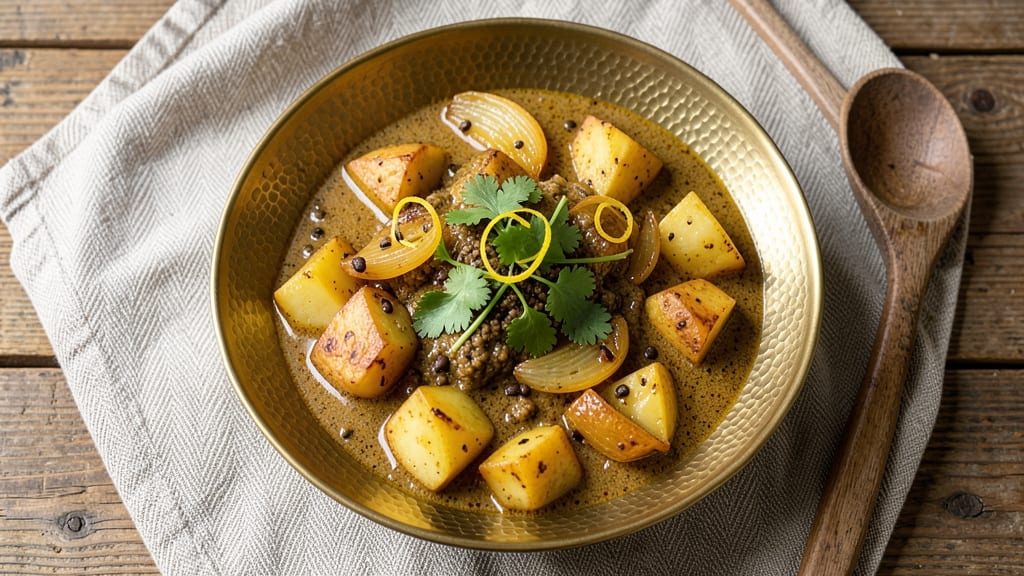
This Bengali potato curry recipe transforms simple potatoes into a fragrant, golden-hued dish that’s the heart of Bengali meals. The secret lies in tempering whole spices—mustard seeds, cumin, and turmeric—until they release their earthy aroma, creating a base that’s both vibrant and deeply comforting.
I developed this version after years of tasting regional variations, simplifying it for home cooks while keeping the soul of the dish intact.
The magic happens in the one-pot method: onions caramelize into a sweet, sticky base, potatoes soak up the spiced oil, and fresh cilantro finishes with a bright, herbal note.
The gravy should cling to the potatoes like a warm embrace—thick enough to coat a spoon but light enough to let the flavors shine through.
This is the kind of curry that pairs perfectly with steamed rice or warm roti, making it a staple for everyday meals and festive spreads alike.
What makes this recipe special is its balance: tender potatoes that melt in your mouth, a gravy that’s neither too thin nor too thick, and spices that sing without overpowering.
The turmeric stains the curry a beautiful golden hue, while the mustard seeds add a subtle kick that lingers on your palate. It’s the kind of dish that feels like a hug in a bowl—simple, hearty, and deeply satisfying.
Once you master this technique, you’ll find endless ways to adapt it: add a pinch of asafoetida for extra depth, swap in baby potatoes for a rustic texture, or finish with a squeeze of lemon for brightness.
The possibilities are as endless as the love that goes into making it. Let’s get cooking!
Ingredients for bengali potato curry
Golden potatoes, warm spices, and a touch of tang—this curry brings Bengali comfort to your table.
| Ingredient | Amount | Notes |
|---|---|---|
| Russet Potatoes 🥔 | 2 lb | Medium-sized, peeled and cubed |
| Yellow Onions 🧅 | 2 whole | Thinly sliced, about 2 cups |
| Mustard Seeds 🌶️ | 1 tbsp | Whole, yellow variety |
| Cumin Seeds 🌿 | 1 tbsp | Whole, toasted for aroma |
| Turmeric Powder 🌿 | 1 ½ tsp | Freshly ground preferred |
| Ground Cumin 🌿 | 1 tsp | For depth of flavor |
| Garam Masala 🌶️ | 1 tsp | Homemade or store-bought |
| Red Chili Powder 🌶️ | ½ tsp | Adjust for heat preference |
| Vegetable Oil 🫒 | ½ cup | Or ghee for richer flavor |
| Water 💧 | 1 ½ cups | For simmering potatoes |
| Fresh Cilantro 🌿 | ¼ cup | Chopped, for garnish |
| Lemon Juice 🍋 | 1 tbsp | Freshly squeezed |
| Salt 🧂 | 1 ½ tsp | Adjust to taste |
| Asafoetida (Hing) 🌶️ | ¼ tsp | Optional, for depth |
The potatoes are the star, so pick firm russets—they hold up better to simmering than waxy varieties. Indian grocery stores often carry pre-peeled potatoes, but I always peel and cube mine myself for even cooking. For the spices, Whole Foods' bulk section has great whole mustard and cumin seeds—just crush them lightly between your palms before toasting. If you're short on time, Penzeys Spices sells pre-ground turmeric that's vibrant and potent. The asafoetida (hing) might be hard to find, but Amazon or local Indian markets usually stock it—it's that umami bomb that ties everything together.
No mustard seeds? Substitute with 1/2 tsp ground mustard, but you'll lose that signature crackling sound. Running low on garam masala? Mix 1/2 tsp each of cinnamon, cardamom, and cloves for a quick fix. The chili powder can be swapped for fresh green chili paste—just 1/2 tsp will give you that same zing. For the onions, caramelizing them slow and low is key, but if you're in a rush, sauté with a pinch of sugar first to speed up the process. And trust me on the lemon juice—it brightens everything up and cuts through the richness.
This curry tastes even better the next day as the flavors meld, so make a double batch if you can. Store in an airtight container in the fridge for up to 5 days, or freeze portions for 3 months—just thaw overnight in the fridge. The potatoes will absorb all that spiced oil, so they stay moist even after reheating. For serving, I like to keep the cilantro separate until the last minute so it stays fresh and vibrant. Pair with warm basmati rice or crusty naan for the full experience.
Why You'll Love This Recipe
- One-Pot Magic: I swear by this recipe—just toss chopped potatoes, onions, and spices into one pot, and let the mustard seeds and cumin sizzle into aromatic perfection. No extra bowls, no fuss, and honestly? That golden crust on the potatoes is worth every minute.
- Spice Symphony: Between the earthy cumin, the sharp crackle of mustard seeds, and that warm turmeric glow, this curry sings. The onions caramelize into sweetness while the potatoes stay tender—crispy edges? Always. It’s the kind of flavor that makes you want to eat it straight from the pan.
- Meal Prep MVP: I make a big batch on Sundays because this curry reheats like a dream. Pair it with rice or roti, and it’s your go-to for lazy nights or potlucks. (Yes, even on a Tuesday night.) The spices deepen overnight, so leftovers taste even better—if that’s possible.
- Budget Brilliance: Russet potatoes and yellow onions are cheap, and a pinch of mustard and cumin stretches far. I feed four people for under $10, and the leftovers? Even better. It’s the kind of dish that proves homemade doesn’t have to break the bank.
Step-by-step instructions for Bengali potato curry
Here's how to create this aromatic, comforting dish that brings Bengali home cooking to your table.
Prepare the Potatoes and Aromatics
Start by peeling the 2 lb Russet Potatoes and cutting them into 1½-inch cubes. I like to keep them slightly irregular—this prevents them from turning mushy during cooking. Place them in a large bowl and set aside.
Next, thinly slice the 2 whole Yellow Onions into half-moons. You should end up with about 2 cups of sliced onions. Set these aside with the potatoes. The onions will soften beautifully during cooking, adding natural sweetness to the curry.
Toast the Whole Spices
Heat the 0.5 cup Vegetable Oil in a heavy-bottomed pot over medium heat. Add the 1 tbsp Mustard Seeds and 1 tbsp Cumin Seeds. Watch closely—they'll pop and dance around the pan. Let them toast for about 1 minute until they release their nutty aroma and begin to turn golden.
Here's the thing—don't walk away. Mustard seeds burn quickly, and once they turn dark, they lose their delicate flavor. You'll know they're ready when you hear a steady popping sound and see them changing color. Immediately add the thinly sliced onions and sauté for 5 minutes until they become translucent and slightly caramelized.
Add Turmeric and Simmer
Stir in the 1.5 tsp Turmeric Powder and 1.5 tsp Salt. The curry will immediately take on that signature golden hue—this is your visual cue that the spices are working. Add the 1.5 cups Water and bring the mixture to a gentle boil.
Once boiling, add the cubed potatoes. Stir gently to combine, then reduce the heat to medium-low. Let the curry simmer uncovered for 15 minutes, stirring occasionally. You'll see the potatoes start to soften and the liquid reduce slightly—this is when the flavors begin to meld together.
Build the Curry Base
After 15 minutes, add the 1 tsp Ground Cumin, 1 tsp Garam Masala, and 0.5 tsp Red Chili Powder. Stir well to distribute the spices evenly. If using, add the 0.25 tsp Asafoetida (Hing) now—it dissolves completely and adds that unmistakable umami depth.
Increase the heat to medium and cook for another 10 minutes, stirring occasionally. The potatoes should be tender but still hold their shape when pierced with a fork. If the curry looks too dry, add 2-3 tablespoons of water to maintain the right consistency.
Finish and Garnish
Once the potatoes are tender, stir in the 1 tbsp Lemon Juice and the chopped 0.25 cup Fresh Cilantro. The lemon brightens the flavors while the cilantro adds freshness. Taste and adjust the seasoning with additional salt if needed.
Let the curry sit off the heat for 5 minutes before serving. This resting period allows the flavors to fully develop. Serve warm with steamed rice or roti, and watch as everyone at the table reaches for seconds—this curry is that comforting.
Pro Tips For Making Bengali Potato Curry
- Boil Potatoes Firm: Cut Russets into even 1-inch chunks and boil them until they’re just slightly underdone—you should still feel a tiny bite in the center. Overcooking turns them mushy in the curry, and nobody wants that. Drain and set aside; they’ll finish cooking in the gravy.
- Bloom Spices Low: After frying onions, add mustard and cumin seeds on medium-low heat. They’ll pop and sizzle like crazy, but if you crank it too high, they burn before releasing their flavor. Let them dance for 30 seconds—just until they’re fragrant, not browned.
- Salt Onions Twice: Sprinkle salt on raw onions while chopping (yes, even if they’re not caramelizing) and again after they soften in the oil. The first round draws out moisture; the second ensures they’re seasoned through. Skimp here, and your curry tastes bland under all that spice.
- Simmer, Don’t Boil: Once the potatoes and spices hit the liquid, reduce heat to a gentle simmer—barely bubbling, like a whisper. Boiling breaks the potatoes into a gluey mess. Cover and let it work for 10-12 minutes; the potatoes will soak up the flavors without turning to paste.
Wine and beer pairings for this dish
Indian Pale Ale
An Indian Pale Ale (IPA) with its bold, hoppy bitterness cuts through the rich, spiced flavors of this curry beautifully. I love pairing it with a Session IPA like Dogfish Head 60 Minute IPA—its citrusy notes complement the turmeric and lemon, while the maltiness balances the heat.
The crisp finish cleanses your palate between bites of aromatic potatoes. 🍺
Moscato d'Asti
For a lighter option, a slightly sparkling Moscato d'Asti from Italy adds a refreshing contrast. The sweet, floral notes of this wine harmonize with the earthy spices, while its effervescence cuts through the curry's richness.
It’s my go-to for a more delicate pairing that still feels celebratory. Look for brands like Saracco or G.D. Vajra for authentic quality.
Bengali-Style Beer
If you’re feeling adventurous, try a Bengali craft beer like Bangla Lager from local breweries in Kolkata or Dhaka. These beers often have a malty sweetness with subtle spice notes that mirror the curry’s profile.
For a Western alternative, a wheat beer with a hint of coriander (like Blue Moon Belgian White) bridges the gap between East and West beautifully.
Non-Alcoholic Options
For a non-alcoholic match, ginger beer or a spiced chai tea works wonders. The ginger’s zing enhances the curry’s warmth, while chai’s cinnamon and cardamom echo the garam masala. I also love serving it with a mango lassi—the creamy sweetness balances the spice perfectly. 💛
Regional Wine Pairings
In Bengal, this curry is often paired with local rice wines like Puthi or Handia, which have a light, slightly sweet profile. If you’re in the U.S., a dry Riesling from Germany or a Chenin Blanc with its crisp acidity mirrors these traditional pairings.
The acidity in these wines helps refresh your palate after each spiced bite.
Nutrition facts
Frequently asked questions
Why does my Bengali potato curry taste bland after cooking?
Bland flavor usually means the spices weren't properly toasted or the potatoes absorbed too much water. For maximum flavor, always toast the mustard and cumin seeds until they sizzle and change color—this releases their oils. Also, simmer uncovered to reduce liquid gradually, and add lemon juice at the very end to brighten flavors. If needed, finish with extra garam masala or a pinch of asafoetida (hing).
Can I make this curry without fresh cilantro?
If you don't have fresh cilantro, substitute with 1 tbsp dried cilantro (or 1 tsp dried oregano for a similar earthy note). For extra freshness, add 1 tsp lemon zest instead. The key is balancing the flavors—cilantro's bright herbaceousness cuts through the richness, so if you skip it, boost other bright elements like lemon or a pinch of black salt (kala namak).
How do I adjust the spice level for kids or sensitive palates?
Reduce the red chili powder to ¼ tsp and omit the asafoetida (it has a strong sulfuric aroma). For extra mildness, add ½ cup coconut milk at the end for creaminess. Kids often love the sweetness of caramelized onions—let them taste-test before adding spices. You can also serve the potatoes plain with a side of mild curry sauce on the side for dipping.
What's the best way to reheat leftovers?
Reheat gently in a pot over low heat with 1-2 tablespoons water, stirring occasionally to prevent drying. Microwaving works too—cover with a damp paper towel and heat in 30-second intervals, stirring between each. For extra flavor, add a splash of lemon juice or a pinch of garam masala while reheating. The curry actually tastes better the next day as flavors meld! Store in an airtight container for up to 5 days.
Can I substitute potatoes with sweet potatoes?
Yes, but expect a slightly different texture and flavor profile. Sweet potatoes will be naturally sweeter and softer, which works beautifully with the spices. Use the same quantity and add ½ tsp extra cumin to complement their earthiness. For color contrast, try cubing both regular and sweet potatoes together. The cooking time remains similar, but check for doneness at 12 minutes instead of 15.