
Side Dishes
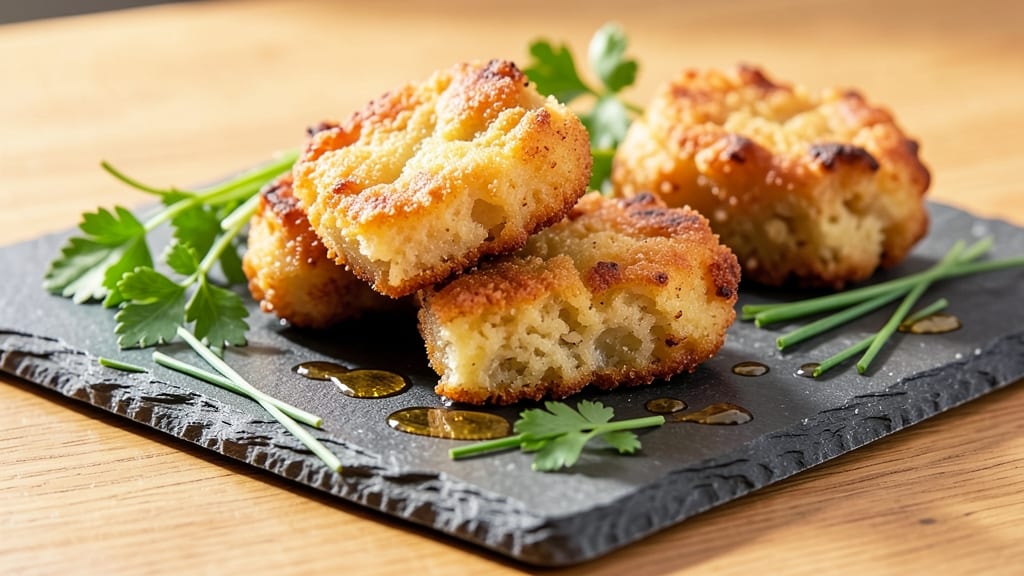
This vegan potato fritters recipe delivers crispy-golden bites that rival classic versions—without a single egg or dairy product. 🔥 The secret lies in a clever flax egg binder that creates that signature crispy exterior while keeping the centers tender and fluffy.
I've perfected this recipe through years of testing, ensuring every batch turns out perfectly golden and packed with herby freshness.
The magic happens with simple ingredients you likely already have: russet potatoes, flour, and fresh herbs like parsley and chives. We'll use aquafaba (chickpea brine) for extra crispiness and a flax egg to bind everything together without compromising texture.
The result is a foolproof method that works whether you pan-fry or bake, giving you control over crispiness levels.
What you'll end up with is a plate of golden, crispy fritters that are impossible to resist—herbaceous, savory, and satisfyingly crunchy. These fritters hold their shape beautifully and pair perfectly with dips like vegan aioli or tangy mustard.
The best part? They're ready in just 30 minutes, making them ideal for weeknight dinners or appetizers.
Serve warm alongside salads, soups, or as a stand-alone snack. The recipe scales easily, so you can make a big batch for parties or meal prep for the week. Let's get started on these delicious vegan potato fritters!
Ingredients for vegan potato fritters
Simple ingredients that transform into crispy, herby vegan fritters in just 30 minutes.
| Ingredient | Amount | Notes |
|---|---|---|
| Russet Potatoes 🥔 | 2 lbs | Peeled and grated fine |
| All-Purpose Flour 🌾 | ½ cup | For binding texture |
| Fresh Parsley 🌿 | ¼ cup | Chopped finely |
| Fresh Chives 🌱 | 2 tbsp | Chopped finely |
| Ground Flaxseed 🌾 | 2 tbsp | For flax egg binder |
| Water 💧 | 6 tbsp | For flax egg mixture |
| Aquafaba 🥫 | ¼ cup | From chickpea brine |
| Salt 🧂 | 1 tsp | Kosher or sea salt |
| Black Pepper 🌶️ | ½ tsp | Freshly ground |
| Olive Oil 🫒 | ¼ cup | For frying |
| Lemon Juice 🍋 | 1 tbsp | Freshly squeezed |
Russets are key here—their high starch content gives that classic fritter texture. Grab the busiest-looking potatoes at the store (those with the most eyes), but avoid any sprouting ones. Trader Joe's or Whole Foods usually have great russets, but any grocery store works. For the herbs, fresh is non-negotiable—dried just won't give that bright flavor. I always double the herbs because half goes in the mix, half gets sprinkled on top for extra freshness. If you can't find chives, green onions work perfectly.
No aquafaba? 1 tbsp cornstarch mixed with 1 tbsp water works in a pinch, though the texture won't be quite as crispy. The flax egg is crucial—don't skip it! For the flour, bread flour gives slightly better structure if you've got it, but all-purpose works fine. The lemon juice brightens everything up, so use freshly squeezed if possible. Bottled juice works too—just add a pinch of salt to compensate. And if you're worried about the potatoes being too wet after grating, wrap them in a clean towel and squeeze out excess moisture before mixing.
These fritters reheat beautifully—just pop them in a 350°F oven for 5-10 minutes to restore crispiness. Store leftovers in an airtight container for 3 days in the fridge or freeze for 2 months. For freezing, arrange them on a tray first so they don't stick together, then transfer to a bag. I always make a double batch and freeze half—perfect for quick snacks or meal prep. The aquafaba and flax egg mixtures can be prepped ahead too, saving you time on frying day.
Why You'll Love This Recipe
- No Chopping Hassle: I swear by the flaxseed trick—just mix the ground flax with water, let it sit, and boom, you’ve got your binder. No eggs, no fuss, and the potatoes stay tender while the edges get that golden crunch.
- Herb-Packed Punch: That bright parsley and chives combo? It’s what makes these fritters sing. The fresh herbs cut through the richness of the potatoes, and honestly, I’ll take that over any bland vegan takeout.
- Meal Prep MVP: Make a big batch on Sunday, freeze half, and reheat them straight from the fridge. They’re perfect for lazy mornings or a quick snack—just pop them in the oven, and you’ve got dinner covered.
- Budget-Friendly Staples: Russets are cheap, flour doesn’t break the bank, and herbs last longer than you’d think. This recipe uses pantry basics, so you’re not scrambling for specialty ingredients—just good, simple food.
Step-by-step instructions for vegan potato fritters
Crispy on the outside, herby and tender inside—let's make these golden bites together.
👨🍳 Step 1: Grate and Squeeze the Potatoes
Start by grating the 2 lbs Russet Potatoes using the fine holes of a box grater. I like to work in batches to avoid a messy pile—just grate, then transfer to a clean kitchen towel or paper towels. This step is crucial because we need to remove excess moisture for crispy fritters.
Gather the grated potatoes into a ball and squeeze out all the liquid you can. You'll feel it dripping out—this is the starchy water that would make your fritters soggy. I press as hard as I can, then let it sit for 5 minutes while I prep the other ingredients. This resting time helps even more moisture escape.
👨🍳 Step 2: Make the Flax Egg and Herby Mixture
In a small bowl, whisk together the 2 tbsp Ground Flaxseed and 6 tbsp Water. Let this sit for 5 minutes while you chop the herbs—this gives the flax time to thicken into a gel-like consistency that will bind everything together perfectly.
While that thickens, finely chop the 0.25 cup Fresh Parsley and 2 tbsp Fresh Chives. I use a sharp knife and cut them as small as possible—you want these herbs to distribute evenly throughout the fritters. In a large bowl, combine the squeezed potatoes, 0.5 cup All-Purpose Flour, 1 tsp Salt, 0.5 tsp Black Pepper, the chopped herbs, and the thickened flax mixture. Stir gently but thoroughly with a spatula.
🍳 Step 3: Fold in the Aquafaba and Lemon
Add the 0.25 cup Aquafaba and 1 tbsp Lemon Juice to the potato mixture. The aquafaba replaces eggs perfectly here, adding that light, airy quality while keeping everything vegan. Stir everything together until just combined—don't overmix or you'll develop gluten and end up with tough fritters.
Let the batter rest for 10 minutes at room temperature. This resting time allows the flour to fully hydrate and the flavors to meld together. You'll notice the mixture becomes slightly more cohesive, which is exactly what we want for shaping perfect fritters.
🔥 Step 4: Heat the Oil and Fry in Batches
Pour the 0.25 cup Olive Oil into a large skillet and heat over medium heat until it reaches 350°F. I use a deep-fry thermometer to check this—if you don't have one, test with a small piece of potato batter. It should sizzle and turn golden within 30 seconds.
Scoop the potato mixture into 1.5-inch balls (about 1 tablespoon each) and carefully place them in the hot oil. Don't overcrowd the pan—work in batches of 4-5 fritters at a time to maintain the oil temperature. Fry for 3-4 minutes per side, turning carefully with a slotted spoon, until they're deep golden brown and crispy all over.
⏰ Step 5: Drain and Serve Warm
Transfer the fried fritters to a paper towel-lined plate and let them drain for 2 minutes. This step is important—it removes excess oil while keeping them warm. Serve immediately while they're still crispy and hot.
For extra freshness, I like to sprinkle them with a little more fresh parsley and a pinch of salt right before serving. These fritters are best enjoyed right away when they're at their crispiest. Pair with a dollop of vegan sour cream or a side of tangy mustard for the perfect bite!
Pro Tips For Making Vegan Potato Fritters
- GRATE POTATOES COLD: Russets are starchy but still hold moisture—skip the pre-boil and grate them straight from the fridge. Cold potatoes release less starch into the mix, so your fritters won’t turn gluey when binding with flaxseed. (Yes, even if you’re impatient like me.)
- SALT THE FLUXED MIX: The flaxseed "egg" needs salt too—mix it into the wet ingredients before combining with flour. Unsalted flour? Add ½ teaspoon per cup. I learned this the hard way when my first batch tasted bland despite extra seasoning on top.
- PRESS FIRMLY, DON’T PACK: Form patties with gentle pressure, not a hammer. Over-compressing squeezes out moisture, leaving you with dry, crumbly fritters. Think "compact but springy"—like a firm handshake, not a vice grip.
- FRIE IN BATCHES, LOW AND SLOW: Crowd the pan, and your oil temp drops faster than a dropped fritter. Work in batches of 2-3, and keep heat at medium-low (325°F). Rushed frying = greasy outsides, doughy insides. (Your future self will thank you.)
Health benefits of this dish
Plant-Based Protein
These fritters pack a surprising amount of plant-based protein—about 4 grams per serving—thanks to the combination of potatoes and flour. While not a complete protein, they pair beautifully with beans or lentils to create a balanced meal.
The flaxseed binder adds extra omega-3s, which support heart health and reduce inflammation. 💪
Low-Fat, High-Fiber
With no added oils beyond the ¼ cup olive oil used for frying, these fritters are naturally lower in fat than traditional versions. The potato base provides 4 grams of fiber per serving, which aids digestion and helps keep you full.
I've found that the fiber content makes these perfect for satisfying cravings without the guilt.
Gluten-Free Adaptation
For a gluten-free version, simply swap the ½ cup all-purpose flour for ½ cup gluten-free flour blend like Bob's Red Mill 1:1. The texture remains crispy, though you may need to add 1 extra tablespoon of aquafaba to compensate for the different binding properties.
Always check your blend's instructions for best results.
Vitamin Boost
Fresh herbs like parsley and chives contribute vitamin K and vitamin C, while potatoes provide vitamin B6 and potassium. The lemon juice adds an extra dose of vitamin C, which enhances iron absorption if you're serving these with a plant-based iron source like spinach.
This makes them a surprisingly nutritious snack or side dish.
Blood Sugar Balance
The fiber and complex carbs in potatoes help stabilize blood sugar levels, making these fritters a better choice than refined flour snacks. Pair them with a protein source like hummus or a vegan yogurt dip to further slow digestion.
I've noticed my energy levels stay steady when I include these in my meals.
Allergen-Friendly
This recipe is naturally free from the top 9 allergens, making it safe for most people with dietary restrictions. The only potential concern is cross-contamination if you're highly sensitive to gluten or nuts. Always check your ingredients—especially the flour and aquafaba—to ensure they're processed in allergen-free facilities.
Nutrition facts
Frequently asked questions
Can I make these fritters without aquafaba?
Yes! If you don't have chickpea brine, substitute with 1 tbsp cornstarch mixed with 1 tbsp water or 1 tbsp arrowroot powder. The texture won't be quite as crispy, but it'll still hold together. For extra crispiness, add 1 extra tbsp flour to the mix. The flax egg remains essential for binding.
Why are my fritters turning out dense instead of crispy?
Dense fritters usually mean excess moisture wasn't removed. Squeeze grated potatoes thoroughly in a towel, then let them rest 10 minutes before mixing. Also ensure your oil is at 350°F—if it's too cool, fritters will absorb oil instead of crisping. For baking instead of frying, use 400°F and spray with oil.
What's the best way to reheat leftover fritters?
For crispy results, place fritters on a baking sheet and heat in a 400°F oven for 5-7 minutes. Avoid microwaving—they'll turn soggy. You can also air-fry at 375°F for 3 minutes. For extra crispiness, sprinkle with a little water before reheating to create steam that helps restore texture.
Can I make these fritters ahead of time?
Shape the fritters and freeze them on a tray before transferring to a bag. Cook straight from frozen in 360°F oil for 5-6 minutes, adding 1 extra minute to cooking time. For baking, use 425°F for 15-18 minutes. They reheat beautifully and save you time on busy days.
What herbs can I substitute if I don't have parsley and chives?
Try dill, green onions, or cilantro for freshness. For a different flavor profile, use thyme or rosemary (reduce to 1 tbsp each). Avoid heavy herbs like oregano—they can overpower. The key is using fresh herbs for maximum flavor, but dried herbs work in a pinch (use half the amount).