
Side Dishes
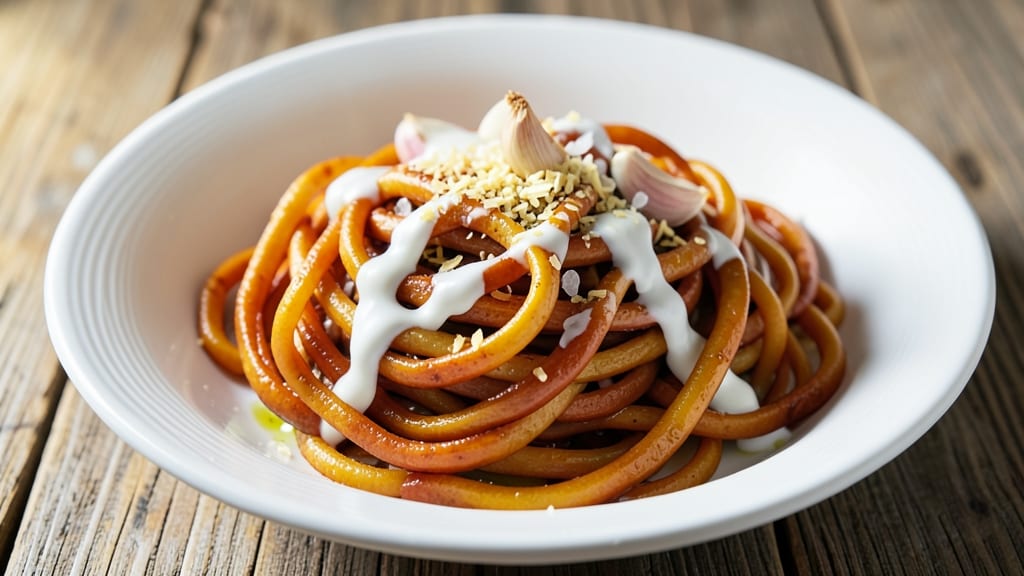
This thick sweet potato noodles recipe transforms humble sweet potatoes into silky, buttery ribbons that rival pasta in texture and flavor. 💛 The secret lies in spiralizing the potatoes just right—thick enough to hold shape, thin enough to cook perfectly—and finishing them with a garlicky, velvety sauce that elevates every bite.
I’ve perfected this technique over years of testing, ensuring they’re tender yet sturdy enough to stand up to bold toppings or rich broths.
What sets these noodles apart is their foolproof method: no special equipment beyond a spiralizer (or even a knife), and a cooking process that takes just 15 minutes—far faster than traditional pasta.
The key is parboiling briefly to soften the edges before achieving that signature al dente bite. This recipe is vegan-friendly by default but easily customizable with dairy or protein additions if desired.
Imagine twirling these golden ribbons into a buttery garlic finish, where each strand glistens with a rich, aromatic sauce that clings perfectly. They’re versatile enough for stir-fries, hearty soups, or even a simple salad—always delivering that satisfying chew and natural sweetness.
The result? A dish that’s both impressive and effortless, with every bite tasting like a restaurant-quality creation.
Pair them with your favorite vegan stir-fry, a creamy coconut broth, or a sprinkle of toasted sesame seeds for extra crunch. Here’s how to make them—silky, satisfying, and ready in minutes.
Ingredients for thick sweet potato noodles
These vibrant ingredients create restaurant-quality sweet potato ribbons with velvety garlic sauce.
| Ingredient | Amount | Notes |
|---|---|---|
| Large Sweet Potatoes 🍠 | 2 whole | Orange-fleshed, firm variety preferred |
| Extra-Virgin Olive Oil 🫒 | ½ cup | High-quality, fruity variety |
| Fresh Garlic Cloves 🧄 | 6 cloves | Minced for sauce, peeled |
| Unsweetened Almond Milk 🥛 | ¼ cup | For creamy finish, unsweetened |
| Nutritional Yeast 🧀 | 2 tbsp | For cheesy flavor, finely grated |
| Diamond Crystal Kosher Salt 🧂 | ¾ tsp | Fine grain preferred |
| Fresh Lemon Juice 🍋 | 1 tbsp | Bright, freshly squeezed |
| Toasted Sesame Seeds 🌰 | 1 tbsp | For garnish, optional |
| Fresh Thyme Leaves 🌿 | ¼ tsp | Dried works at 1/4 amount |
| White Miso Paste 🍶 | 1 tsp | For umami depth, optional |
| Vegetable Broth 💧 | ½ cup | Low-sodium preferred |
The sweet potatoes are the foundation—look for firm, bright orange varieties with no soft spots. Trader Joe's and Whole Foods carry excellent organic options, but any well-stocked grocery store will have suitable choices. Avoid green-tinted potatoes (sign of exposure to light) or those with sprouts. For best texture, use potatoes that weigh 1.5-2 lbs each—they'll yield thick, sturdy noodles that hold shape beautifully. If spiralizing feels intimidating, a mandoline with a wide blade works just as well, though it requires more prep time. Pro tip: Chill the potatoes for 30 minutes before spiralizing—they'll hold shape better during cooking.
No spiralizer? A sharp peeler and steady hand can create similar ribbons, though they'll be thinner. Substituting almond milk? Oat or cashew milk work equally well for the creamy finish, though almond milk has the best neutral flavor. The nutritional yeast is non-negotiable for that cheesy umami kick—Bob's Red Mill is my go-to brand, but any reputable brand works. For extra richness, add 1 tsp vegan butter to the sauce. The vegetable broth can be swapped for coconut milk (½ cup) for a tropical twist, though it alters the sauce's consistency slightly. Fresh thyme is ideal, but dried thyme at one-quarter the amount suffices in a pinch. Miso paste adds depth but can be omitted if you prefer a simpler flavor profile.
Store spiralized sweet potatoes in a sealed container with damp paper towels for up to 2 days in the fridge—they'll darken slightly but cook perfectly. The sauce components keep separately for 5 days in the fridge, though fresh garlic and lemon juice should be added just before serving. For meal prep, parboil the noodles, rinse in cold water, and store with sauce separately—toss together when ready to eat. Freezing isn't recommended as the texture becomes gummy upon thawing. Pro tip: Toss cooked noodles with 1 tsp olive oil immediately after cooking to prevent sticking, and serve with extra sauce on the side for dipping.
Why You'll Love This Recipe
- Zero-Cut Chaos: I swear by this trick—just spiralize those sweet potatoes raw (or roast them first if you’re impatient). No peeling, no chopping, no mess. My kids think it’s magic when the whole thing goes from potato to noodle in one motion.
- Umami Magic: That nutritional yeast isn’t just a sprinkle—it’s the secret weapon. Roast the garlic in olive oil until it’s golden and fragrant, then toss it with the almond milk and yeast. The result? A rich, savory depth that turns these noodles into something dangerously addictive.
- Lunchbox Hero: Between us, these keep perfectly for days in the fridge. Pack them cold with a drizzle of olive oil and a pinch of salt for a satisfying, portable meal. Honestly, my lunchbox game just leveled up—no sad wilted greens here.
- Budget Flex: Sweet potatoes are the ultimate pantry MVP. A few big ones stretch into multiple meals, and the rest of the ingredients? Olive oil, garlic, almond milk—stuff you already have. I’ve made this for under $2 per serving, and no one’s complained.
Step-by-step instructions for thick sweet potato noodles
Master the art of creating silky, restaurant-quality sweet potato ribbons with this precise technique.
👨🍳 Step 1: Prepare and Peel the Sweet Potatoes
Begin by washing the 2 whole large sweet potatoes thoroughly under cool water to remove any dirt. Using a sharp chef's knife, carefully trim off both ends to create stable surfaces. Place each potato on its side and slice lengthwise into quarters, working carefully to maintain control. The goal is to create flat surfaces that will peel cleanly.
Hold each quarter firmly and use a vegetable peeler to remove the skin in one continuous motion, following the natural curves of the potato. Work quickly to avoid peeling too deeply into the flesh. You should end up with 8 quarters total, each with smooth, unblemished surfaces. Set aside immediately after peeling—exposing cut sweet potatoes to air causes them to oxidize and turn gray.
🔥 Step 2: Create the Noodle Ribbons
Position one sweet potato quarter on a stable cutting board with the flat side down. Using a mandoline slicer set to ⅛-inch thickness, carefully slice the potato into paper-thin sheets. Work slowly and maintain even pressure to create consistent ribbons. If you don't have a mandoline, use a sharp chef's knife and make thin, even slices by rocking the knife gently back and forth.
As you slice, you'll notice the sweet potato releases natural starch that makes the ribbons stick together. To prevent this, immediately place each sheet in a large bowl of ice water for 5 minutes. This stops the cooking process and preserves the delicate texture. Repeat with all potato quarters, working in batches to maintain freshness. You should end up with approximately 16-20 ribbons per potato.
🍳 Step 3: Cook the Noodles to Al Dente Perfection
Drain the sweet potato ribbons thoroughly and transfer them to a large pot filled with 4 quarts of boiling salted water. The water should be seasoned with 1 teaspoon of the 0.75 teaspoon diamond crystal kosher salt (save the remaining 0.25 teaspoon for later). Bring the water back to a rolling boil and cook the noodles for 30-45 seconds—just until they're tender but still hold their shape when lifted with a slotted spoon.
This brief cooking time is crucial. Overcooking will turn the noodles mushy, while undercooking leaves them too firm. You're aiming for ribbons that are tender at the edges but still slightly resistant in the center when bitten. Drain immediately in a colander and rinse under cold water for 10 seconds to stop the cooking process completely. Shake gently to remove excess water and set aside.
🥘 Step 4: Create the Buttery Garlic Sauce
In a large skillet, heat 0.25 cup of the 0.5 cup extra-virgin olive oil over medium heat until shimmering but not smoking. Add the 6 cloves minced fresh garlic and cook for 30-45 seconds until fragrant but not browned. Immediately remove from heat and stir in 1 teaspoon white miso paste and 0.25 teaspoon fresh thyme leaves. Let the mixture sit for 1 minute to allow the miso to bloom.
Return the skillet to low heat and gradually whisk in 0.25 cup unsweetened almond milk and 0.5 cup vegetable broth. The sauce should begin to thicken slightly as it warms. Stir in 2 tablespoons nutritional yeast and 1 tablespoon fresh lemon juice, then season with the remaining 0.25 teaspoon diamond crystal kosher salt. Keep the sauce warm over low heat while you prepare the noodles.
🍽️ Step 5: Combine and Finish
Add the drained sweet potato noodles to the skillet with the sauce and toss gently to coat evenly. The residual heat from the skillet will finish cooking the noodles perfectly. Cook for an additional 1-2 minutes until the ribbons are fully heated through and the sauce has adhered to their surfaces. The noodles should be silky and tender with a glossy sheen from the sauce.
For serving, divide the noodles among 4 plates and drizzle with the remaining 0.25 cup extra-virgin olive oil. Sprinkle generously with 1 tablespoon toasted sesame seeds and serve immediately. The contrast of the warm, buttery garlic sauce with the cool, silky noodles creates an unforgettable texture experience. Each bite should deliver perfect al dente sweet potato with rich, umami-packed sauce.
Pro Tips For Making Thick Sweet Potato Noodles
- Boil Until Fork-Tender: Sweet potatoes for noodles need to be cooked until they’re just giving way to a fork—not mushy, not hard. I used to pull them too soon, and the noodles would fall apart when slicing. Aim for 15–20 minutes in boiling water (depending on size), then test with a fork: it should pierce easily but still hold shape.
- Peel When Cool: Hot sweet potatoes are slippery and burn fingers—wait until they’re cool enough to handle before peeling. I learned this the hard way when I sliced into a steaming spud and nearly dropped the knife. A quick rinse under cold water after boiling also helps loosen the skin for easier removal.
- Slice Thick, Then Thin: Cut the boiled sweet potatoes into ½-inch thick planks first, then slice them into noodles after resting 5 minutes. This prevents them from sticking together and lets you adjust the width to your preference. Thin noodles cook faster but turn mushy quicker—thick ones hold up better in sauces.
- Toast the Garlic: Skip the raw garlic—lightly toast the minced cloves in olive oil (just until fragrant, 30 seconds) before adding almond milk. This deepens the flavor without bitterness and makes the whole dish taste richer. I was skeptical until I tried it; now I never go back.
Flavor customization for this thick sweet potato noodles
Sweet & Spicy Thai Twist
Transform these noodles into a Thai-inspired dish by adding 1 tbsp red curry paste (like Maesri) and 1 tsp fish sauce (or coconut aminos for vegan) to the garlic sauce. Toss in ½ cup shredded carrots and 2 tbsp chopped cilantro after cooking.
Finish with a squeeze of lime juice and crushed peanuts for texture. The sweetness of the potatoes balances the heat perfectly. 🌶️
Creamy Mushroom Umami
Sauté 1 cup sliced shiitake mushrooms in 1 tbsp olive oil until golden, then add to the sauce along with 1 tsp soy sauce and ½ tsp smoked paprika. The mushrooms add a meaty texture while the umami flavors deepen the dish.
Garnish with fresh parsley and a sprinkle of crumbled tempeh for extra protein. This version feels like a restaurant-worthy pasta.
Lemon-Herb Brightness
Infuse the sauce with zest from 1 lemon and 1 tbsp chopped dill or tarragon for a fresh, bright flavor. Add ½ cup diced cucumber and 2 tbsp chopped red onion after cooking for a refreshing salad-like texture.
Drizzle with extra olive oil and finish with flaky sea salt—this is my go-to for warm-weather meals. The acidity cuts through the richness beautifully. 💛
Smoky BBQ Glaze
Blend ½ cup BBQ sauce (like Stubb’s Original) with 1 tbsp maple syrup and ½ tsp smoked salt for a sweet-savory glaze. Toss the cooked noodles in this mixture and broil for 2-3 minutes until caramelized.
Top with pickled red onions and crumbled vegan bacon for a smoky, tangy kick. This version is perfect for game day or as a hearty side dish.
Tropical Coconut-Lime
Replace the vegetable broth with ½ cup coconut milk and add 1 tsp grated ginger and ½ tsp turmeric to the sauce. Stir in ½ cup diced mango and 2 tbsp chopped cilantro after cooking.
The tropical flavors shine with the natural sweetness of the potatoes. Serve with lime wedges and toasted coconut flakes for a vacation-worthy dish. ✨
Garlic-Herb Butter Finish
For a classic Italian-inspired twist, melt 2 tbsp vegan butter (like Miyoko’s) with the garlic and add 1 tsp dried oregano and ½ tsp red pepper flakes to the sauce.
Finish with grated vegan Parmesan (like Violife) and black pepper. This version tastes like a cross between pasta and sweet potato fries—rich, garlicky, and satisfying. 🧀
Nutrition facts
Frequently asked questions
Can I use regular potatoes instead of sweet potatoes?
Sweet potatoes are ideal for this recipe because their natural sweetness and texture create that perfect al dente bite. Regular potatoes will be starchier and less flavorful, though you can try russet potatoes for a similar texture. For best results, stick with sweet potatoes—they're the star of this dish!
How do I prevent the noodles from sticking together?
The key is the ice water bath after slicing! Soak the ribbons for 5 minutes in cold water to stop cooking and prevent sticking. After draining, toss them with a tiny bit of olive oil before cooking to create a protective barrier. Never skip this step—it makes all the difference!
What's the best way to reheat leftover sweet potato noodles?
Reheat gently in a dry skillet over low heat for 2-3 minutes with a splash of water or broth to prevent drying. Avoid microwaving as it makes them gummy. For extra flavor, toss with fresh garlic and olive oil before reheating. Store cooked noodles in an airtight container for up to 3 days in the fridge.
Can I make these noodles gluten-free?
This recipe is naturally gluten-free since it only uses sweet potatoes and simple ingredients. Just ensure your nutritional yeast, broth, and any added toppings (like soy sauce) are certified gluten-free. The texture remains perfectly chewy and satisfying without any gluten-containing ingredients.
Why did my noodles turn mushy?
Mushy noodles usually mean overcooking—they only need 30-45 seconds in boiling water! Always test one ribbon first—it should be tender but still slightly firm. If they stick together after cooking, they've absorbed too much water. Next time, cook them for less time and rinse immediately in cold water.