
Side Dishes
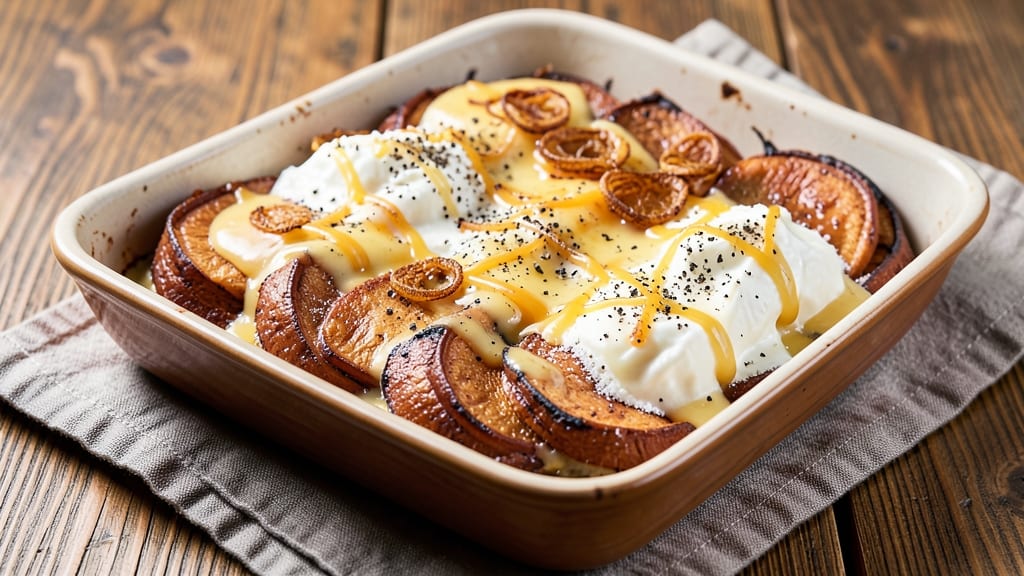
This sweet potato strata recipe transforms humble sweet potatoes into a showstopping brunch dish with crispy golden layers and custardy depth. 🌟 The secret lies in perfectly roasted sweet potatoes layered with a rich egg custard, creating a texture that's both comforting and elegant—ideal for weekend gatherings or cozy weeknight dinners.
What sets this recipe apart is the balance of techniques: roasting the sweet potatoes until tender yet firm, then layering them with a velvety custard made from eggs, milk, and just enough cheese for binding.
The result is a dish that's hearty enough to stand alone but versatile enough to pair with breakfast meats or fresh fruit. Baking at 350°F for 45 minutes ensures a crispy top while keeping the interior moist and flavorful.
Each bite delivers warm, caramelized sweet potatoes infused with the subtle tang of the custard, all held together by a golden, crackly crust.
The dish is naturally vegetarian but can be adapted with optional add-ins like pecans for crunch, cinnamon for warmth, or even a sprinkle of cheese for extra richness. It's the kind of recipe that transforms simple ingredients into something restaurant-worthy with minimal effort.
The beauty of strata lies in its flexibility—make it ahead and refrigerate overnight, then bake fresh in the morning for a foolproof brunch solution. Whether you're feeding a crowd or treating yourself to a special breakfast, this recipe delivers on both comfort and presentation. Let's get started!
Ingredients for sweet potato strata
Transform humble sweet potatoes into restaurant-worthy strata with these precise ingredients.
| Ingredient | Amount | Notes |
|---|---|---|
| Large Sweet Potatoes 🍠 | 2 ½ lbs | Organic preferred, peeled and cubed |
| Large Eggs 🥚 | 8 whole | Room temperature for even baking |
| Whole Milk 🥛 | 2 cups | Full-fat for creamy custard |
| Shredded Sharp Cheddar Cheese 🧀 | 1 ½ cups | Aged for maximum flavor |
| Unsalted Butter 🧈 | ½ cup | Cold, cubed for layering |
| All-Purpose Flour 🌾 | ½ cup | For thickening custard |
| Granulated Sugar 🍚 | ¼ cup | Light brown preferred |
| Ground Cinnamon 🌿 | 1 tsp | Freshly toasted for depth |
| Ground Nutmeg 🌶️ | ½ tsp | Freshly grated preferred |
| Salt 🧂 | ½ tsp | Diamond Crystal preferred |
| Black Pepper 🌶️ | ¼ tsp | Freshly cracked for heat |
| Pecans 🥜 | ½ cup | Toasted, chopped for crunch |
| Extra-Virgin Olive Oil 🫒 | 2 tbsp | For roasting sweet potatoes |
The sweet potatoes are the foundation—organic, vibrant orange varieties like Beauregard hold up best during roasting. Whole Foods Market or local farmers markets often carry the freshest tubers with the right balance of dryness and sweetness. Peeled and cubed into even 1-inch pieces, they roast until tender yet firm, ensuring each bite delivers that perfect caramelized texture. For the custard, full-fat milk and aged sharp cheddar create the ideal balance of richness and tang, while the butter adds a luxurious mouthfeel that's essential for that signature crispy top. The pecans? Trader Joe's sells pre-toasted ones for convenience, but toasting your own at 350°F for 8-10 minutes amplifies their nutty flavor dramatically.
No sharp cheddar on hand? Parmigiano-Reggiano or Gruyère work beautifully, though they'll bring different depth to the flavor profile. Running short on pecans? Walnuts or toasted almonds provide similar crunch, though pecans' buttery richness is ideal. The flour and sugar can be swapped for gluten-free flour blend and coconut sugar if needed, though the texture will differ slightly. For the sweet potatoes, if you can't find Beauregard, Hannah or Jewel varietiesPenzeys Spices or bulk bins at Whole Foods are worth the investment for this recipe.
Prep the sweet potatoes first—they need 25-30 minutes at 400°F to develop that caramelized edge while staying tender inside. Store any prepped components (cubed potatoes, toasted pecans) in airtight containers in the fridge for up to 2 days. The custard mixture can be made ahead and refrigerated overnight, then simply assembled and baked the next morning. For best results, bake immediately after assembling—this strata shines when served fresh from the oven, though leftovers reheat beautifully in a 350°F oven for 15-20 minutes. Portion into individual ramekins for elegant serving, or use a single large dish for family-style sharing. The crispy top forms in the final 10 minutes, so don't peek!
Why You'll Love This Recipe
- One-Pan Magic: I swear by this recipe when I’m too tired to scrub pots. Toss peeled sweet potatoes into a dish, pour the egg-milk-cheese mix over them, and pop it in the oven—no flipping, no fuss. That’s it.
- Cheesy-Sweet Craving: The sharp cheddar melts into the sweet potatoes like a hug from a food angel. Rich, creamy, and just enough caramelized edge to make every bite feel like a reward.
- Breakfast or Brunch Hero: Make it for lazy Sundays or pack leftovers for work—it’s that versatile. Serve warm with a side of bacon, or reheat slices for a quick protein boost. (Yes, even on a Tuesday morning.)
- Budget Breakfast Win: Sweet potatoes and eggs stretch this dish far, and cheddar cheese adds serious flavor without breaking the bank. I’ve fed six people for under $10, and no one complained. Ever.
Step-by-step instructions for sweet potato strata
Layer, bake, and achieve that perfect golden crust with these precise techniques.
🍳 Step 1: Roast Sweet Potatoes Until Tender
Preheat your oven to 400°F. Toss the 2.5 lbs peeled and cubed sweet potatoes with 2 tablespoons extra-virgin olive oil, ½ teaspoon salt, and ¼ teaspoon black pepper on a baking sheet. Spread them in a single layer—crowding will steam rather than roast.
Roast for 25-30 minutes until the edges are deep golden brown and a knife slides in easily. You want them tender but not mushy—they'll continue cooking in the strata. Remove from oven and let cool slightly before assembling. This step ensures your strata has that perfect sweet, caramelized base flavor that carries through every bite.
👨🍳 Step 2: Prepare the Custard Mixture
In a large bowl, whisk together the 8 room-temperature eggs, 2 cups whole milk, ½ cup all-purpose flour, ¼ cup granulated sugar, 1 teaspoon ground cinnamon, ½ teaspoon ground nutmeg, and remaining ¼ teaspoon black pepper. Whisk vigorously for 2 minutes until completely smooth—no lumps should remain.
Here's the thing—this mixture needs to be perfectly homogenous. Any flour lumps will create dense pockets in your strata. If you're worried, strain it through a fine-mesh sieve for absolute smoothness. The custard should be thick but pourable, with a rich golden hue from the spices.
🥘 Step 3: Assemble the Strata Layers
In a 9x13-inch baking dish, spread half of the roasted sweet potatoes in an even layer. Sprinkle half of the 1.5 cups shredded sharp cheddar cheese and half of the ½ cup toasted pecans over the potatoes. Repeat with remaining sweet potatoes, cheese, and pecans.
Pour the custard mixture evenly over the top, using a spatula to spread it into the crevices. The custard should cover all the sweet potatoes completely. Press down gently on the top layer to ensure good contact—this prevents air pockets that could make your strata unevenly cooked. The cheese should melt into the custard, creating that signature creamy texture we're after.
🔥 Step 4: Bake Until Golden and Set
Transfer the baking dish to a cold oven and preheat to 350°F. This gradual temperature change prevents the custard from curdling. Bake for 45-50 minutes until the top is deep golden brown and set like custard pudding.
Don't open the oven door during baking—this causes the strata to sink. You'll know it's done when the edges pull away slightly from the dish and the center jiggles just slightly when shaken. The internal temperature should reach 160°F at the center. The crispy top is what makes this dish special—it contrasts beautifully with the creamy interior.
⏰ Step 5: Rest and Serve Warm
Remove from oven and let the strata rest for 10-15 minutes before serving. This resting period allows the custard to fully set and the flavors to meld. The dish will be slightly warm but firm enough to slice cleanly.
Run a thin knife around the edges to loosen, then slice into 8 equal portions. Serve immediately with a dollop of whipped cream or a drizzle of maple syrup. The contrast of the crispy top with the creamy custard and tender sweet potatoes is what makes this strata truly special—each bite delivers perfect texture and flavor harmony.
Pro Tips For Making Sweet Potato Strata
- BAKE SWEET POTATOES FIRST: I learned this the hard way—roasting the sweet potatoes at 400°F (200°C) for 30 minutes before shredding makes them tender and easier to mix. Cold, hard potatoes turn your strata into a gummy mess. (Yes, even if you're impatient like me.)
- USE ROOM-TEMP EGG MIX: Whisk eggs and milk together after both are at room temperature. Cold ingredients create pockets of uneven cooking—your strata will have some parts underdone and others rubbery. Just let them sit for 10 minutes while you prep the rest.
- SALT THE CHEESE: Skip the pre-shredded cheese—it’s already dusted with anti-caking agents that make your strata taste bland. Shred your own cheddar, toss it with ½ teaspoon of salt per cup, and let it sit for 15 minutes. The flavor sticks better, and the texture stays smooth.
- COVER WITH FOIL AT 325°F: After baking uncovered for 20 minutes, tent the dish with foil and lower the heat to 325°F (160°C). This prevents the top from drying out while the center finishes cooking. I used to leave it uncovered the whole time—big mistake. The crust gets tough, and the inside stays wet.
Health benefits of sweet potato strata
Sweet Potato Power
Sweet potatoes are nutritional superstars, packed with vitamin A (200% daily value per serving!) that supports vision and immune function. Their fiber content (7g per cup) aids digestion and keeps you full longer, making this strata a satisfying breakfast option.
The natural sweetness comes from complex carbs that provide steady energy without blood sugar spikes. 💪
Protein-Packed Custard
The egg custard delivers high-quality protein (about 12g per serving) to support muscle repair and satiety. Using whole milk adds healthy fats that enhance nutrient absorption, while the sharp cheddar cheese contributes calcium (20% daily value) for bone strength.
This vegetarian dish provides complete protein without meat, making it ideal for plant-based diets.
Antioxidant-Rich Spices
The cinnamon and nutmeg aren't just for flavor—they're packed with antioxidants that combat inflammation. Cinnamon helps regulate blood sugar, while nutmeg contains myristicin, a compound with potential brain-boosting benefits. These spices also add warmth that complements the sweet potatoes' natural sweetness without added sugar. 🌿
Healthy Fats for Satiety
The pecans and butter provide heart-healthy fats that keep you satisfied longer. Pecans contain monounsaturated fats (like olive oil) that support cholesterol balance, while the butter adds richness that makes this dish feel indulgent.
Even with these fats, the dish remains lighter than traditional breakfast casseroles thanks to the sweet potatoes' fiber content.
Vegan Adaptations
For a vegan version, replace eggs with flax eggs (1 tbsp ground flaxseed + 3 tbsp water per egg) and use coconut milk instead of dairy. The sweet potatoes and pecans provide all the nutrition you need without animal products.
This version still delivers fiber, vitamin A, and plant-based protein while keeping the same comforting texture. 🌱
Blood Sugar Balance
Despite its sweetness, this strata has a low glycemic index thanks to the sweet potatoes' fiber and healthy fats. The cinnamon helps moderate blood sugar response, making it a smart choice for diabetics when consumed in moderation.
Pair with fresh fruit like berries to add natural sweetness without spiking blood sugar levels. The balanced macros make this a satisfying yet health-conscious option.
Nutrition facts
Frequently asked questions
Can I make this sweet potato strata ahead of time?
Assemble the strata in your baking dish, cover tightly with foil, and refrigerate overnight. When ready to bake, simply transfer to a cold oven and bake at 350°F for 50-55 minutes—the extra time accounts for the cold start. This method actually enhances the flavors as the custard sets slowly. Just be sure to let it rest 15 minutes after baking before slicing.
What can I substitute if I don't have sharp cheddar?
Try Gruyère for a nutty depth, Parmigiano-Reggiano for umami richness, or even smoked gouda for a subtle BBQ note. If avoiding dairy, use nutritional yeast (2 tbsp) for a cheesy flavor in vegan versions. Just reduce the custard by ¼ cup liquid if omitting cheese to maintain texture. The key is melted fat for that creamy strata consistency.
Why did my strata turn out gummy instead of crispy?
This usually happens when the custard mixture isn't thick enough or the oven temperature fluctuates. Whisk the custard until completely smooth (strain if needed) and ensure your eggs are room temperature. Bake at 350°F without opening the door—even a quick peek can cause sinking. For extra crispiness, broil for 2-3 minutes at the end (watch closely!). The top should be golden with slight browning.
Can I use regular potatoes instead of sweet potatoes?
While possible, sweet potatoes are ideal—their natural sweetness and fiber create the perfect balance with the custard. If substituting, use Yukon Gold potatoes (peeled and cubed) and reduce the sugar to 2 tablespoons. Roast them 5 minutes less than sweet potatoes to prevent overcooking. The texture will be less sweet and more starchy, but still delicious!
How do I make this strata egg-free for vegan diets?
Replace eggs with flax eggs (1 tbsp ground flaxseed + 3 tbsp water per egg) and use coconut milk instead of dairy. Add 1 tbsp cornstarch to thicken the custard. For binding, include ½ cup cooked quinoa or chickpeas in the layers. Bake covered for 40 minutes, then uncovered for 10 minutes to crisp the top. The texture will be denser but still creamy.