
Side Dishes
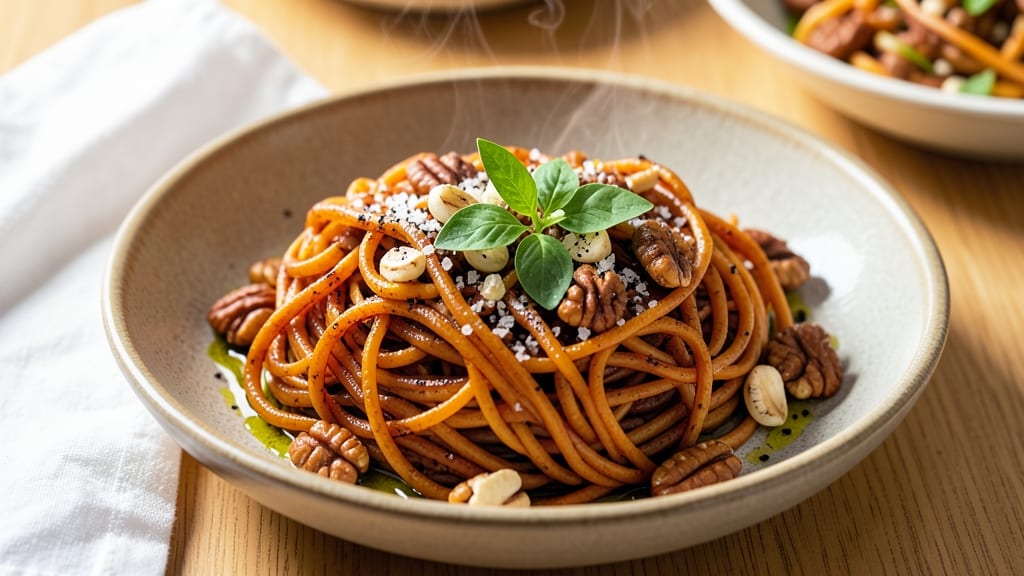
This sweet potato spaghetti recipe transforms humble root vegetables into restaurant-worthy noodles with minimal effort. The spiralized sweet potatoes roast up tender yet firm, absorbing bold flavors while maintaining their natural sweetness and vibrant color. I perfected this one-pan method after years of experimenting with alternative pasta—it's foolproof, nutritious, and ready in under 30 minutes.
The secret lies in the high-heat roasting technique that caramelizes the edges just enough to create satisfying texture while keeping the centers tender. We'll pair it with a nutty crunch element—either toasted pecans or pine nuts—to add depth and contrast.
This dish works beautifully as a vegetarian main or alongside grilled proteins, absorbing sauces like pesto, tomato-based marinara, or even a simple agave glaze.
What makes this recipe particularly satisfying is how it balances modern convenience with traditional pasta-making techniques. The spiralizer creates those familiar noodle shapes while keeping the dish light and vibrant.
The roasting process develops complex caramelized flavors that you'd expect from a long simmer in a pot of boiling water, but without the mess or waiting time.
For an extra touch of indulgence, serve with garlic bread on the side to soak up any remaining sauce. The sweetness of the potatoes pairs perfectly with savory elements, making this dish surprisingly versatile for weeknight dinners or special occasions. Let's get started on creating your perfect alternative pasta experience.
Ingredients for sweet potato spaghetti
Transform humble sweet potatoes into restaurant-quality spaghetti with these carefully chosen ingredients.
| Ingredient | Amount | Notes |
|---|---|---|
| Large Sweet Potatoes 🍠 | 2 whole | Orange-fleshed, firm variety preferred |
| Extra-Virgin Olive Oil 🫒 | ¼ cup | High quality, fruity variety |
| Kosher Salt 🧂 | 1 ½ tsp | Diamond Crystal preferred |
| Freshly Ground Black Pepper 🌶️ | ½ tsp | Coarsely cracked |
| Garlic Cloves 🧄 | 4 cloves | Minced for seasoning |
| Toasted Pecans 🥜 | ½ cup | Chopped for crunch |
| Fresh Basil Leaves 🌿 | ¼ cup | Chopped for garnish |
| Balsamic Vinegar 🍷 | 1 tbsp | For finishing drizzle |
| Vegetable Broth 💧 | ½ cup | Low-sodium preferred |
| Maple Syrup 🍁 | 1 tbsp | Grade B for depth |
| Nutritional Yeast 🧀 | 2 tbsp | For cheesy flavor |
| Lemon Zest 🍋 | 1 tsp | Brightens flavor profile |
| Red Pepper Flakes 🌶️ | ½ tsp | Optional for heat |
The sweet potatoes form the foundation—select orange-fleshed varieties like Beauregard for optimal texture and sweetness. Trader Joe's and Whole Foods carry excellent options, or look for firm, unblemished tubers at your local market. Avoid green-tinted skin, which indicates bitterness. For the nutty crunch, toasted pecans from Costco provide superior flavor and texture compared to store-brand alternatives. The pecans should be lightly toasted until fragrant but not browned, enhancing their natural oil content for that perfect crunch. Freshly ground black pepper and minced garlic elevate the dish without overpowering the sweet potatoes' natural sweetness.
No pecans? Toasted walnuts or pine nuts work beautifully as substitutes, though texture will differ slightly. The balsamic vinegar adds depth—opt for a high-quality aged balsamic from Oregon Vineyards or Giovanni Rossi for authentic flavor. When selecting nutritional yeast, choose brands like Bragg or Bob's Red Mill for the best cheesy umami notes. For extra richness, consider adding avocado oil instead of olive oil during roasting—it has a higher smoke point and neutral flavor. The maple syrup should be Grade B for its deeper caramel notes, though Grade A works in a pinch. If you prefer less sweetness, reduce to 1 teaspoon and add an extra pinch of salt to balance.
Store spiralized sweet potatoes in an airtight container in the fridge for up to 3 days, though they're best enjoyed fresh. The toasted pecans keep well in a sealed jar for 2 weeks at room temperature, while fresh basil should be wrapped in damp paper towels and refrigerated for 4-5 days. This dish reheats beautifully—simply toss with a splash of water or broth to restore moisture. For meal prep, portion into containers with a drizzle of olive oil to prevent drying. The roasted sweet potatoes freeze exceptionally well for up to 3 months, making this an ideal make-ahead option for busy weeknights.
Why You'll Love This Recipe
- One-Pot Magic: I swear by this—just spiralize, roast, and toss. No boiling, no draining, no extra pots. The sweet potatoes caramelize right on the sheet pan while you chop garlic, and by the time that’s golden, your "spaghetti" is ready.
- Garlic Kiss: That first bite of crispy edges with tender, buttery sweet potato? The garlic roasts into a nutty depth you won’t find in regular pasta. Honestly, I’ve made it plain with just olive oil and salt—still crave-worthy.
- Lunchbox Hero: Between us, this is my go-to for packed lunches. The roasted strands hold up for days (yes, even in a bento box), and it’s way more exciting than sad desk salads. Add a sprinkle of chili flakes for extra pizzazz.
- Budget Stretch: Sweet potatoes are my pantry’s secret weapon—cheaper than pasta, packed with fiber, and this method uses every bit. I’ve fed four people for under $8, and the leftovers reheat like a dream. (No sad, gummy pasta here.)
Step-by-step instructions for sweet potato spaghetti with nutty crunch
Transform humble sweet potatoes into silky spaghetti with this one-pan roasted method.
Prep and Roast the Sweet Potatoes
Preheat your oven to 425°F and position a rack in the middle position. Cut the 2 whole large sweet potatoes lengthwise into ¼-inch thick planks using a mandoline or sharp knife. You should end up with about 16-20 thin strips per potato.
Arrange the sweet potato strips in a single layer on a rimmed baking sheet, leaving ½-inch between each strip. Drizzle evenly with the 0.25 cup extra-virgin olive oil, then sprinkle with 1.5 tsp kosher salt and 0.5 tsp freshly ground black pepper. Toss gently to coat, ensuring the edges are well-seasoned.
Roast for 15 minutes until the edges begin to brown and soften slightly. Flip each strip carefully using tongs and return to the oven for another 10-12 minutes until they reach 200°F internally and are tender when pierced with a fork. The strips should look like delicate spaghetti strands with caramelized edges.
Build the Nutty Garlic Broth
While the sweet potatoes roast, heat a large skillet over medium heat. Add the 4 minced garlic cloves and sauté for 30 seconds until fragrant but not browned. Immediately add the 0.5 cup vegetable broth and 1 tbsp maple syrup, scraping up any browned bits from the pan.
Bring to a gentle simmer and let reduce by half (3-4 minutes). Stir in the 2 tbsp nutritional yeast and 1 tsp lemon zest, whisking until smooth. The mixture should thicken slightly and develop a nutty, umami-rich flavor. Remove from heat and stir in the 0.5 tsp red pepper flakes if using.
Combine and Finish with Crunch
Transfer the roasted sweet potato strips to the skillet with the garlic broth. Gently toss to coat completely, allowing the strands to absorb the flavorful liquid. Cook for 2-3 minutes until heated through and the strands begin to soften further from the residual heat.
Remove from heat and stir in the 0.5 cup toasted pecans and 0.25 cup chopped fresh basil leaves. Drizzle with the 1 tbsp balsamic vinegar and toss again. The pecans will add a satisfying crunch while the basil brightens the earthy sweet potato flavor.
Serve Immediately for Maximum Texture
Divide the sweet potato spaghetti among serving plates while still hot. The strands should be tender but hold their shape, with a slight resistance when bitten. Garnish with additional toasted pecans and chopped basil if desired.
Serve immediately to enjoy the perfect contrast of silky sweet potato strands with nutty crunch. The dish pairs beautifully with a simple arugula salad dressed with lemon vinaigrette or a dollop of whipped ricotta for added creaminess.
Pro Tips For Making Sweet Potato Spaghetti
- BOIL THEM WHOLE: Sweet potatoes cook evenly when you leave the skin on—no peeling needed. Cut them into ¼-inch-thick sticks, toss in salted boiling water, and they’ll soften in 8–10 minutes (no mushy centers). I learned this the hard way after sloshing puréed sweet potato everywhere trying to salvage overcooked chunks.
- PRESS FOR EVENNESS: After boiling, mash the sweet potatoes directly in the pot with a potato masher or fork—don’t blend. Press hard to break up lumps while keeping some texture; this mimics spaghetti’s bite. I was skeptical until I tried it: the strands hold together better than a blender’s over-smooth purée.
- SALT THE WATER LIKE THE SEA: Use 2 tablespoons kosher salt per 4 cups water—more than you’d think. The high salinity crisps the edges of the sweet potato strands when you pan-fry them later, giving that restaurant-quality texture. (Yes, even if you’re impatient like me.)
- FRY IN BATCHES: Crowding the pan turns your spaghetti into glue. Cook in 2–3 batches over medium-high heat with 1 tablespoon olive oil per batch, stirring constantly for 3–4 minutes. The oil should sizzle but not smoke—this guarantees caramelized strands, not sad, limp noodles.
Regional styles of this sweet potato spaghetti
Southern Comfort Style
In the American South, sweet potato spaghetti gets a smoky, soulful twist. Swap the garlic broth for a smoky tomato sauce made with 1 cup crushed San Marzano tomatoes, 1 tbsp smoked paprika, and ½ tsp cayenne pepper.
Roast the sweet potato strands with 1 tsp brown sugar and ½ tsp ground cumin for 20 minutes before flipping. Top with crumbled crispy bacon and chopped green onions for that classic Southern crunch. 🔥
Italian-Inspired Pesto Twist
For an authentic Italian-inspired version, replace the garlic broth with ½ cup basil pesto (store-bought or homemade). Toss the roasted sweet potato strands with ¼ cup grated Parmesan cheese and 2 tbsp pine nuts instead of pecans.
Finish with a sprinkle of freshly grated Pecorino Romano and a few sun-dried tomato slices for that Mediterranean flair. This version works beautifully with a side of garlic bread for dipping. 🌿
Mexican Street Food Fusion
Transform your sweet potato spaghetti into a Mexican street food sensation by adding 1 tbsp chili powder, ½ tsp ground coriander, and ¼ tsp cinnamon to the roasting oil. After tossing with the garlic broth, stir in ½ cup black beans and ¼ cup corn kernels for texture.
Top with avocado slices, crumbled cotija cheese, and a drizzle of crema or sour cream. Serve with lime wedges for squeezing. 🌶️
Japanese-Inspired Teriyaki
For a lighter Asian-inspired take, replace the garlic broth with a teriyaki glaze made from 3 tbsp soy sauce, 1 tbsp mirin, 1 tbsp honey, and 1 tsp grated fresh ginger.
Roast the sweet potato strands with ½ tsp sesame oil and ½ tsp white pepper for 18 minutes. Toss with 1 tbsp toasted sesame seeds and 2 tbsp chopped scallions. Garnish with sesame seeds and serve with steamed bok choy on the side. 🍜
Mediterranean Herb Crust
Give your sweet potato spaghetti a Mediterranean flair by pressing a mixture of 2 tbsp breadcrumbs, 1 tbsp chopped fresh oregano, 1 tsp dried thyme, and ½ tsp garlic powder onto the roasted strands before the final bake.
Roast for an additional 5 minutes at 400°F to crisp the crust. Toss with a lemon-garlic sauce made from 2 tbsp olive oil, 1 tbsp lemon juice, and 1 minced garlic clove. Finish with crumbled feta cheese and kalamata olives. 🌊
Nutrition facts
Frequently asked questions
Can I use regular potatoes instead of sweet potatoes?
Regular potatoes won't work as well because they lack the natural sweetness and vibrant color that makes sweet potato spaghetti special. Sweet potatoes also hold their shape better during roasting, giving you that perfect spaghetti-like texture. If you're set on using regular potatoes, try russet potatoes and roast them at a slightly lower temperature (400°F) for 10-12 minutes per side to prevent burning.
How do I get the sweet potato strands to stay tender?
The key is precise timing and temperature. Roast at 425°F for 15 minutes per side, checking internal temperature with a thermometer—it should reach 200°F but not exceed 210°F. Overcooking turns them mushy. For extra tenderness, toss the roasted strands with a splash of vegetable broth or olive oil before serving.
What's the best way to store leftover sweet potato spaghetti?
Store in an airtight container in the fridge for up to 3 days. To reheat, microwave for 45-60 seconds with a damp paper towel over the top to restore moisture. For freezing, spread strands on a tray to prevent sticking, then transfer to a freezer bag for up to 3 months. Thaw overnight in the fridge before reheating.
Can I make this dish vegan?
Skip the nutritional yeast if you prefer, and use olive oil instead of butter. For extra richness, stir in 1 tbsp tahini or 1 tsp miso paste to the garlic broth. The pecans and basil remain vegan-friendly, and you can drizzle with vegan balsamic glaze instead of regular balsamic vinegar.
Why do my sweet potato strands turn out too soft?
Over-roasting or using overly ripe sweet potatoes causes softness. Always select firm, unblemished tubers and cut them into ¼-inch thick strips for even cooking. If they're still too soft, reduce roasting time by 2-3 minutes per side. For extra structure, toss with 1 tbsp cornstarch before roasting—it helps create a slight crispness.