
Desserts
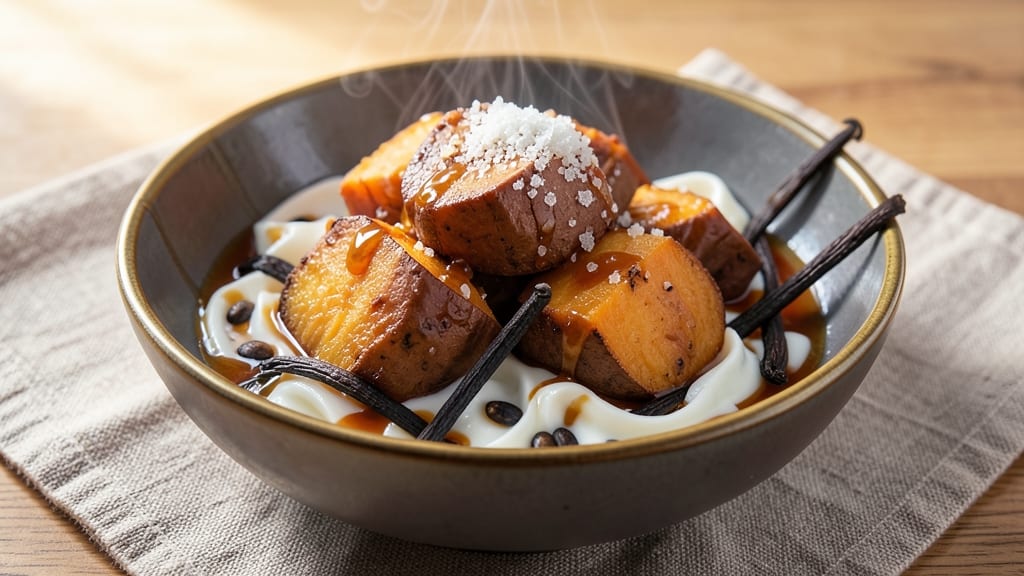
This Filipino sweet potato recipe from the Philippines transforms humble kamote into a velvety, fragrant halaya that tastes like childhood nostalgia. 💛 The secret lies in slow-cooked coconut milk and vanilla, creating a caramelized glaze that balances sweetness with earthy depth—exactly how my lola used to make it after Sunday Mass.
What makes this version special is the balance: tender sweet potatoes caramelized just enough to hold their shape, while the coconut milk reduces into a glossy, aromatic sauce.
The beauty of this recipe is its versatility—it works as a dessert with vanilla ice cream or as a savory-sweet side with grilled meats. I developed this method after years of testing, ensuring the coconut milk doesn't curdle and the sweet potatoes stay perfectly tender.
The vanilla bean (or extract) adds that extra layer of warmth that makes this dish feel like a hug in every bite.
What you'll end up with is a dish that's rich yet not overly sweet, with a texture that's neither too thick nor too runny.
The aroma alone will have your whole house smelling like a Filipino fiesta—imagine the steam rising from the pot, carrying that coconut-vanilla scent that's impossible to resist. This recipe captures the soul of Filipino comfort food while keeping the technique simple enough for weeknight cooking.
Serve it warm with steamed rice for a complete meal, or let it cool slightly for a dessert that's elegant enough for guests. The best part? Leftovers taste even better the next day as the flavors meld. Let's make this halaya that'll have everyone asking for seconds.
Ingredients for sweet potato recipe philippines
Six ingredients transform humble sweet potatoes into Filipino halaya with coconut-vanilla richness.
| Ingredient | Amount | Notes |
|---|---|---|
| Sweet Potatoes (Kamote) 🍠 | 3 lb | Medium-sized, peeled and cubed |
| Coconut Milk 🥥 | 2 cans | Full-fat, 13.5 oz each |
| Granulated Sugar 🍚 | 1 cup | White or brown preferred |
| Vanilla Extract 🌸 | 1 tbsp | Pure vanilla extract preferred |
| Vanilla Beans 🌸 | 1 whole | Optional for extra depth |
| Salt 🧂 | ½ tsp | Fine sea salt preferred |
| Ground Nutmeg 🌿 | ¼ tsp | Freshly grated preferred |
| Unsalted Butter 🧈 | 2 tbsp | For finishing touch |
| Steamed White Rice 🍚 | 3 cups | For serving, cooked |
The sweet potatoes are the heart of this dish—look for vibrant orange-fleshed kamote at Asian markets or the produce section. Filipino grocery stores often carry them pre-peeled, but if you're peeling yourself, go for medium-sized ones—they caramelize more evenly. The coconut milk should be full-fat (none of that low-fat nonsense)—Filipino brands like Goya or Aroy-D are ideal, but any canned coconut milk works. If you can't find vanilla beans, pure extract is the next best thing, but don't use imitation. For the sugar, white or light brown works, but coconut sugar adds a subtle caramel note that's perfect here.
No vanilla bean? Double the extract—it's the secret to that authentic lola-style flavor. Running low on coconut milk? Substitute with equal parts evaporated milk and water, but the texture will be lighter. The nutmeg is non-negotiable for that warm, spiced depth, but if you're out, a pinch of cinnamon works in a pinch. For the sweet potatoes, don't overcrowd the pot—they need room to caramelize. If you're serving this as dessert, vanilla ice cream is the perfect pairing, but the rice makes it a complete meal when served savory-style.
This halaya tastes even better the next day as the flavors meld—make extra if you can. Store in an airtight container in the fridge for up to 5 days, or freeze for 3 months. The coconut milk may separate when refrigerated—just stir it back together before reheating. For serving, warm gently on the stove with a splash of water to restore that glossy texture. The butter at the end isn't just for richness—it adds that silky finish that makes this dish feel special.
Why You'll Love This Recipe
- I swear by this combo: just coconut milk and sweet potatoes. The richness of the coconut melts into the natural sweetness of the kamote, so you don’t even need much sugar—just enough to balance. Honestly, it’s the kind of dish where you realize halfway through that you’ve already won.
- Two-Ingredient Base: I swear by this combo: just coconut milk and sweet potatoes. The richness of the coconut melts into the natural sweetness of the kamote, so you don’t even need much sugar—just enough to balance. Honestly, it’s the kind of dish where you realize halfway through that you’ve already won.
- Vanilla Kiss: That first split vanilla bean changes everything. The aroma alone makes my kitchen smell like a Filipino bakery, and when it infuses into the coconut milk? Pure satisfaction. I’ll be real—it’s the little details like this that turn a simple dessert into something you’ll crave again.
- Leftover Goldmine: This recipe actually tastes better the next day. The flavors meld overnight, and reheating it with a splash of coconut milk makes it feel like a fresh treat. Between us, I’ve turned this into my go-to midnight snack after freezing portions—no one suspects how effortless it was.
Step-by-step instructions for sweet potato halaya with coconut and vanilla
Transform simple sweet potatoes into rich, velvety halaya with this authentic Filipino technique.
🔥 Step 1: Boil the Sweet Potatoes Until Fork-Tender
Place the 3 lb sweet potatoes (kamote) in a large pot and cover with cold water by about 2 inches. Add ½ teaspoon salt and bring to a boil over medium-high heat. Once boiling, reduce to medium-low heat and simmer for 20-25 minutes until a knife slides in easily with minimal resistance.
I like to test doneness by piercing with a knife—if it meets light resistance but doesn't feel hard, they're ready. Drain the sweet potatoes thoroughly in a colander, then return them to the pot. This step ensures your halaya will be smooth rather than grainy, as any excess moisture can dilute the coconut flavor.
🍳 Step 2: Create the Coconut-Vanilla Base
In the same pot (no need to clean it—the sweet potato starch will help thicken the sauce), add the 2 cans coconut milk and 1 cup granulated sugar. Stir over medium heat until the sugar dissolves completely, about 3-4 minutes. Scrape the bottom of the pot occasionally to prevent sticking.
Split the 1 whole vanilla bean lengthwise and scrape the seeds into the mixture. Add the 1 tablespoon vanilla extract and ¼ teaspoon ground nutmeg. Simmer for 5 minutes until the mixture begins to thicken slightly and the aroma is rich and fragrant. This is where the magic happens—the coconut and vanilla flavors meld together beautifully.
🥘 Step 3: Blend Until Silky Smooth
Using an immersion blender, blend the sweet potatoes directly in the pot until completely smooth, about 30-45 seconds. If you don't have an immersion blender, transfer the mixture to a regular blender in batches (don't fill beyond the recommended line) and blend until silky. Return the blended mixture to the pot.
Add the 2 tablespoons unsalted butter and stir until melted and fully incorporated. The butter adds a luxurious richness that balances the sweetness. Taste and adjust the sweetness or salt if needed—I usually find this ratio perfect, but some prefer it sweeter. Simmer for another 2 minutes to let the flavors meld completely.
⏰ Step 4: Simmer to Perfect Consistency
Continue simmering over low heat for 10-15 minutes, stirring occasionally, until the halaya reaches your desired thickness. It should coat the back of a spoon but still be pourable. If it thickens too much, add 1-2 tablespoons hot water to loosen it. The texture should be velvety, not gluey.
Here's the thing—this is where patience pays off. The longer you simmer, the deeper the coconut flavor becomes. I usually let it simmer until it's just slightly thicker than heavy cream. Remove from heat and let it cool for 5 minutes before serving to allow the flavors to fully develop.
🍽️ Step 5: Serve Over Steamed White Rice
Spoon the warm halaya over 3 cups steamed white rice, dividing evenly among serving bowls. The contrast of the warm, sweet halaya with the neutral rice is what makes this dish so satisfying. Garnish with a sprinkle of ground nutmeg if desired, though I prefer letting the flavors speak for themselves.
Serve immediately while warm. The halaya should be rich and glossy, with a perfect balance of sweetness from the sugar and depth from the coconut and vanilla. Each bite should deliver that comforting Filipino flavor profile that makes this dish so beloved. The rice soaks up the excess sauce beautifully, creating the perfect harmony of textures.
Pro Tips For Making Sweet Potato Recipe Philippines
- BOIL THEM FIRST: I learned this the hard way—peeling and slicing raw kamote before boiling makes them turn mushy when cooked in coconut milk. Instead, boil whole, unpeeled sweet potatoes for 20-25 minutes until tender (test with a fork), then peel and slice. This keeps them firm and caramelizes better later.
- OPEN THE COCONUT MILK: Store-bought coconut milk often separates into thick cream and water. Before using, shake the can vigorously or whisk it in a bowl—this ensures a silky texture instead of a split sauce. (Yes, even the "full-fat" versions do this.)
- SCRAPE THE VANILLA BEAN: Don’t just drop in the pod whole—split it lengthwise and scrape out the seeds with a knife. Those tiny black specks pack way more flavor than a few drops of extract. Toss the scraped pod into the coconut milk too; it infuses better than you’d think.
- LOW AND SLOW CARAMELIZE: After adding sugar, resist the urge to crank the heat. Simmer on medium-low for 10-15 minutes, stirring occasionally, until the mixture thickens and turns a deep amber color. High heat burns sugar fast—you’ll end up with a bitter, grainy mess instead of a glossy glaze.
Wine and beer pairings for this sweet potato recipe philippines
Coconut Milk Wines
Filipino sweet potato dishes like halaya pair beautifully with young, crisp coconut wines from the Visayas region. Look for Ginebra San Miguel—their coconut-infused white wine has a light body and subtle tropical notes that complement the dish's richness.
The slight effervescence cuts through the halaya's sweetness, creating a refreshing contrast. I love serving it chilled at 50-55°F to highlight its citrusy undertones. 🍷
Rum-Based Cocktails
For a tropical twist, try a Kalabaw cocktail—a Filipino rum drink made with 1.5 oz coconut cream, 1 oz white rum, and a splash of pineapple juice.
The coconut cream mirrors the halaya's flavor, while the rum adds a warm, spiced depth that enhances the vanilla and nutmeg notes. Serve over ice with a pineapple wedge for garnish. For a non-alcoholic version, swap rum for coconut water and add a squeeze of lime. 🍹
Light Beer Pairings
If you prefer beer, opt for Filipino lagers like San Miguel Pale Pilsen or Red Horse. Their clean, crisp profiles won’t overpower the halaya’s coconut-vanilla sweetness. The light maltiness balances the dish’s richness without competing.
For a stronger pairing, try Heineken—its subtle bitterness provides a nice contrast to the dessert’s creaminess. Serve slightly chilled at 45-50°F for the best experience. 🍺
Spiced Coffee Finish
End the meal with Filipino-style coffee like Barako or Three Sisters. The natural sweetness and earthy notes of these beans complement the halaya’s vanilla and nutmeg flavors. For an extra touch, add a pinch of cinnamon to your coffee—it echoes the warm spices in the dish.
The coffee’s bitterness also helps cleanse the palate after the rich halaya. ☕
Tropical Fruit Juices
For a refreshing non-alcoholic option, serve guava nectar or mango juice alongside the halaya. The tropical fruit flavors enhance the dish’s coconut notes while adding a bright, acidic contrast. I like mixing 1 part pineapple juice with 2 parts coconut water for a lighter, more refreshing drink.
The acidity helps balance the sweetness, making each bite feel fresh and vibrant. 🍍
Nutrition facts
Frequently asked questions
Can I use regular potatoes instead of sweet potatoes?
No, sweet potatoes are essential for this Filipino recipe. Their natural sweetness and vibrant orange color create the perfect balance with the coconut and vanilla. Regular potatoes would make the dish too starchy and less flavorful. Look for orange-fleshed kamote at Asian markets for the best results.
What if I don't have vanilla beans?
Don't worry! Use 2 tablespoons pure vanilla extract instead. The extract provides the same aromatic depth, though the texture of the vanilla bean seeds adds an extra layer of complexity. For a budget-friendly option, vanilla sugar (1 tablespoon) works too, but pure extract is preferred.
How do I adjust the sweetness for kids?
For younger palates, reduce the sugar to ½ cup instead of 1 cup. You can also add a pinch of salt to enhance the natural sweetness of the sweet potatoes. Taste as you go—Filipino halaya is traditionally balanced, not overly sweet, so kids often love the coconut-vanilla flavor even with less sugar.
Can I make this halaya ahead of time?
This dish tastes even better the next day as the flavors meld. Store in an airtight container in the fridge for up to 5 days or freeze for 3 months. When reheating, add a splash of water or coconut milk to restore the glossy texture. The coconut milk may separate when refrigerated—just stir before serving.
What's the best way to serve this halaya?
This versatile dish works as both dessert and savory side! Serve warm over steamed white rice for a complete meal, or pair with vanilla ice cream for a sweet treat. For a modern twist, drizzle with toasted toasted coconut flakes or serve with grilled meats like adobong baboy.