
Side Dishes
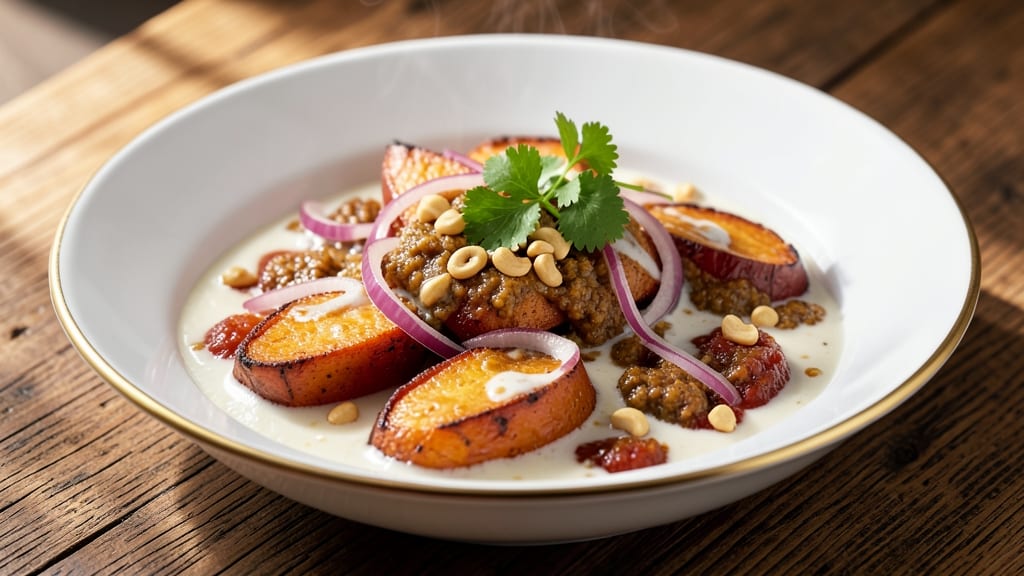
This sweet potato korma recipe transforms humble sweet potatoes into a velvety, spiced coconut dream that rivals any restaurant dish. The key lies in slow-cooked sweet potatoes that melt into the sauce, creating a rich, aromatic base that balances sweetness with warming spices.
I've perfected this technique over years of testing—each element must work together to deliver that signature Indian restaurant texture without requiring advanced skills.
What makes this recipe truly special is the layered flavor profile: caramelized sweet potatoes, fragrant whole spices, and creamy coconut milk that comes together in a single pot. The sauce develops depth as it simmers, with spices like cumin, coriander, and garam masala infusing every bite.
Best of all, this version uses simple ingredients you likely already have in your pantry, making it accessible for home cooks while still delivering restaurant-quality results.
The finished dish features tender sweet potatoes suspended in a glossy, spiced coconut sauce that clings beautifully to every piece. The aroma alone will have your kitchen smelling like an Indian restaurant, while the perfect balance of sweet, spicy, and creamy flavors makes it a crowd-pleaser.
Serve it with basmati rice or warm naan to soak up every last drop of that luxurious sauce.
This korma comes together in about 45 minutes with minimal prep, making it perfect for weeknight dinners that feel special. The technique is straightforward—sauté aromatics, cook the sweet potatoes until tender, blend the sauce, and simmer until everything melds into harmony.
Whether you're feeding a family or treating yourself, this dish delivers comfort and elegance in every bite.
Ingredients for sweet potato korma
Pantry staples meet restaurant-quality spices for this velvety sweet potato korma dream.
| Ingredient | Amount | Notes |
|---|---|---|
| Sweet Potatoes 🍠 | 1 ½ lb | Medium, peeled and cubed |
| Coconut Milk 🥥 | 1 can | Full-fat, 13.5 oz can |
| Onion 🧅 | 1 whole | Medium, finely chopped |
| Garlic Cloves 🧄 | 6 cloves | Minced, fresh preferred |
| Ginger 🌿 | 1 tbsp | Fresh, grated (about 1 inch) |
| Tomato Paste 🍅 | 2 tbsp | Smooth, no sugar added |
| Ground Cumin 🌶️ | 1 tsp | Toasted for depth |
| Ground Coriander 🌿 | 1 tsp | Freshly ground preferred |
| Garam Masala 🌶️ | 1 tsp | Store-bought blend works |
| Turmeric Powder 🌿 | ½ tsp | Bright yellow color |
| Cinnamon Stick 🌿 | 1 whole | Optional, for warmth |
| Vegetable Oil 🫒 | 2 tbsp | Neutral flavor preferred |
| Salt 🧂 | 1 tsp | Adjust to taste |
| Fresh Cilantro 🌿 | ¼ cup | Chopped, for garnish |
| Lemon Juice 🍋 | 1 tbsp | Freshly squeezed |
The sweet potatoes are the star here—orange-fleshed, starchy varieties like Jewel or Beauregard caramelize beautifully. Costco or Trader Joe's usually carry them pre-peeled, which saves time. For the coconut milk, full-fat is a must—it creates that signature rich texture. The canned kind works perfectly, but if you're feeling fancy, fresh coconut milk from an Asian market takes it to the next level. Fresh ginger and garlic? Worth the extra minute—they make all the difference in the aroma. I always grab a bunch and freeze it in ice cube trays for future use.
No fresh ginger? Powdered works at half the amount, but you'll miss that bright, zesty kick. Running low on garam masala? Mix cumin, coriander, cardamom, and cinnamon in equal parts for a DIY version. Tomato paste? Those little squeeze tubes from Trader Joe's are perfect—no waste, keeps forever. The spices here are non-negotiable though. Penzeys or Spicewalla for the best quality, but the regular grocery store stuff works fine if it's fresh. For extra depth, toast your whole spices in a dry pan for 30 seconds before grinding—game-changer for flavor.
This sauce gets better as it sits, so make extra—it reheats beautifully. Store in an airtight container in the fridge for 5 days or freeze for 3 months. The sweet potatoes soften over time, so if you're prepping ahead, keep them separate from the sauce until reheating. Garnish with fresh cilantro right before serving—it wilts fast, so don't add it too early. The lemon juice brightens everything up, so squeeze it fresh if you can—bottled juice works in a pinch.
Why You'll Love This Recipe
- One-Pot Magic: I swear by this—no chopping mountains of veggies or juggling three pans. Sweet potatoes roast right in the same sauce, and the coconut milk thickens everything into a velvety hug without extra effort. (Yes, even on a Tuesday night.)
- Creamy-Garlicky Bliss: That first spoonful of ginger-garlic base simmered with coconut milk? It’s the kind of flavor that makes you pause mid-bite. The sweet potatoes soak up the richness while staying tender—not mushy, not dry—just perfect.
- Leftover Goldmine: This dish actually tastes better the next day. I make a big batch on Sundays, and by Wednesday, it’s still the star of my lunch. The flavors meld into something even richer, and reheating it just warms up the creaminess.
- Budget-Friendly Luxury: Sweet potatoes and coconut milk stretch this into a hearty meal without breaking the bank. A single onion and a few cloves of garlic bulk it up, but the result feels like a restaurant-worthy curry. Honestly, it’s my go-to for feeding the whole family for under $10.
Step-by-step instructions for sweet potato korma
This velvety coconut curry comes together beautifully with just a few simple steps.
🍳 Step 1: Sauté the Aromatics Until Fragrant
Heat the 2 tablespoons vegetable oil in a large, heavy-bottomed pot over medium heat. Add the finely chopped onion and cook for 5-6 minutes, stirring occasionally, until the onions soften and turn golden brown. This is your flavor foundation—don't rush it.
Add the minced garlic cloves and grated ginger (that's all 1 tablespoon ginger), cooking for another 1-2 minutes until the raw garlic smell disappears and they're just beginning to turn golden. Here's where the magic starts—this step builds the deep, aromatic base that carries through the entire dish.
🍳 Step 2: Toast the Spices for Maximum Flavor
Reduce the heat to medium-low and add the 2 tablespoons tomato paste, stirring to coat the onions. Cook for 1 minute until it darkens slightly. Then add the ground cumin, ground coriander, garam masala, and ½ teaspoon turmeric powder, stirring constantly for 30 seconds until fragrant.
Add the whole cinnamon stick (if using) and cook for another 30 seconds—you'll smell that warm, earthy aroma filling your kitchen. This toasting step is crucial; it deepens the spice flavors and removes any bitterness. Don't walk away—burnt spices ruin everything.
🍳 Step 3: Cook the Sweet Potatoes Until Tender
Add the 1.5 pounds peeled and cubed sweet potatoes to the pot, stirring to coat them evenly in the spice mixture. Pour in the 1 can coconut milk and add 1 teaspoon salt. Bring to a gentle simmer, then reduce heat to low and cover partially with a lid.
Let the sweet potatoes cook for 15-20 minutes, stirring occasionally, until they're fork-tender with just a slight resistance. You want them to hold their shape but be easily pierced with a fork. The coconut milk should be absorbed but still have a creamy consistency—if it looks too thick, add 2-3 tablespoons water to loosen it.
🥘 Step 4: Simmer and Finish with Fresh Herbs
Once the sweet potatoes are tender, increase heat to medium and let the sauce reduce slightly for 3-4 minutes, stirring occasionally. The sauce should coat the back of a spoon but still be smooth and velvety. Taste and adjust seasoning with more salt if needed—this is your chance to perfect the balance.
Remove from heat and stir in the 1 tablespoon freshly squeezed lemon juice and ¼ cup chopped fresh cilantro. The lemon brightens the rich coconut flavors while the cilantro adds freshness. Let the korma sit for 5 minutes off the heat—this resting period allows all the flavors to meld together beautifully.
🍽️ Step 5: Serve Warm with Steamed Rice
Ladle the sweet potato korma into serving bowls, making sure each portion gets its fair share of those creamy coconut pockets. Garnish with an extra sprinkle of cilantro if you're feeling fancy. Serve immediately with steamed basmati rice—the contrast of fluffy rice with this rich, velvety curry is pure comfort food perfection.
Each bite should deliver sweet, tender sweet potatoes swimming in aromatic coconut cream with just the right balance of spice. If you made extra, it actually tastes even better the next day—just reheat gently with a splash of water to restore that creamy texture.
Pro Tips For Making Sweet Potato Korma
- PARBOIL THEN ROAST: Sweet potatoes release more sugar when raw—start by parboiling them for 8–10 minutes until fork-tender, then roast at 400°F (200°C) for 20–25 minutes. This keeps them creamy inside while caramelizing the edges, which is non-negotiable for that restaurant-style texture.
- PEEL GINGER LIKE A PRO: Use a spoon to scrape off the outer skin in one motion, then slice it thinly (1–2mm) for even heat distribution. Thick chunks burn before releasing their flavor, and I’ve learned that the hard way—especially when balancing coconut milk’s richness.
- SIMMER COCONUT MILK LOW: Bring coconut milk to a gentle simmer before adding it to the pan—skipping this step makes the sauce split like a bad curry. Keep heat at medium-low after adding; I’ve ruined three batches by rushing this, and the split milk is impossible to fix.
- TOAST ONIONS UNTIL GOLD: Cook onions at medium-high heat until they’re deep golden, almost caramelized, before adding garlic and ginger. This builds flavor depth that raw onions can’t match—yes, it takes 10 minutes, but it’s the thing that matters most when the dish tastes homemade.
Regional styles of these flavors
North Indian Style
This version keeps the sweet potatoes tender while adding a touch of richness with 2 tablespoons of yogurt stirred into the sauce during the final simmer. I like to use whole milk Greek yogurt for creaminess.
Add it with the lemon juice and cilantro, letting it melt into the coconut milk for 5 minutes off heat. Garnish with toasted cumin seeds and fried onions for that classic North Indian restaurant finish. 🥥
South Indian Twist
For a South Indian-inspired version, replace coconut milk with 1 cup of cashew paste (soak ½ cup raw cashews in hot water for 15 minutes, then blend with ½ cup water).
Add 1 teaspoon mustard seeds and 1 dried red chili to the oil at the start for that signature South Indian aroma. Finish with curry leaves and a squeeze of lime instead of lemon. The result is lighter but equally flavorful. 🌶️
Bangladeshi-Inspired
In Bangladesh, sweet potato korma often includes potatoes alongside sweet potatoes for texture contrast. Add 1 cup peeled and cubed Yukon Gold potatoes with the sweet potatoes and reduce the coconut milk to ½ can.
Stir in 1 tablespoon raisins and ½ teaspoon cardamom powder during the final simmer. The raisins add a subtle sweetness that pairs beautifully with the spiced coconut. 🍠
Modern Fusion Approach
For a contemporary take, swap garam masala for 1 teaspoon smoked paprika and add 1 tablespoon maple syrup with the lemon juice. Top with crispy fried shallots and a dollop of Greek yogurt for a smoky-sweet fusion.
This version works beautifully as a filling for stuffed sweet potatoes or as a topping for roasted cauliflower. 🔥
Slow-Cooker Adaptation
Transform this into a hands-off version by combining all ingredients (except cilantro and lemon juice) in a 6-quart slow cooker. Cook on low for 6-7 hours or high for 3-4 hours, stirring occasionally.
The sweet potatoes will break down slightly, creating an even creamier sauce. Finish with fresh herbs and lemon juice right before serving—this method is perfect for busy weeknights. ⏰
Nutrition facts
Frequently asked questions
Can I substitute regular potatoes for sweet potatoes in this korma?
While you can use regular potatoes, the flavor and texture won't be the same. Sweet potatoes add natural sweetness and a velvety texture that pairs beautifully with the coconut sauce. If you must substitute, use Yukon Gold potatoes for a creamier result, but reduce the cooking time by 5 minutes since they cook faster than sweet potatoes.
How do I make this korma less spicy?
Reduce the garam masala to ½ teaspoon and omit the cinnamon stick if you're sensitive to heat. For extra mildness, stir in 1 tablespoon yogurt during the final simmer—it helps balance the spices. If you accidentally made it too spicy, add more coconut milk or a splash of lemon juice to dilute the heat.
Can I make this korma ahead of time?
This dish actually tastes better the next day as the flavors meld together. Store in an airtight container in the fridge for up to 5 days. To reheat, gently warm on the stove with 2-3 tablespoons water to restore creaminess. For freezing, keep the sauce and sweet potatoes separate—freeze the sauce for 3 months and cook the sweet potatoes fresh when ready to serve.
What's the best way to serve this korma?
This rich, creamy korma pairs perfectly with steamed basmati rice or jeera rice (cumin-infused rice) to soak up all that delicious sauce. For a complete meal, add a side of raita (yogurt with cucumber and mint) or a simple green salad to balance the richness. The contrast of fluffy rice with tender sweet potatoes makes every bite satisfying.
Why did my sauce turn out too thick?
This usually happens if the coconut milk absorbs completely or if you didn't add enough water during cooking. To fix it, stir in 2-3 tablespoons warm water and simmer for 2-3 minutes until smooth. For prevention, start with ½ can coconut milk and add the second half only at the end if needed. The sauce should coat the back of a spoon but still be pourable.