
Side Dishes
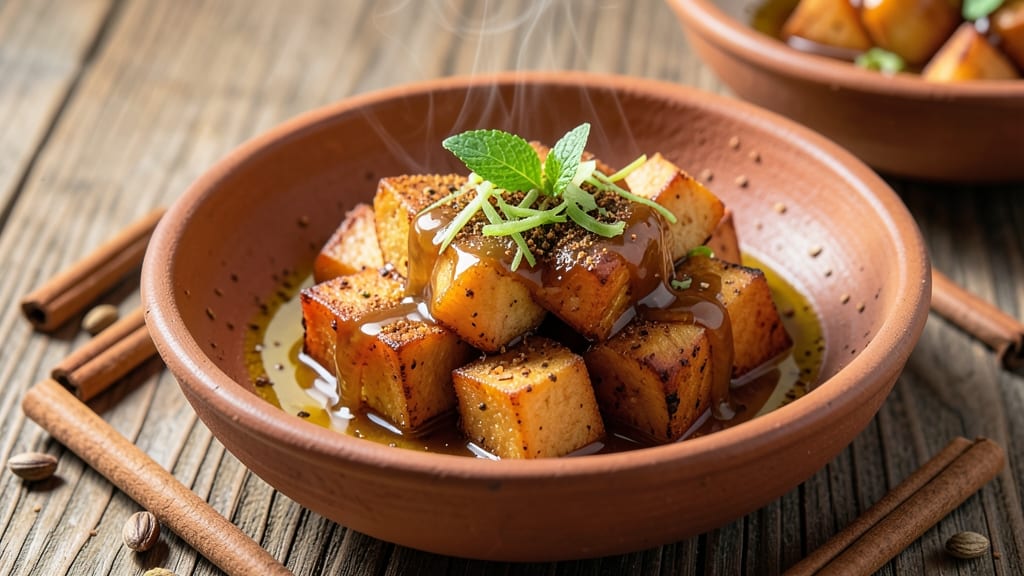
This sweet potato jaggery recipe transforms humble roots into a caramelized masterpiece with a crunchy jaggery crust that balances earthy sweetness and spiced warmth. The jaggery—India's unrefined palm sugar—adds deep caramel notes while cinnamon and cardamom elevate every bite into something restaurant-worthy.
I developed this after years of perfecting the balance between tender sweet potatoes and jaggery's intense sweetness without overpowering the dish.
The secret lies in the dual-roasting technique: first caramelizing the jaggery with spices until it forms a glossy, crackly crust, then gently cooking the sweet potatoes until fork-tender.
This method creates three distinct textures—crispy crust, creamy interior, and caramelized edges—while keeping the dish naturally vegetarian and packed with warming spices. The result is a side dish that stands alone or complements grilled meats and rice equally well.
What makes this recipe truly special is how the jaggery transforms from a simple sweetener into the star of the dish—its caramelized bits cling to the sweet potatoes like edible confetti.
The spices infuse deeply during the roasting process, creating layers of flavor that develop even more as it cools. This isn't just another sweet potato recipe; it's a textural and aromatic experience that will have everyone asking for seconds.
Perfect for holiday tables, vegetarian feasts, or as a centerpiece side dish that steals the show. The recipe scales beautifully for crowds while maintaining its restaurant-quality balance of sweet, spicy, and caramelized notes. Ready to elevate your sweet potato game? Let's get started with the ingredients you'll need.
Ingredients for sweet potato jaggery
Unrefined jaggery and warming spices transform simple sweet potatoes into a restaurant-worthy vegetarian centerpiece.
| Ingredient | Amount | Notes |
|---|---|---|
| Sweet Potatoes 🍠 | 1 ½ lb | Medium-sized, peeled and cubed |
| Jaggery 🍯 | ¾ cup | Unrefined palm sugar, finely chopped |
| Ground Cinnamon 🌿 | 1 tsp | Ceylon cinnamon preferred |
| Ground Cardamom 🌶️ | ½ tsp | Freshly ground for potency |
| Fresh Ginger 🧡 | 1 tbsp | Finely grated, aromatic |
| Coconut Oil 🫒 | 2 tbsp | Unrefined, for roasting |
| Coconut Milk 🥥 | ¼ cup | Full-fat for richness |
| Salt 🧂 | ½ tsp | Diamond Crystal kosher |
| Black Pepper 🌶️ | ¼ tsp | Freshly cracked |
| Lemon Juice 🍋 | 1 tbsp | Freshly squeezed |
| Ghee 🧈 | 1 tbsp | Clarified butter for flavor |
| Toasted Coconut Flakes 🥥 | 2 tbsp | For garnish |
The jaggery is the heart of this dish—look for dark, unrefined blocks at Indian grocery stores like Patel Brothers or Apna Bazaar. The difference between jaggery and brown sugar is dramatic: jaggery has a deeper caramelized flavor with subtle molasses notes. For the cinnamon, Ceylon cinnamon is ideal, but regular ground works in a pinch. Cardamom pods can be lightly toasted and ground for an extra aromatic punch. Fresh ginger is non-negotiable here—it's what balances the sweetness and adds that bright, zesty kick. If you can't find Ceylon cinnamon, Penzeys Spices carries excellent options.
No jaggery? Muscovado sugar is the closest substitute, but reduce by 15% since it's less concentrated. Running out of cardamom? Nutmeg at half the amount gives a similar warmth. The coconut milk can be swapped for cashew cream if you prefer a richer texture. For the ginger, if you only have powdered, reduce to one-third the amount—it's much more potent. The ghee adds incredible depth; if you're avoiding dairy, vegan ghee works perfectly. Toasting the coconut flakes in a dry pan for 2 minutes enhances their flavor dramatically—don't skip this step if you want that extra crunch.
Jaggery and spices can be pre-mixed up to 3 days ahead and stored in an airtight container. Sweet potatoes should be peeled and cubed the same day for best texture. The finished dish keeps well for 4-5 days in the fridge, though the crust loses its crispiness after 2 days. For serving, I recommend reheating in a 350°F oven for 10 minutes to restore that caramelized sheen. The coconut flakes should be toasted fresh before serving—they lose their crunch when stored.
Why You'll Love This Recipe
- One-Pot Magic: I swear by this recipe when I’m too tired to wash a million bowls—just peel, chop, and simmer. The jaggery caramelizes right in the pot, so no extra pans or fuss.
- Spiced Warmth: That first bite of tender sweet potato with jaggery’s deep, molasses-like sweetness and a whisper of cinnamon and cardamom? It’s like dessert sneaking into dinner. (Yes, even on a Tuesday night.)
- Snack or Side: I keep this in the fridge for quick bites—warm or cold, it’s perfect. My kids grab it straight from the pot, and I serve it at gatherings when I need something effortlessly impressive.
- Budget Comfort: Sweet potatoes and jaggery stretch my grocery budget without sacrificing flavor. A single batch feeds my family for days, and the spices last for months. Practical? Absolutely. Delicious? Ridiculously.
Step-by-step instructions for spiced caramelized sweet potatoes
Here's how to transform simple sweet potatoes into a rich, aromatic dish with a jaggery crust that balances sweetness and spice perfectly.
Roast the Sweet Potatoes Until Tender
Preheat your oven to 400°F and position a rack in the middle position. Line a large baking sheet with parchment paper for easy cleanup. Toss the 1.5 lb sweet potatoes (peeled and cubed) with 2 tablespoons coconut oil, 1 teaspoon ground cinnamon, ½ teaspoon ground cardamom, ½ teaspoon salt, and ¼ teaspoon black pepper until evenly coated.
Spread the sweet potatoes in a single layer on the prepared baking sheet, leaving space between each piece for even browning. Roast for 25-30 minutes, stirring once halfway through, until the edges are golden brown and a knife slides in easily. You want them tender but not mushy—this ensures they hold their shape when combined with the jaggery later.
Create the Jaggery Caramel
While the sweet potatoes roast, place ¾ cup jaggery in a heavy-bottomed skillet over medium-low heat. Stir occasionally as it melts, breaking up any clumps with a silicone spatula. Once fully melted, add 1 tablespoon fresh ginger and 1 tablespoon lemon juice, stirring for 2-3 minutes until fragrant and slightly thickened.
Remove the skillet from heat and let the jaggery mixture cool slightly for 5 minutes. This prevents the sweet potatoes from steaming when combined. The jaggery should be thick enough to coat the back of a spoon but still pourable. If it sets too quickly, warm it briefly over low heat to restore its consistency.
Combine and Finish with Coconut Milk
Once the sweet potatoes are tender, transfer them to a large mixing bowl. Pour the cooled jaggery mixture over the hot sweet potatoes, tossing gently to coat evenly. Let the mixture sit for 1 minute to allow the jaggery to slightly set on the edges—this creates the signature crunchy crust.
Stir in ¼ cup coconut milk and 1 tablespoon ghee, tossing until the sweet potatoes are fully coated and the jaggery has melted into a glossy, sticky glaze. The texture should be moist but not soupy, with visible jaggery crystals clinging to the edges. If the mixture appears too dry, add 1 teaspoon coconut milk at a time until balanced.
Garnish and Serve Immediately
Transfer the spiced sweet potatoes to a serving platter and sprinkle evenly with 2 tablespoons toasted coconut flakes. The contrast between the warm, caramelized sweet potatoes and the cool, crunchy coconut flakes adds a delightful textural element. Serve immediately while the jaggery crust is still slightly sticky and the coconut flakes are fresh.
For best results, serve this dish warm with a side of yogurt or a sprinkle of fresh mint. The jaggery crust should be slightly crisp on the edges while remaining tender in the center, with the aromatic spices infusing every bite. The lemon juice brightens the sweetness, while the ghee adds a luxurious richness that ties everything together.
Pro Tips For Making Sweet Potato Jaggery
- CUT SWEET POTATOES EVENLY: Jaggery caramelizes best when the sweet potatoes are the same size—think 1-inch cubes, not random chunks. I learned this the hard way when one batch turned mushy while others stayed firm. A sharp knife and steady hand save you from uneven cooking and a sad, watery dish.
- MASH JAGGERY FIRST: Skip the jaggery chunks—grate or finely chop it before cooking. This dissolves faster and blends smoother into the sweet potatoes, avoiding that grainy texture that ruins the whole thing. (Yes, even if you’re impatient like me, wait for it to melt fully.)
- LOW AND SLOW WINS: Medium-low heat is your friend here. Too hot, and the jaggery burns before the sweet potatoes soften. Too low, and you’ll be staring at the pot for an hour. I aim for tiny bubbles at the edges—consistent, not frantic.
- GINGER NEEDS A GRATE: Fresh ginger loses its punch when chopped—grate it fine for this dish. The tiny particles infuse faster and leave a bright, zesty kick instead of just a vague background flavor. (Pro move: Zest a little extra and save it for garnish—trust me.)
Troubleshooting this dish
Jaggery Crust Too Hard
If your jaggery crust comes out rock-hard instead of just crispy, the issue is likely overcooking or insufficient coconut milk. The jaggery needs to be thick but pourable when combined with the sweet potatoes—think honey-like consistency.
If it's too thick, warm it gently over low heat while stirring until it loosens. Add 1 teaspoon coconut milk at a time until it reaches the right texture. Also, ensure you're using freshly toasted coconut flakes—they should be golden and crunchy, not stale. 💡
Sweet Potatoes Too Dry
Dry sweet potatoes usually mean they were over-roasted or the jaggery mixture wasn't balanced with enough coconut milk. For the roast, pull them out when they're tender but still firm—a knife should slide in easily, but they shouldn't collapse.
If they're dry after combining, stir in extra coconut milk (1 tsp at a time) until the texture is moist but not soggy. The ghee also helps bind the mixture, so don’t skip it—it adds richness and prevents dryness. ✨
Jaggery Not Melting Properly
Jaggery can be stubborn if it's not chopped finely enough or if the heat isn't consistent. Use a heavy-bottomed skillet (like Le Creuset) and keep the heat at medium-low. Break the jaggery into pea-sized pieces before melting—this speeds up the process.
If it starts to burn, remove from heat immediately and stir in 1 tsp coconut milk to cool it down. Never rush this step; patience ensures a smooth, caramelized finish. 🔥
Spices Overpowering Sweetness
The cinnamon and cardamom should enhance, not dominate, the sweetness. If your dish tastes too spicy, reduce the cinnamon to ½ teaspoon and cardamom to ¼ teaspoon. The jaggery’s natural sweetness should shine, so balance is key.
Taste the jaggery mixture before combining—it should be rich and caramel-like, not bitter. A splash of lemon juice (1 tbsp) brightens the flavors and cuts through any harshness. 🌶️
Texture Too Soggy
Soggy texture happens when too much coconut milk is added or the sweet potatoes aren’t fully tender before combining. Start with ¼ cup coconut milk and adjust only if needed. Also, ensure the sweet potatoes are roasted until fork-tender—they should hold their shape but yield slightly.
If the mixture still feels too wet, spread it on a baking sheet and bake at 350°F for 5-7 minutes to crisp up the edges. 💫
Jaggery Crust Not Sticking
A jaggery crust that won’t stick usually means the sweet potatoes weren’t hot enough when combined. Pour the jaggery mixture over hot, just-roasted sweet potatoes—the residual heat helps it set quickly.
If it’s still not sticking, toss the sweet potatoes with 1 tsp ghee before adding the jaggery. The fat acts as a binder, ensuring the crust clings beautifully. 🍯
Nutrition facts
Frequently asked questions
Can I use brown sugar instead of jaggery?
While jaggery gives a unique caramelized depth, you can substitute with muscovado sugar (reduce by 15% since it's less concentrated). Regular brown sugar lacks jaggery's molasses notes and may make the crust too hard. For best results, combine ½ cup brown sugar + ¼ cup honey to mimic jaggery's texture and flavor.
How do I store leftovers?
Store in an airtight container for up to 4-5 days in the fridge. Reheat at 350°F for 10 minutes to restore crispiness. The jaggery crust softens when cold but crisps up again when warmed. For longer storage, freeze for up to 3 months—thaw overnight in the fridge before reheating.
What if I don't have Ceylon cinnamon?
Regular ground cinnamon works, but reduce to ½ teaspoon to avoid overpowering. For extra warmth, add ¼ teaspoon nutmeg. The key is balance—the spices should complement the jaggery's sweetness, not compete. Taste the jaggery mixture before combining with sweet potatoes to adjust.
Can I make this vegan?
Yes! Replace ghee with vegan ghee or coconut oil, and use coconut cream instead of coconut milk. The dish remains rich and flavorful. For extra depth, add 1 teaspoon maple syrup to the jaggery mixture to enhance caramelization.
Why does my jaggery mixture crystallize?
Crystallization happens when jaggery cools too quickly. Keep it at medium-low heat and stir constantly. If it starts to set, warm gently with 1 teaspoon coconut milk to restore smoothness. For next time, chop jaggery into smaller pieces before melting to prevent clumping.