
Side Dishes
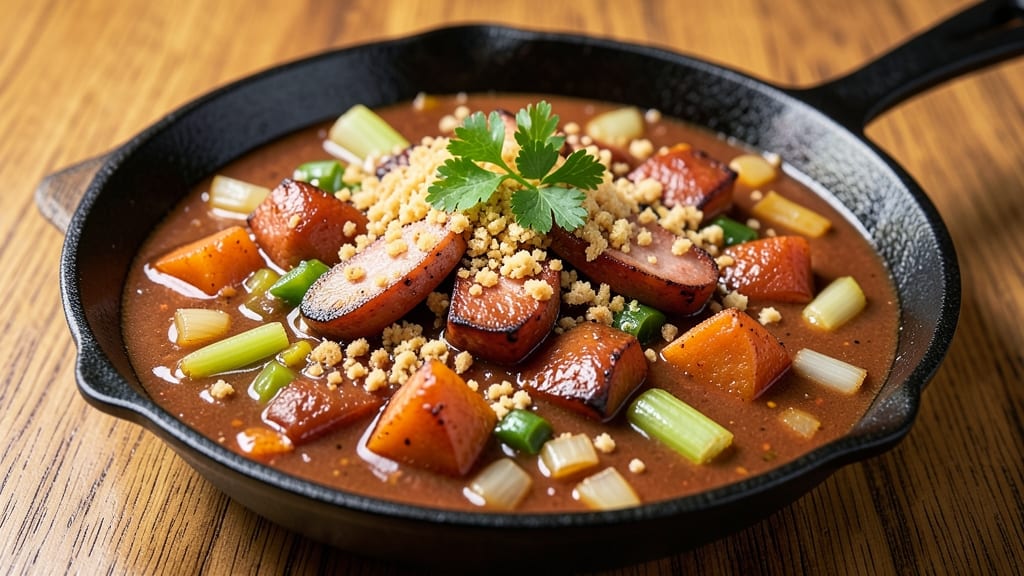
This sweet potato gumbo recipe transforms humble ingredients into a rich, smoky masterpiece that belongs at any table. The foundation—a deep, dark roux—carries layers of flavor that sweet potatoes and sausage elevate into something extraordinary.
What starts as a simple mix of flour and oil becomes the soul of this dish, where time and patience pay off in every spoonful.
The beauty of gumbo lies in its balance: the smoky roux grounds the dish, while sweet potatoes add natural sweetness that contrasts the savory sausage and aromatic vegetables. This recipe delivers restaurant-quality depth without shortcuts, making it perfect for weekend gatherings or cozy weeknight dinners.
The slow simmer allows flavors to meld into a harmonious, hearty stew that’s both comforting and impressive.
By the time you serve this gumbo over steamed rice, you’ll have a dish that’s rich, flavorful, and deeply satisfying—with a roux so perfect it could stand alone.
The sweet potatoes soften just enough to absorb the broth, while the sausage and vegetables maintain their texture, creating a symphony of tastes in every bite. This is gumbo as it should be: bold, traditional, and unforgettable.
Whether you’re feeding a crowd or treating yourself to a homemade meal, this recipe delivers on every promise. The key is patience—letting the roux develop its deep color and allowing the gumbo to simmer until every ingredient is infused with its smoky, savory essence.
Ready to make your kitchen smell like a Louisiana bayou?
Ingredients for sweet potato gumbo
Sixteen ingredients. One deep, smoky foundation. Transforming humble staples into gumbo magic.
| Ingredient | Amount | Notes |
|---|---|---|
| Sweet Potatoes 🍠 | 3 lbs | Medium size, peeled and cubed |
| Andouille Sausage 🌭 | 1 ½ lbs | Smoked, sliced into rounds |
| All-Purpose Flour 🌾 | 1 cup | For dark roux development |
| Vegetable Oil 🫒 | 1 ½ cups | High smoke point preferred |
| Yellow Onion 🧅 | 2 whole | Diced, medium size |
| Green Bell Pepper 🌶️ | 1 whole | Diced, seeds removed |
| Celery Stalks 🧅 | 4 whole | Diced, trimmed |
| Garlic Cloves 🧄 | 6 cloves | Minced, fresh preferred |
| Chicken Stock 💧 | 6 cups | Low-sodium preferred |
| Dried Thyme 🌿 | 1 tbsp | Or 1 tbsp fresh thyme |
| Bay Leaves 🍃 | 2 whole | Removed before serving |
| Smoked Paprika 🌶️ | 1 tbsp | For smoky depth |
| Salt 🧂 | 1 ½ tsp | Kosher or sea salt |
| Black Pepper 🌶️ | ½ tsp | Freshly ground preferred |
| Cayenne Pepper 🔥 | ¼ tsp | Adjust for heat preference |
| Fresh Parsley 🌿 | ¼ cup | Chopped, for garnish |
The roux is non-negotiable here. All-purpose flour and high-smoke-point vegetable oil are your base—no shortcuts. For the best results, use Crisco or Spectrum vegetable oil (they stand up to the heat). The dark roux takes patience—20-30 minutes of constant stirring—but it’s worth every minute. If you burn it, start over. The sweet potatoes should be firm and uniform in size; organic or store-brand work equally well. Look for andouille sausage at specialty markets or the meat section—Johnsonville is a solid grocery store option, but nothing beats fresh-cut from a butcher.
No andouille? Smoked kielbasa or spicy Italian sausage will work in a pinch, but the flavor won’t be the same. Fresh thyme is ideal, but dried works at one-third the amount—just make sure it’s not ground. The chicken stock should be low-sodium; Pacific Foods or Swanson are reliable brands. For the bell pepper and celery, organic is ideal (no need to peel), but regular works fine if you wash them well. The smoked paprika adds depth—Penzeys or McCormick are great choices. If you’re sensitive to heat, reduce the cayenne to 1/4 tsp or swap for red pepper flakes.
This gumbo tastes even better the next day—make a double batch if you can. Store in an airtight container in the fridge for 4-5 days or freeze for 3 months. The roux can be made ahead and refrigerated for up to 3 days (reheat gently before adding other ingredients). For serving, keep the fresh parsley wrapped in a damp paper towel in the fridge—it stays bright for 5 days. The sweet potatoes soften beautifully when reheated; just add a splash of water or stock if it thickens too much.
Why You'll Love This Recipe
- One-Pot Magic: I swear by this recipe because it’s one of those rare dishes where you dump everything in one pot and walk away. No last-minute chopping, no extra bowls—just sweet potatoes simmering with smoky andouille and a roux so rich it’ll make you forget you ever burned one before.
- Smoky-Sweet Crave: That first bite? Pure satisfaction. The andouille’s heat plays off the caramelized sweet potatoes like a jazz duet, while the onion adds this deep, almost buttery sweetness. Honestly, I’ve made gumbo before, but this one sticks with you—like a good memory.
- Weeknight to Dinner Party: Between us, this is my secret weapon for when friends drop by unannounced. It’s hearty enough for a crowd but simple enough to throw together after work. (Yes, even on a Tuesday night.) The leftovers? Even better the next day—if they last that long.
- Budget-Friendly Feast: Sweet potatoes and andouille stretch this dish into a full meal without breaking the bank. I’ve fed four people for under $15 with this, and everyone leaves happy. Plus, the roux uses basic flour and oil—no fancy shortcuts needed. Practical, delicious, and kind to my wallet.
Step-by-step instructions for sweet potato gumbo
This gumbo delivers deep, smoky flavor through a perfect dark roux foundation.
Develop the Dark Roux
Heat the 1.5 cups vegetable oil in a heavy Dutch oven over medium-low heat. Add the 1 cup all-purpose flour and whisk constantly with a wooden spoon. The mixture will bubble and foam as it cooks.
Watch carefully as the roux transitions from golden to chocolate brown—this takes 20-25 minutes. The key is patience; a dark roux builds rich, complex flavors. If it starts to smoke excessively, reduce the heat slightly. You'll know it's ready when it smells nutty and has the consistency of peanut butter.
Sauté the Holy Trinity
Immediately add the 2 whole yellow onion, 1 whole green bell pepper, and 4 whole celery stalks (all diced) to the roux. Stir constantly for 5-7 minutes until the vegetables soften and release their moisture. This step develops the gumbo's foundational flavor.
Next, add the 6 cloves garlic cloves and cook for another 1 minute until fragrant. Here's where it gets important: don't let the vegetables brown too much—you want them tender, not crispy. This ensures they'll blend seamlessly into the gumbo rather than overpower it.
Add Sausage and Sweet Potatoes
Push the vegetables to the side of the pot and add the 1.5 lbs andouille sausage in a single layer. Cook for 3-4 minutes until browned on all sides. Remove the sausage and set aside temporarily.
Return the sausage to the pot along with the 3 lbs sweet potatoes (cubed). Stir to coat everything in the roux. Pour in the 6 cups chicken stock, scraping up any browned bits from the bottom. Add the 1 tbsp smoked paprika, 1 tbsp dried thyme, 2 whole bay leaves, 1.5 tsp salt, 0.5 tsp black pepper, and 0.25 tsp cayenne pepper. Bring to a gentle simmer.
Simmer Until Tender
Cover the pot and simmer for 45-50 minutes on low heat, stirring occasionally. The gumbo should thicken gradually as the sweet potatoes break down. You're aiming for a consistency where the potatoes are fork-tender but still hold their shape.
Taste and adjust seasoning if needed. Real talk: the cayenne can vary in heat, so adjust to your preference. The gumbo should be rich, smoky, and balanced between sweet and savory. If it's too thick, add a splash of water or stock to reach your desired consistency.
Finish and Serve
Remove the 2 whole bay leaves before serving. Stir in the 0.25 cup fresh parsley just before plating. The parsley adds freshness that cuts through the richness of the gumbo.
Serve immediately in deep bowls, garnished with additional parsley if desired. The gumbo should be thick enough to coat the back of a spoon but still spoonable. Each bite should deliver layers of smoky sausage, sweet potatoes, and the deep, nutty complexity of the dark roux.
Pro Tips For Making Sweet Potato Gumbo
- CRISP THE ANDOUILLE FIRST: Slice the sausage into ¼-inch rounds and sear them in a dry skillet over medium-high heat for 2-3 minutes before adding to the gumbo. This renders the fat and tightens the meat, so it doesn’t turn mushy when simmering—trust me, the difference is noticeable.
- ROAST THE SWEET POTATOES: Toss peeled sweet potatoes in 1 tablespoon oil, salt, and pepper, then roast at 400°F (200°C) for 25-30 minutes before adding to the pot. The concentrated sweetness and caramelized edges make the gumbo richer than raw cubes ever could.
- DON’T RUSH THE ROUX: Stir that flour-and-oil mix constantly over medium heat until it’s a deep, nutty brown—about 15-20 minutes. If it darkens too fast, lower the heat or remove the pot for a minute. A burnt roux ruins everything, and you’ll know when it’s right: it should smell like toasted nuts.
- SWEAT THE ONIONS LOW: Cook the onions in the same pot you’ll make the roux (after browning the sausage) over low heat for 8-10 minutes until soft and translucent. High heat caramelizes them too fast, and you’ll end up with bitter bits instead of sweet, mellow flavor.
Pro cooking tips for sweet potato gumbo
Roux Perfection
A dark roux is the heart of gumbo, and patience is your best tool. I use a heavy Dutch oven—like All-Clad or Le Creuset—because it distributes heat evenly. Start with medium-low heat and whisk constantly with a wooden spoon (metal can burn the roux).
The color should progress from golden to chocolate brown (like peanut butter) over 20-25 minutes. If it smokes too much, reduce heat immediately—burnt roux ruins everything. 🌡️
Pro tip: Add a pinch of salt to the roux while cooking. It helps stabilize the emulsion and prevents scorching. Once it reaches the perfect stage, you’ll smell that unmistakable nutty aroma—this is your cue to move to the next step.
Never rush it; a rushed roux tastes flat and one-dimensional.
Holy Trinity Mastery
The holy trinity—onion, bell pepper, and celery—needs equal attention. Dice them into small, uniform pieces (about ¼-inch) so they cook evenly. Sauté them in the roux for 5-7 minutes until soft but not browned.
Overcooking turns them mushy and dulls their flavor. I like to use organic vegetables (no peeling needed) for extra freshness, but regular works if washed well. 🍅
Add garlic last and cook for just 1 minute—any longer, and it burns. The goal is to infuse the roux with their flavors, not char them. If you’re short on time, you can pulse the trinity in a food processor, but fresh sautéing gives the best texture and depth.
Sausage Timing
Brown the andouille sausage in batches if needed to avoid crowding the pot. You want golden-brown sear marks on all sides—this adds depth. Remove it temporarily while you prep the sweet potatoes, then return it to the pot to soak up all the roux flavors.
If using Johnsonville smoked sausage, follow package instructions for slicing, but ask your butcher for pre-sliced andouille if possible—it’s a game-changer. 🌭
Don’t skip browning the sausage! The Maillard reaction here creates rich, caramelized notes that elevate the entire dish. If the sausage releases too much fat, blot it with a paper towel before adding it back to the pot to keep the gumbo from getting greasy.
Sweet Potato Texture
Cut sweet potatoes into 1.5-inch cubes for even cooking. Smaller pieces soften faster but can turn to mush, while larger pieces stay intact. Add them to the pot after the sausage and stir well to coat in the roux.
The sweetness of the potatoes balances the smokiness, so don’t skip this star ingredient. 🍠
Simmer the gumbo on low heat for 45-50 minutes, stirring occasionally. The sweet potatoes should be fork-tender but still hold their shape. If they’re breaking apart too much, reduce the heat further.
Taste as you go—adjust salt or cayenne as needed. The gumbo should be thick but spoonable, not gluey.
Simmering Secrets
Covering the pot traps steam, which helps tenderize the sweet potatoes and infuse flavors. Stir every 10 minutes to prevent sticking and ensure even cooking. If the gumbo thickens too much, add ¼ cup chicken stock to loosen it.
The smoked paprika adds depth, so don’t skimp—it’s the secret to that authentic bayou smokiness. 🔥
Let the gumbo rest for 10 minutes off the heat before serving. This allows flavors to meld and the sweet potatoes to absorb more liquid. Skipping this step can leave the gumbo watery or unevenly seasoned. Trust me, the wait is worth it!
Nutrition facts
Frequently asked questions
Can I substitute regular potatoes for sweet potatoes in gumbo?
While you can technically use regular potatoes, sweet potatoes are essential for that perfect balance of sweetness and creaminess. Their natural sugars caramelize during cooking, creating a richer flavor profile that complements the smoky sausage and dark roux. If you must substitute, try yams—they hold up better than russets or red potatoes, which tend to break apart too much.
How do I adjust this recipe for a vegetarian version?
Replace the andouille sausage with 1 lb smoked tofu or 1.5 lbs king oyster mushrooms (sliced), and use vegetable broth instead of chicken stock. Add 1 tbsp soy sauce or 1 tsp liquid smoke to mimic the smoky depth. For extra protein, stir in 1 can white beans (drained) during the final 10 minutes of simmering.
What's the best way to reheat leftover sweet potato gumbo?
Reheat gently on the stove over low heat with a splash of water or broth to prevent drying out. If using the microwave, stir frequently and cover with a damp paper towel. For best results, reheat only until warmed through (3-5 minutes)—overheating can make the sweet potatoes mushy. The gumbo actually tastes better the next day as flavors meld further!
Can I make the roux ahead of time?
Yes! The roux can be made 1-2 days ahead and stored in an airtight container in the fridge. When ready to use, reheat gently over low heat while stirring constantly. If it thickens too much, add 1 tsp oil to restore the proper consistency. Never freeze the roux—it can develop off flavors when thawed.
Why did my roux burn before reaching the right color?
Roux burns when heat is too high or stirring isn't constant enough. Use medium-low heat and whisk continuously with a wooden spoon—never metal, which conducts heat too quickly. If it starts smoking excessively, immediately reduce heat or remove from burner. A burnt roux can't be saved; start fresh with 1 cup flour + 1.5 cups oil again. Patience is key!