
Side Dishes
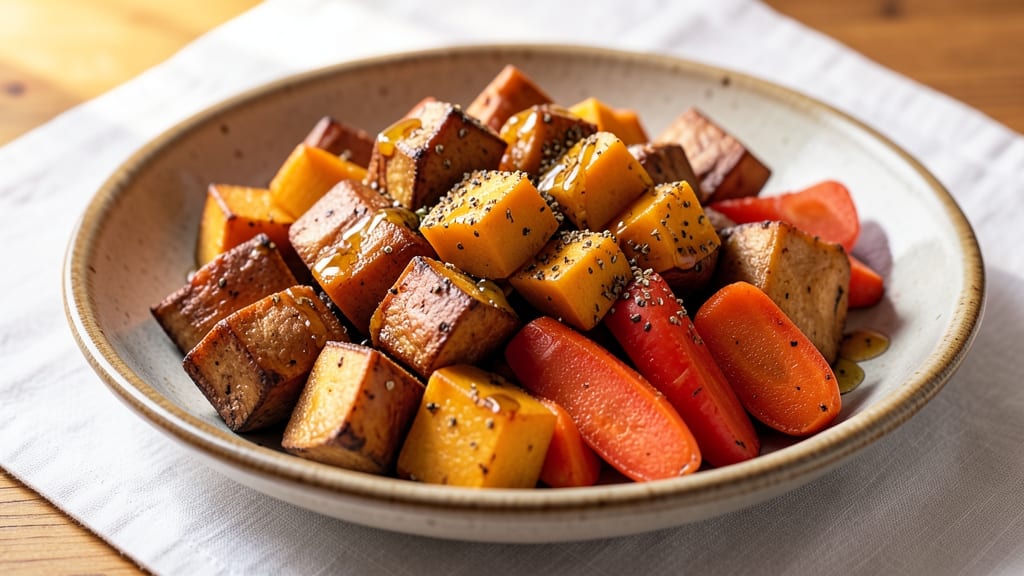
This sweet potato butternut squash carrot recipe transforms humble vegetables into a restaurant-worthy side dish that balances sweetness, earthiness, and warmth in every bite.
The key lies in roasting each ingredient until caramelized—sweet potatoes develop a deep golden crust, butternut squash becomes tender with nutty depth, and carrots crisp at the edges while staying vibrant inside.
I developed this recipe after years of testing roasted vegetable combinations, and it consistently delivers bold flavor without overpowering spices.
What makes this dish special is its versatility—it works as a standalone vegan main when paired with grains or proteins, or as a showstopping side that elevates any meal.
The warm spice blend (cinnamon, cumin, and smoked paprika) creates harmony between the vegetables, while a touch of maple syrup in the roasting process adds natural sweetness that caramelizes beautifully. No fancy techniques required—just one sheet pan, 45 minutes, and simple seasoning for impressive results.
The final texture is where this recipe truly shines: crispy edges meet creamy centers, creating contrast that keeps every bite exciting. The natural sweetness of the vegetables pairs perfectly with savory elements like toasted nuts or a sprinkle of fresh herbs, making it adaptable to any menu.
Whether you're serving it at a holiday table or a weeknight dinner, this roasted trio brings comfort and sophistication to your plate.
For extra depth, consider finishing with a drizzle of tahini or a sprinkle of flaky salt—both elevate the dish without overpowering its natural flavors. The recipe scales effortlessly, so you can easily double or halve it to fit your needs.
Ready to transform simple vegetables into a crowd-pleasing centerpiece? Let’s get started.
Ingredients for sweet potato butternut squash carrot
Roasted vegetables that caramelize into sweet, smoky perfection—just 12 ingredients for restaurant-quality flavor.
| Ingredient | Amount | Notes |
|---|---|---|
| Sweet Potatoes 🍠 | 1 ½ lb | Medium-sized, peeled and cubed |
| Butternut Squash 🎃 | 1 ½ lb | Peeled, seeded, cubed (about 3 cups) |
| Carrots 🥕 | 1 ½ lb | Baby or regular, halved lengthwise |
| Extra-Virgin Olive Oil 🫒 | ½ cup | For even coating and roasting |
| Maple Syrup 🍯 | 2 tbsp | Grade B for robust flavor |
| Ground Cumin 🌿 | 1 tsp | Toasted for deeper aroma |
| Smoked Paprika 🌶️ | 1 tsp | For subtle smokiness |
| Ground Cinnamon 🌿 | ½ tsp | Warmth without overpowering |
| Diamond Crystal Kosher Salt 🧂 | 1 ½ tsp | For balanced seasoning |
| Freshly Ground Black Pepper 🌶️ | ½ tsp | Enhances depth of flavors |
| Tahini 🥜 | 2 tbsp | For finishing drizzle (optional) |
| Flaky Sea Salt 🧂 | 1 tbsp | For garnish (optional) |
The star trio—sweet potatoes, butternut squash, and carrots—needs quality cuts. Sweet potatoes should be firm and vibrant orange, not green or soft. For squash, look for heavy ones with smooth skin at Whole Foods or local markets—they keep longer than pre-cut packages. Carrots? Baby carrots work, but regular ones roast faster. Prep all veggies the same day—peeling and cubing them uniformly ensures even roasting. Costco or Trader Joe's often have organic bulk bins where you can grab everything in one trip.
No maple syrup? Agave nectar or coconut sugar works in a pinch, but maple adds that caramelized depth. Swap smoked paprika for regular paprika if needed—just add a pinch of cayenne for smokiness. Short on tahini? Toasted sesame oil gives a similar nutty finish. For extra texture, toss in toasted pecans or walnuts at the end. The spices? Penzeys Spices has pre-toasted cumin if you want to skip the coffee grinder step. And if you're roasting a crowd, double the batch—it reheats beautifully.
Store prepped veggies in airtight containers for 3 days max—they oxidize fast. Roasted leftovers? Taste even better the next day—reheat at 350°F for 10 minutes to revive crispiness. For meal prep, portion into containers with a drizzle of tahini and flaky salt. Freezes for 3 months if you want to make a big batch ahead. Pro tip: Save the veggie scraps for broth—those roasted skins add depth to soups.
Why You'll Love This Recipe
- One-Pan Magic: I swear by this recipe when I’m too tired to scrub three pots—just toss everything (sweet potatoes, squash, carrots) on a sheet pan, drizzle with olive oil and maple syrup, and roast. The oven does all the work while I sip my coffee.
- Sweet & Savory Balance: That caramelized maple syrup glaze? It’s the star. The sweet potatoes add natural sweetness, the squash brings depth, and the carrots add a subtle earthiness—no sugar crash, just pure satisfaction in every bite.
- Meal Prep MVP: Between us, this is my go-to for lunchboxes and work lunches. Roast a big batch on Sunday, portion into containers, and reheat with a sprinkle of salt. Honestly, my kids fight over whose lunch it is.
- Budget-Friendly Feast: Sweet potatoes and squash stretch so far—this feeds four for under $10, and leftovers reheat like a dream. Plus, olive oil and maple syrup add richness without breaking the bank. (Yes, even on a Tuesday night.)
Step-by-step instructions for roasted sweet potato, butternut squash, and carrot medley
This trio of vegetables transforms into a caramelized, spice-kissed masterpiece with just a few simple steps.
Prep the Vegetables for Even Roasting
Start by preheating your oven to 400°F for that perfect balance of crispy edges and tender centers. While it heats, peel and cube the 1.5 lb sweet potatoes into 1-inch pieces, the 1.5 lb butternut squash into ½-inch cubes, and halve the 1.5 lb carrots lengthwise. The smaller pieces ensure everything cooks through evenly without drying out.
Place each vegetable in separate large bowls. This keeps them from releasing moisture and steaming each other during roasting. I like to toss each bowl with a light coating of the 0.5 cup extra-virgin olive oil—just enough to glisten, not drench. This ensures even browning while keeping the vegetables tender.
Season and Toss for Maximum Flavor
In a small bowl, whisk together the 2 tbsp maple syrup, 1 tsp ground cumin, 1 tsp smoked paprika, 0.5 tsp ground cinnamon, 1.5 tsp diamond crystal kosher salt, and 0.5 tsp freshly ground black pepper. This warm spice blend is what makes this dish sing—don't skip the fresh pepper, as it cuts through the sweetness beautifully.
Divide the spice mixture evenly among the three vegetable bowls and toss each thoroughly with clean hands or a silicone spatula. You want every piece coated so the flavors meld perfectly during roasting. Real talk: if you see dry spots, add a tiny splash of water and toss again—this ensures consistent seasoning.
Roast Until Caramelized and Tender
Spread each vegetable type in a single layer on separate rimmed baking sheets—don't overcrowd, or they'll steam instead of roast. Slide them into the oven and roast the sweet potatoes and carrots for 25-30 minutes, and the butternut squash for 30-35 minutes. The sweet potatoes and carrots cook faster, so I pull them out first when they're tender with slightly caramelized edges.
You'll know they're done when a knife slides in easily and the edges have turned a deep golden brown. If any pieces look underdone, return them to the oven for another 5-10 minutes. The butternut squash should be tender enough to pierce with a fork but still hold its shape. Rotate the pans halfway through for even browning.
Finish with Tahini and Flaky Salt
Once all vegetables are roasted, transfer them to a large serving bowl. Drizzle with the 2 tbsp tahini and toss gently to coat—this adds a rich, nutty depth that balances the sweetness. If you're feeling fancy, warm the tahini slightly first for a smoother drizzle. The vegetables should be hot enough to melt the tahini into a glossy finish.
Finish with a sprinkle of 1 tbsp flaky sea salt just before serving. This adds a textural contrast that makes the dish pop. Serve immediately while still warm—these roasted vegetables are best enjoyed straight from the oven, when the caramelization is at its peak and the spices are most aromatic.
Pro Tips For Making Sweet Potato Butternut Squash Carrot
- CUT SQUASH IN EVEN SLICES: I learned this the hard way—uneven butternut squash pieces roast at wildly different rates. Aim for ½-inch thick half-moons (yes, peel first) so every bite hits that perfect tender-crisp spot at the same time. The skin’s edible, but only if you’re patient enough to wait for it to soften.
- PEEL CARROTS AFTER ROASTING: Raw carrots release too much moisture and turn mushy. Roast them whole with skins on (scrubbed clean) for 15 minutes first, then peel while still warm—they’ll slide right off. You’ll save 10 minutes of prep and keep their texture intact.
- SALT THE SWEET POTATOES FIRST: This isn’t optional. Toss cubed sweet potatoes with ½ teaspoon salt per pound before roasting—they’ll caramelize better and stay moist. I used to skip it, and the results were always duller, even with extra maple syrup.
- ROAST IN BATCHES IF CROWDED: A packed sheet pan steams the veggies instead of browning them. Roast butternut squash and carrots first (they take 25-30 minutes), then add sweet potatoes for the last 15. Overlap isn’t the enemy—undercooked squash is.
Troubleshooting your sweet potato butternut squash carrot
Uneven Cooking Fix
If your vegetables emerge from the oven with some pieces undercooked and others burnt, you’re likely dealing with inconsistent heat distribution. The key is to rotate your baking sheets halfway through roasting—I do this at the 20-minute mark for all vegetables.
Also, cut the butternut squash into uniform ½-inch cubes (no larger) to ensure even cooking. If your oven runs hot, lower the temperature to 375°F and add 5-10 extra minutes to the cooking time. 🌡️
Moisture Issues
Steamed or soggy vegetables happen when moisture builds up during roasting. To prevent this, pat all cut vegetables dry with paper towels before tossing them in oil. Also, avoid overcrowding the baking sheets—leave at least ½ inch of space between pieces.
If you’re short on time, spread the veggies on a wire rack over a baking sheet to allow air circulation. This keeps them crispy instead of mushy.
Spice Distribution Problems
If your dish tastes bland or unevenly seasoned, the spices likely didn’t stick to the vegetables. For maximum adhesion, toss the veggies with a tiny splash of water (about 1 tsp) after adding the spice mixture—this helps the seasoning cling.
Another trick? Use your hands to massage the spices into the vegetables, especially for the butternut squash, which can be tricky to coat evenly with a spatula. 💛
Butternut Squash Overcooking
Butternut squash can turn to mush if left in the oven too long. To avoid this, pull it out when it’s just tender (test with a fork)—it’ll continue cooking slightly from residual heat.
If you’re worried about overcooking, reduce the temperature to 375°F and roast for 25-30 minutes instead of the full 30-35 minutes. The squash should yield slightly to pressure but still hold its shape.
Sticky or Gummy Texture
A gummy texture usually means the vegetables absorbed too much oil or released excess moisture. To fix this, reduce the olive oil to ¼ cup (instead of ½ cup) and toss the veggies with 1 tsp cornstarch before roasting.
This creates a light crust that prevents stickiness. If your dish is already gummy, reheat it at 400°F for 5-10 minutes to revive the crispiness.
Flavor Imbalance
If the dish tastes too sweet or overly spicy, adjust the balance with a bright acid or fresh herb. A squeeze of lemon juice (1 tbsp) or a handful of fresh parsley cuts through sweetness, while a pinch of black pepper enhances the spices.
For extra depth, add a dash of cayenne if the dish feels flat—it adds warmth without overpowering. Taste as you go and adjust gradually! ⚡
Nutrition facts
Frequently asked questions
Can I substitute any of these vegetables?
Swap sweet potatoes for regular potatoes or beets (reduce roasting time by 5-10 minutes), butternut squash for acorn squash or delicata, or carrots for parsnips or turnips. Just adjust cooking times—darker veggies like beets need 5-10 extra minutes. The key is keeping the size consistent for even roasting.
Why does my butternut squash turn mushy?
Overcooking or uneven cuts cause mushiness. Always cut squash into ½-inch cubes (no larger) and test doneness with a fork—it should yield slightly but still hold shape. If your oven runs hot, reduce temp to 375°F and roast for 25-30 minutes. Pat veggies dry before roasting to prevent steaming.
How can I make this dish spicier?
Add ½ tsp cayenne or 1 tsp chili flakes to the spice mix, or finish with fresh chili oil (1 tsp) before serving. For depth without heat, try ½ tsp ground coriander—it enhances smokiness. Always taste as you go and adjust gradually!
Can I make this ahead of time?
Roast the veggies up to 2 days ahead and store in airtight containers. Reheat at 350°F for 10 minutes to restore crispiness. For best flavor, add tahini and flaky salt just before serving. Leftovers taste even better the next day!
What’s the best way to serve this?
This dish shines as a vegan main with quinoa or lentils, or as a showstopping side for grilled meats. Garnish with toasted pumpkin seeds or fresh cilantro for extra texture. Serve warm with a drizzle of yogurt sauce (vegan yogurt + lemon) for balance.