
Side Dishes
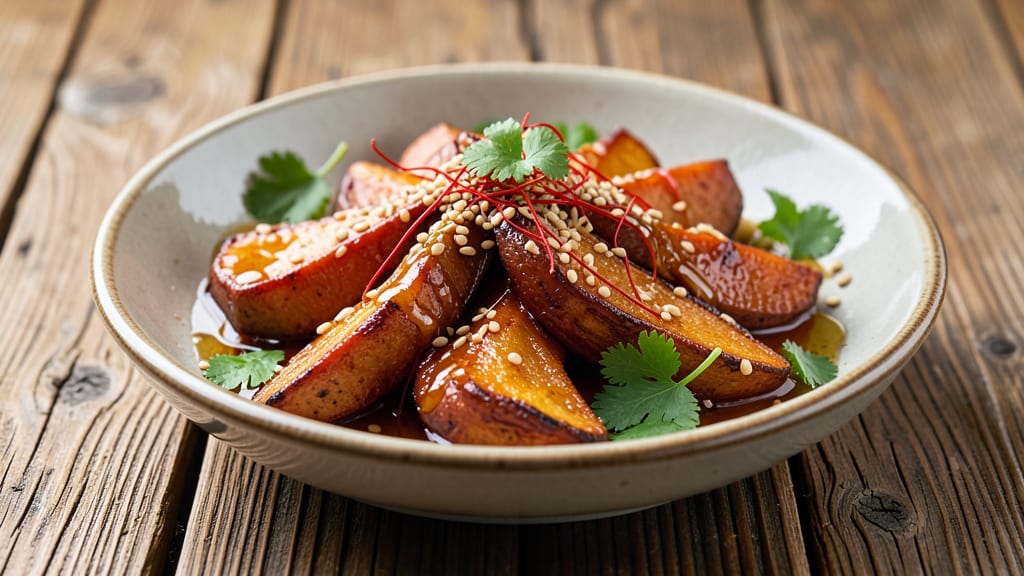
This crispy-skinned sweet potato banchan transforms humble ingredients into a savory-sweet Korean side dish that steals every meal. 🌟 The secret lies in roasting until caramelized edges meet tender centers, creating a perfect balance of textures and flavors that complement rice and kimchi beautifully.
As a staple in Korean cuisine, this banchan brings warmth and depth to any table setting.
The recipe begins with simple preparation—peeling and slicing sweet potatoes into even rounds, then boiling until just tender. The real magic happens in the oven, where high heat transforms the edges into crispy, golden perfection while keeping the inside moist and flavorful.
A touch of sesame oil and soy sauce elevates the dish, adding a subtle umami richness that pairs perfectly with rice.
What you’ll end up with is a crispy-skinned, savory-sweet side dish that’s as visually appealing as it is delicious. The caramelized edges contrast beautifully with the soft interior, while the aromatic sesame and soy notes create a harmonious balance.
This banchan is not only vegetarian-friendly but also a versatile addition to any Korean meal.
Serve alongside steamed rice, kimchi, and other banchan for an authentic Korean spread. The crispy texture and balanced flavors make it a crowd-pleaser, perfect for weeknight dinners or special gatherings. Here’s how to make it!
Ingredients for sweet potato banchan
Nine simple ingredients create this crispy-skinned Korean side dish perfect for any meal.
| Ingredient | Amount | Notes |
|---|---|---|
| Sweet Potatoes 🍠 | 2 lb | Medium-sized, peeled and sliced into 1/4-inch rounds |
| Vegetable Oil 🫒 | ¼ cup | For light frying, high smoke point preferred |
| Sesame Oil 🫒 | 1 tbsp | Toasted sesame oil for authentic flavor |
| Soy Sauce 🥄 | 2 tbsp | Light or all-purpose soy sauce |
| Rice Vinegar 🍶 | 1 tbsp | White or seasoned rice vinegar |
| Sesame Seeds 🌾 | 1 tbsp | Toasted for garnish and extra crunch |
| Salt 🧂 | 1 tsp | Kosher or sea salt for seasoning |
| Black Pepper 🌶️ | ¼ tsp | Freshly ground for subtle heat |
| Garlic Cloves 🧄 | 2 cloves | Minced for aromatic depth |
| Ginger 🌿 | 1 tsp | Freshly grated, for bright flavor |
| Sugar 🍚 | 1 tsp | Granulated, to balance savory-sweet |
Sweet potatoes are the star—look for firm, vibrant orange ones at the store. Trader Joe's or Korean markets often carry the best varieties, but any medium-sized sweet potato works. Peeled and sliced evenly, they roast to perfection. For extra crispiness, pat slices dry before boiling. The key is high heat in the oven—450°F or higher ensures those caramelized edges. If you're short on time, microwave the slices for 2 minutes before roasting to speed up the process.
No sesame oil? Toasted sesame seeds plus a neutral oil work in a pinch, though the flavor won't be as rich. Swap rice vinegar for apple cider vinegar if needed, but the acidity will differ slightly. Fresh ginger and garlic can be omitted if you're in a hurry—dried powdered versions at half the amount still add depth. For a sweeter profile, substitute maple syrup for sugar, though it may darken faster. The soy sauce is non-negotiable, though—it's the umami backbone of this dish.
Roasted sweet potatoes keep 3-4 days in an airtight container at room temperature, though they're best fresh. For longer storage, freeze the cooked slices for up to 3 months—just reheat in a 350°F oven for 10-15 minutes to restore crispiness. Garnish with toasted sesame seeds right before serving to keep them fresh. This banchan reheats beautifully, making it perfect for meal prep—just re-crisp in the oven for 5 minutes before serving.
Why You'll Love This Recipe
- Five-Ingredient Magic: I swear by this combo—just oil, soy, vinegar, and sesame. The sweet potatoes caramelize into crispy edges while staying tender inside, and that final drizzle of sesame oil? Chef’s kiss. No fancy techniques, just pure flavor payoff.
- Weeknight Hero: Honestly, this is my go-to when I’m staring at a fridge full of random veggies and zero energy. Toss in the sweet potatoes, roast them, and slap on that tangy-salty glaze. Done. Even my picky husband doesn’t complain—(yes, even on a Tuesday night).
- Leftovers That Don’t Suck: Between us, most roasted veggie leftovers taste sad. Not this. The soy and vinegar keep it bright, and the texture stays perfect for days. I’ll pack these in lunches or toss them into fried rice—no one ever notices they’re yesterday’s dinner.
- Budget Crunch Saver: Sweet potatoes are my pantry’s secret weapon. Cheap, filling, and this recipe stretches them into something restaurant-worthy. Plus, the other ingredients? Basic stuff I already have. It’s the kind of dish that makes grocery day less stressful.
Step-by-step instructions for crispy-skinned sweet potato banchan
Master this Korean staple with perfectly crisp edges and tender centers—every bite delivers that ideal contrast.
🍳 Step 1: Prep and Parboil the Sweet Potatoes
Peel the 2 lb sweet potatoes and slice them into ¼-inch rounds—uniform thickness ensures even cooking. Place them in a large pot of cold, salted water (add 1 tsp salt to the water) and bring to a boil over medium-high heat. Once boiling, reduce to medium heat and simmer for 5-6 minutes until the edges soften slightly but the centers remain firm when pierced with a knife.
This parboiling step is crucial—it jumpstarts the cooking process and prevents the sweet potatoes from turning mushy during frying. Drain immediately in a colander and rinse briefly with cold water to stop the cooking process. Shake off excess water thoroughly before proceeding.
🔥 Step 2: Fry Until Golden and Crisp
Heat ¼ cup vegetable oil in a large skillet over medium-high heat until it shimmers but doesn't smoke. Working in batches (don't overcrowd the pan), add the parboiled sweet potato slices and fry for 3-4 minutes per side until they develop a deep golden-brown crust and the edges become crisp. I press down gently on the slices during the first minute to prevent curling and ensure even contact with the pan.
You'll know they're ready when the edges are crisp and golden brown while the centers still hold their shape. Transfer fried slices to a paper towel-lined plate to drain excess oil. If the oil starts smoking or the potatoes brown too quickly, reduce the heat slightly—you want a gentle sizzle, not a wild flame.
👨🍳 Step 3: Make the Savory-Sweet Seasoning
In a small bowl, whisk together 2 tbsp soy sauce, 1 tbsp rice vinegar, 1 tsp sugar, 1 tsp sesame oil, ½ tsp black pepper, 2 cloves minced garlic, and 1 tsp freshly grated ginger. The mixture should be smooth with a vibrant aroma—this is your flavor base. Taste and adjust seasoning if needed; I like to add a pinch more sugar if the soy sauce dominates.
Here's the thing—don't skip the ginger and garlic. They add that bright, aromatic depth that makes this banchan truly special. If you're using jarred minced garlic, drain it well first to avoid watery seasoning.
🥘 Step 4: Toss and Garnish for Perfect Finish
Return the crispy sweet potato slices to the skillet over low heat and pour the seasoning mixture over them. Toss gently to coat evenly, letting the sweet potatoes absorb the flavors for 1-2 minutes. The residual heat will help the seasoning cling perfectly without steaming the crispy edges.
Transfer to a serving platter and sprinkle generously with 1 tbsp toasted sesame seeds. The seeds add that final crunchy texture contrast that makes this dish so satisfying. Serve immediately while still warm—this banchan is best enjoyed fresh from the pan.
Pro Tips For Making Sweet Potato Banchan
- CUT SLICES THINLY: I learned this the hard way—thick chunks end up mushy while thin slices crisp perfectly. Aim for ¼-inch thickness, and don’t stack them in the pan; give them space to brown evenly.
- SALT BEFORE FRIED: Toss the sweet potato slices with a pinch of salt before hitting the oil. This draws out moisture so they crisp instead of steaming, and the flavor sticks better than if you season after.
- STOP AT 70% DONE: Pull the pan off heat when the edges are golden but the centers still have a little bite. The residual heat finishes cooking while keeping them from turning gummy—trust me, they’ll crisp up once tossed with the dressing.
- DRESSING IN TWO STEPS: Start with soy sauce and rice vinegar, then finish with sesame oil. Adding it too early makes the dressing soggy; drizzle it last so the aroma hits fresh and the oil glistens. (Yes, even if you’re impatient like me.)
Common mistakes when making perfect results
Overcrowding the Pan
Frying too many sweet potato slices at once is a rookie mistake that leads to soggy, unevenly cooked banchan. I always work in batches—no more than half the pan's capacity at a time.
Overcrowding causes the oil temperature to drop, preventing that perfect golden-brown crust we're after. If your pan looks crowded, take a break and fry the next batch instead of forcing them in. 🔥
Skipping the Parboil
Some recipes skip the parboiling step, but I strongly recommend it—it's what gives this banchan its signature texture. Without it, the sweet potatoes absorb too much oil and turn greasy rather than crispy.
The 5-6 minute boil jumpstarts the cooking process, ensuring the centers stay tender while the edges get that perfect crunch. Trust me, this step makes all the difference!
Uneven Slicing
Inconsistent slice thickness is the #1 reason for uneven cooking. Use a mandoline slicer or sharp knife to cut all pieces to ¼-inch thickness. I like to check each slice with calipers if I'm feeling precise—thinner slices cook faster and burn before the centers are done.
Take your time here; it's worth the extra effort for perfect results.
Wrong Oil Temperature
Too hot or too cool oil ruins everything. You want the oil to be medium-high heat—hot enough to sizzle but not smoke. I test by dropping in a tiny piece of potato; if it browns immediately, lower the heat.
If it just sits there, increase it. The right temperature gives that beautiful caramelized edge while keeping the inside tender. 🌡️
Overmixing the Seasoning
Once you toss the seasoning, resist the urge to stir vigorously. Gentle tossing prevents the crispy edges from softening. I like to use tongs to flip the slices rather than a spoon.
Also, don't add all the seasoning at once—start with half, taste, then adjust. Too much soy sauce can make the dish taste flat, while too little leaves it bland.
Serving Too Late
This banchan is best served immediately after tossing with the seasoning. The crispy texture fades quickly as it sits. I keep a serving platter nearby and transfer the slices directly from the pan to the table.
If you need to hold it for guests, cover loosely with foil and serve within 10 minutes—any longer and you'll lose that perfect crunch. 💫
Nutrition facts
Frequently asked questions
Can I use regular potatoes instead of sweet potatoes?
Sweet potatoes are essential for this recipe—their natural sweetness and moist texture create the perfect balance with the savory seasoning. Regular potatoes would turn out too starchy and bland. If you must substitute, try purple sweet potatoes for a beautiful color twist while maintaining the same flavor profile.
How do I make this banchan ahead of time?
Roast the sweet potato slices up to 2 days ahead and store them in an airtight container at room temperature. Reheat in a 375°F oven for 10-15 minutes> with a drizzle of oil to restore crispiness. For the full flavor, toss with the seasoning just before serving. The texture won't be as perfect as fresh, but it's still delicious!
What other Korean banchan pair well with this?
This sweet potato banchan pairs beautifully with classic Korean sides like kimchi, spinach namul, or seasoned bean sprouts. For a complete meal, serve with steamed rice, grilled bulgogi beef (if not vegetarian), and a soy-marinated egg. The crispy texture contrasts perfectly with softer banchan like braised greens.
Can I bake instead of frying for a healthier version?
Yes! For a lighter version, toss parboiled sweet potato slices with 1 tsp oil, salt, and pepper, then bake at 425°F for 20-25 minutes> until crispy. After baking, toss with the seasoning mixture. The texture will be slightly less crispy than fried, but still delicious and healthier.
Why does my banchan turn out soggy?
Soggy banchan usually means one of two things: either the sweet potatoes were overcooked during parboiling or the oil wasn't hot enough when frying.