
Side Dishes
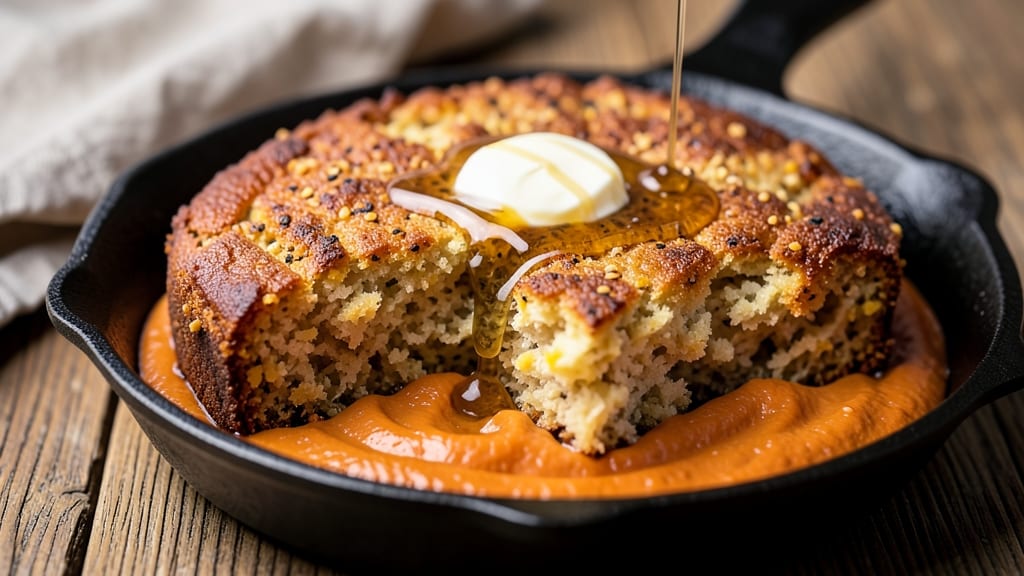
This Southern sweet potato cornbread recipe delivers the perfect balance of crispy edges and moist, slightly sweet swirls—just like Grandma used to make. 💛 The secret lies in blending tender sweet potato into the batter, creating pockets of flavor that make every bite irresistible.
What sets this recipe apart is the buttermilk base, which keeps the crumb tender while the honey adds just the right amount of Southern sweetness.
Traditional Southern techniques ensure a golden crust that's crisp enough to hold up to chili or butter, while the interior stays moist and fluffy. The sweet potato adds natural sweetness without overpowering the classic cornbread flavor, making it a crowd-pleaser for any meal.
This recipe is designed to be foolproof, with simple ingredients and a straightforward process that guarantees restaurant-quality results every time.
By the time it emerges from the oven, you'll have a loaf with a crispy exterior and moist swirls of sweet potato throughout—perfect for slicing into warm, buttery pieces.
The aroma alone will have everyone gathering around the table, and the texture is just right: tender enough to melt in your mouth but sturdy enough to hold up to your favorite toppings.
Serve it alongside chili for dipping, slather it with honey, or enjoy it plain—this cornbread is versatile enough for any occasion. The recipe scales easily, so you can make a single loaf for two or double it for a crowd.
Let's get started on this classic Southern side dish that's sure to become a family favorite.
Ingredients for southern sweet potato cornbread
Sweet potatoes, buttermilk, and honey—just like Grandma used to make it.
| Ingredient | Amount | Notes |
|---|---|---|
| Sweet Potatoes 🍠 | 1 ½ cups | Canned, drained and mashed smooth |
| All-Purpose Flour 🌾 | 1 ½ cups | White or whole wheat blend |
| Cornmeal 🌽 | 1 cup | Fine grind preferred |
| Buttermilk 🥛 | 1 cup | Full-fat for best flavor |
| Honey 🍯 | ½ cup | Wildflower or clover preferred |
| Unsalted Butter 🧈 | ½ cup | Melted and cooled slightly |
| Large Eggs 🥚 | 2 whole | Room temperature for mixing |
| Baking Powder 🧂 | 2 tsp | Diamond Crystal preferred |
| Salt 🧂 | 1 tsp | Kosher or sea salt |
| Ground Cinnamon 🌿 | 1 tsp | Freshly ground for warmth |
| Ground Nutmeg 🌿 | ¼ tsp | Freshly grated preferred |
| Vanilla Extract 🍯 | 1 tsp | Pure vanilla preferred |
The sweet potatoes are the star here. Canned works fine—just make sure they're smooth and well-drained. Trader Joe's has the best-priced canned sweet potatoes, but any brand in the baking aisle will do. For extra richness, I sometimes add a pinch of salt to the mashed sweet potatoes while they're warm. The honey? Local wildflower adds depth, but any good honey will work. If you're feeling fancy, grab a small jar of Southern Living brand honey—it's got that perfect Southern sweetness. And don't skip the cinnamon and nutmeg—those spices are what make this taste authentically Southern.
No buttermilk? Mix 1 tablespoon lemon juice or vinegar with 1 cup milk—let it sit for 5 minutes. No honey? Maple syrup works in a pinch, though it's a little heavier. The cornmeal is non-negotiable for that classic cornbread texture, but if you're out, extra flour will work in a bind. For the butter, I always use Land O'Lakes or Kerrygold—they melt beautifully. If you're making this ahead, you can prep the batter the night before and refrigerate it. Just let it sit at room temperature for 30 minutes before baking. The eggs should be room temperature—cold eggs can make the batter too thick.
This cornbread keeps beautifully. Wrap the loaf in foil and store it at room temperature for 2-3 days. For longer storage, pop it in the freezer—it reheats perfectly in a 350°F oven for 10-15 minutes. I like to slice it into thick pieces and freeze them individually. That way, you can just grab one and warm it up whenever you're craving that crispy, buttery goodness. The leftovers? Perfect for French toast the next morning—just dip slices in an egg mixture and cook in butter. Trust me, it's even better the second time around.
Why You'll Love This Recipe
- Sweet Potato Magic: That roasted sweet potato purée? It’s the secret weapon—creamy, naturally sweet, and cuts through the buttermilk’s tang like butter on a hot biscuit. No one will guess you didn’t bake this from scratch.
- One-Bowl Wonder: Four ingredients, one bowl, zero stress. The cornmeal gives it that perfect crumb, and the honey ties everything together while you’re still scraping the last bits from the pan. (Yes, even on a Tuesday night.)
- Breakfast to Brunch: Serve it warm with honey butter for breakfast, slice it into squares for a picnic, or use it to soak up gravy at Sunday supper. It’s the one loaf that does it all—no excuses.
- Budget-Friendly Staple: Sweet potatoes and buttermilk stretch your dollar, and a single batch feeds four (or five if you’re me). Wrap leftovers in foil, reheat in the oven, and watch them disappear faster than your willpower.
Step-by-step instructions for Southern sweet potato cornbread
Here's how to bake golden, crispy cornbread with sweet potato swirls that stay moist.
👨🍳 Step 1: Mix the Dry Ingredients
In a large bowl, whisk together the 1.5 cups all-purpose flour, 1 cup cornmeal, 2 tsp baking powder, 1 tsp salt, 1 tsp ground cinnamon, and 0.25 tsp ground nutmeg. I like to use a whisk for this step to make sure everything gets evenly distributed—no lumps here! The cornmeal gives that classic Southern texture, while the cinnamon and nutmeg add warmth that pairs perfectly with the sweet potatoes.
Set this dry mixture aside while you prep the wet ingredients. Don't skip measuring the baking powder carefully—too much and your cornbread will taste bitter, too little and it won't rise properly. I always double-check this step because baking powder is the secret to that perfect lift.
👨🍳 Step 2: Prepare the Wet Ingredients
In a separate bowl, melt the 0.5 cup unsalted butter in the microwave for 30-45 seconds until just liquid, then let it cool slightly. Add the 1.5 cups mashed sweet potatoes (they should be completely smooth with no lumps), 0.5 cup honey, 2 whole large eggs, 1 cup buttermilk, and 1 tsp vanilla extract. Mix everything together until smooth—this is where the magic happens.
The sweet potatoes add natural moisture while keeping the cornbread tender, and the honey gives that subtle caramel note that makes this Southern classic so special. I like to mix this by hand with a sturdy spoon so I can feel the texture—it should be thick but pourable. If it looks too thick, add 1-2 tablespoons of milk to loosen it up.
🥘 Step 3: Combine Wet and Dry Ingredients
Gradually add the dry ingredients to the wet mixture, stirring gently with a spatula until just combined. You'll want to stop mixing as soon as everything is incorporated—overmixing develops gluten and makes the cornbread tough. The batter should be thick but still able to hold its shape when dropped from a spoon.
Here's the thing—this batter is going to be pretty thick. That's exactly what we want for that perfect texture. If you're worried about it being too thick, remember that the sweet potatoes and honey are adding moisture as it bakes. Don't be tempted to add extra liquid—trust the recipe!
🍳 Step 4: Create the Sweet Potato Swirl
Pour about half of the batter into a greased 9-inch cast iron skillet (I like to use butter for greasing—it adds flavor). Take a spoon and make a well in the center. Now, take a spoonful of the remaining batter and drop it into the center of the well. Using the back of the spoon, gently swirl it outward toward the edges, creating a marbled effect.
This swirl technique is what gives this cornbread its signature look and flavor. The sweet potato batter in the center will create those beautiful swirls as it bakes, while the surrounding batter gives structure. Don't worry if it doesn't look perfect—it's the baking process that creates the real magic. Once you've swirled, pour the remaining batter around the edges.
🔥 Step 5: Bake to Golden Perfection
Preheat your oven to 375°F and bake the cornbread for 25-30 minutes until the top is deep golden brown and a toothpick inserted in the center comes out clean. The edges should be crispy while the center remains moist—this is where the sweet potato magic happens.
I know it's tempting to open the oven door early to check, but resist! The steam inside is what creates that perfect texture. When you do take it out, let it cool in the skillet for 5 minutes before transferring to a wire rack. The residual heat will finish cooking it just right, and the cast iron helps keep it warm while it sets.
Pro Tips For Making Southern Sweet Potato Cornbread
- Boil Sweet Potatoes First: I learned this the hard way—roasting sweet potatoes first makes them gummy when mashed. Instead, boil peeled cubes for 12-15 minutes until fork-tender, then mash while hot. The texture stays smooth and absorbs the flour better, giving that perfect crumb.
- Weigh Your Flour: That kitchen scale isn’t just for show. Volumetric measuring with cups leaves too much room for error, especially with cornmeal. Use a scale for both flour and cornmeal—aim for 250g flour and 100g cornmeal for the right balance of density and crumb.
- Skip the Overmixing: The moment your batter looks like glue, stop stirring. Overworking it toughens the gluten, and your cornbread will turn out dense instead of tender. Mix just until the dry ingredients disappear—maybe 10-12 strokes max.
- Grease That Pan: Cornbread sticks like it’s auditioning for a horror movie. Use 2 tablespoons of melted butter or oil to coat the pan and sprinkle in a handful of cornmeal. Tap out the excess—this guarantees a crisp crust and easy release. (Yes, even if you’re impatient like me.)
Common mistakes when making great southern sweet potato cornbread
Overmixing the Batter
This is the #1 mistake I see beginners make—they whip that batter like they're making pancakes. 🥄 Overmixing develops gluten, which turns your cornbread from tender to tough. Once you've combined all the ingredients, stop stirring immediately after everything is just incorporated.
The batter should be thick but still pourable—think like a thick pancake batter, not cake batter.
Pro tip: Use a spatula and mix just until the dry ingredients disappear. If you're unsure, do the "spoon test"—when you lift a spoonful, it should hold its shape but still be able to flow gently. I've ruined more cornbreads than I'd admit by overmixing, so trust the recipe here.
Skipping the Swirl
The sweet potato swirl isn't just for show—it's what makes this cornbread special!
If you pour the batter in evenly without creating the well and swirl, you'll miss out on those beautiful pockets of sweet potato flavor throughout. 🍠 The swirl technique creates those marbled patterns that make every bite interesting.
Here's how to fix it if you forget: After pouring half the batter, use a spoon to create a well in the center, then drop spoonfuls of the remaining batter into the well.
Use the back of the spoon to gently swirl outward. It doesn't need to be perfect—just create some movement in the center so the sweet potato gets distributed throughout.
Wrong Pan Choice
Cast iron is your best friend for this recipe, but I've seen people try everything from glass baking dishes to nonstick pans. 🍳 Cast iron distributes heat evenly and creates that perfect crispy crust while keeping the interior moist.
If you don't have cast iron, a heavy oven-safe skillet works too, but avoid thin metal pans—they can cause uneven baking.
Grease your pan properly! I recommend using butter (not oil) for that authentic Southern flavor. Brush it evenly on all surfaces, including the sides. If your cornbread sticks, it's either because you didn't grease enough or your pan wasn't hot enough when you poured the batter.
Incorrect Baking Temperature
Too low and your cornbread will be gummy; too high and it'll burn before the center cooks. 🔥 The sweet spot is 375°F—this temperature creates that perfect balance of crispy edges and moist interior.
If your oven runs hot, reduce to 350°F and add 5-10 extra minutes to the baking time.
Don't open that oven door during baking! The temperature drop causes the cornbread to sink. If you're worried about doneness, use the toothpick test instead of peeking. Insert it in the center—it should come out with just a few moist crumbs, not wet batter.
Using Substitutes Without Adjustments
I get it—you might not have buttermilk or honey on hand, but swapping without adjustments can ruin the texture. 🥛 For buttermilk, mix 1 tbsp vinegar or lemon juice with 1 cup milk and let it sit for 5 minutes.
For honey, maple syrup works but reduce by 1 tbsp since it's denser. Never substitute applesauce or pumpkin for the sweet potatoes—they'll change the moisture content dramatically.
If you're using whole wheat flour, reduce it by 2 tbsp and add 2 tbsp all-purpose flour to maintain the right texture. The cornmeal is essential for that classic crumb—don't skip it or substitute with anything else. These adjustments keep your cornbread from becoming dense or dry.
Not Letting It Rest
Fresh out of the oven, this cornbread looks perfect—but if you slice it immediately, those beautiful swirls will fall apart. 💫 Let it cool in the pan for 5 minutes first, then transfer to a wire rack to cool completely (about 10 minutes
This resting time lets the structure set properly. If you're in a hurry, slice it after 15 minutes total cooling time, but you'll lose some of that clean slice-and-serve quality. The longer you wait, the better it holds together. Trust me, the 10-minute wait is worth it for that perfect first bite.
Nutrition facts
Frequently asked questions
Can I make this cornbread without sweet potatoes?
The sweet potatoes are what make this recipe special, but you can substitute 1.5 cups mashed pumpkin for a similar texture. For the best flavor, though, I recommend using canned sweet potatoes—they add natural sweetness and moisture that's hard to replicate. If you're avoiding sweet potatoes for dietary reasons, try adding extra honey (2 tbsp more) and 1/4 cup applesauce to the wet ingredients instead.
How do I store leftovers?
Wrap the cornbread tightly in foil or plastic wrap and store at room temperature for 2-3 days. For longer storage, freeze slices individually between parchment paper. To reheat, warm in a 350°F oven for 10-15 minutes or microwave for 20-30 seconds (though oven reheating preserves the crispy texture better). The flavor actually improves after 24 hours as the spices meld!
Can I make this gluten-free?
Yes, but you'll need to make adjustments. Replace the 1.5 cups all-purpose flour with 1.5 cups gluten-free 1:1 baking flour and the 1 cup cornmeal with 1 cup gluten-free cornmeal. Add 1 extra egg (3 total) to help bind the batter since gluten-free flours don't hold together as well. Also reduce the honey by 1 tbsp to prevent over-sweetness. The texture will be slightly denser but still delicious!
What's the best way to serve this cornbread?
This cornbread is perfect with warm chili, honey butter, or as a side for fried chicken. For extra Southern flair, brush warm slices with melted butter and sprinkle with cinnamon sugar. The crispy edges are great for dipping—try it with brown sugar and cream cheese or spicy mustard. It also makes amazing French toast the next day!
Why did my cornbread turn out dense?
Dense cornbread usually means one of three things: overmixing (which develops gluten), too much liquid (like adding extra milk), or underbaking. Check your baking powder—old or expired baking powder won't lift properly. Also ensure your oven is fully preheated and the pan is hot before pouring the batter. If using substitutes, reduce liquids by 2 tbsp and increase baking time by 5 minutes to compensate.