
Soups & Stews
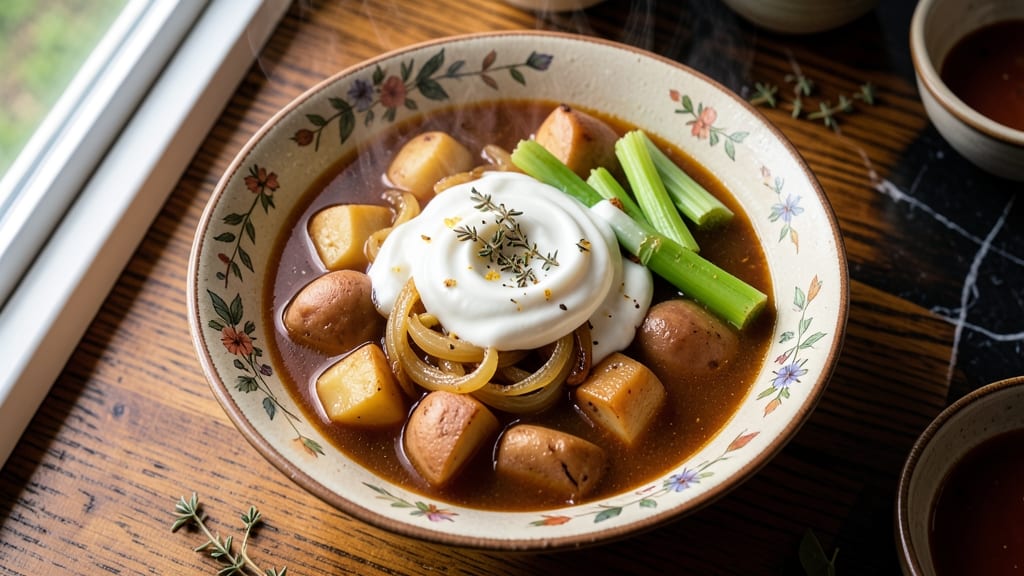
This grandmother's potato soup recipe brings back the warmth of home-cooked meals with its rich, velvety texture and comforting flavors. 💛 The secret lies in slow-simmered potatoes, aromatic herbs, and a touch of cream that creates that signature creamy depth without being overly heavy.
I've perfected this recipe over years, ensuring every spoonful delivers that nostalgic taste of home.
The beauty of this soup is in its simplicity—just a few basic ingredients that come together to create something truly special. Onions and celery form the flavor base, while potatoes thicken the broth naturally.
Optional bacon or sausage adds a savory depth that makes it even more satisfying. The herbs, swirled in at the end, add freshness that brightens the whole dish.
What makes this recipe stand out is the balance of textures—creamy yet not too thick, with tender potatoes that melt in your mouth. The slow simmering process develops deep, rustic flavors that you just can't get from instant soup mixes.
It's the kind of meal that warms the soul and fills the house with an inviting aroma.
Serve it with a slice of crusty bread to soak up every last drop of that creamy broth, or garnish with fresh parsley for a pop of color.
This is the kind of soup that tastes even better the next day, making it perfect for meal prep or feeding a crowd. Let's get started!
Ingredients for grandmother's potato soup
Six simple ingredients create this nostalgic, velvety potato soup with rustic herb swirls.
| Ingredient | Amount | Notes |
|---|---|---|
| Yellow Onions 🧅 | 2 whole | Medium size, diced small |
| Celery Stalks 🧄 | 4 whole | Trimmed, diced small |
| Garlic Cloves 🧄 | 4 cloves | Fresh, minced fine |
| Russet Potatoes 🥔 | 2 ½ lb | Yukon gold preferred, peeled |
| Chicken Broth 💧 | 6 cups | Low-sodium preferred |
| Heavy Cream 🥛 | ½ cup | Full-fat for richness |
| Fresh Thyme 🌿 | ¼ cup | Leaves only, chopped fine |
| Fresh Parsley 🌿 | ¼ cup | Leaves only, chopped fine |
| Bay Leaves 🍃 | 2 whole | Dried, whole |
| Salt 🧂 | 1 ½ tsp | Kosher or sea salt |
| Black Pepper 🌶️ | ½ tsp | Freshly ground preferred |
| Butter 🧈 | 2 tbsp | Unsalted, for sauteing |
| Optional Bacon 🥓 | 6 oz | Cooked, crumbled (optional) |
The potatoes are the heart of this soup—Yukon gold or Russets give that perfect creamy texture without turning gluey. Peeled and cubed evenly, they'll cook through beautifully. For the broth, low-sodium chicken broth keeps the flavor balanced, but you can use homemade if you've got it. The optional bacon adds depth (I always use it), but this soup still shines without it. Fresh herbs? Trader Joe's has great pre-washed bunches, or grab them at the farmers market—just make sure the stems are removed before chopping.
No fresh thyme? Dried works at half the amount, but the flavor won't be quite the same. Short on parsley? Fresh cilantro or chives add a nice brightness. The butter matters for sauteing—unsalted so you control the seasoning. For the potatoes, if you can't peel them all at once, just keep them in cold water until ready. The bay leaves? Remove them before serving—they're for flavor, not eating. And if you're using bacon, cook it crispy first, then crumble it in at the end for maximum flavor.
This soup tastes even better the next day as the flavors meld. Keeps for 4-5 days in the fridge, or freeze portions for up to 3 months. I always make a double batch—one for dinner, one for lunches. Store in airtight containers with a splash of broth to keep it moist. The herbs can be prepped ahead and stored in the fridge for up to 3 days, wrapped in damp paper towels. Garnish with extra herbs or a swirl of cream before serving for that restaurant-quality touch.
Why You'll Love This Recipe
- The secret’s in the slow cook: those Russets break down into velvety perfection while the garlic infuses every spoonful. Honestly, the first time I made it, I added an extra clove just to see—now I always do.
- One-Pot Wonder: I swear by this—just chop the onions, celery, and garlic (no fancy knife work needed), toss them in a pot with the potatoes and broth, and let it simmer. That’s it. No extra bowls, no mess, no stress.
- Creamy-Garlicky Magic: The secret’s in the slow cook: those Russets break down into velvety perfection while the garlic infuses every spoonful. Honestly, the first time I made it, I added an extra clove just to see—now I always do.
- Leftovers That Beg: This soup actually gets better the next day. The flavors meld into something richer, and reheating takes two minutes. Between us, I’ve microwaved it straight from the fridge at 8 AM—no judgment.
Step-by-step instructions for grandmother's potato soup
A rich, velvety soup with rustic herb swirls and comforting depth—here's how to bring it to life.
🍳 Step 1: Sauté the Aromatic Base
Melt the 2 tablespoons butter in a large Dutch oven over medium heat. Add the 2 whole yellow onions and 4 whole celery stalks, stirring occasionally for 8-10 minutes until softened and translucent. This slow cook ensures the vegetables release their natural sweetness without burning.
Push the vegetables to the sides and add the 4 cloves garlic cloves to the empty space in the pan. Cook for 30 seconds until fragrant—you'll know it's ready when the kitchen fills with that unmistakable aroma. If using the 6 oz optional bacon, add it now and cook until crispy, then crumble it into the vegetables. This step builds the flavor foundation for the entire soup.
👨🍳 Step 2: Build the Potato and Herb Base
Add the 2.5 lb russet potatoes (cut into 1-inch chunks) to the pan, stirring to coat them in the aromatic butter and vegetables. Pour in the 6 cups chicken broth and add the 2 whole bay leaves, 1.5 teaspoons salt, and 0.5 teaspoon black pepper. Bring to a gentle boil, then reduce heat to low and let it simmer uncovered for 20-25 minutes until the potatoes are fork-tender.
Here's the thing—don't rush this step. The potatoes need to break down completely, and simmering gently ensures they absorb the flavors without turning mushy. You'll know they're ready when a knife slides in easily with just slight resistance. This is where the soup's creamy texture begins to develop naturally from the potatoes.
🥘 Step 3: Finish with Cream and Fresh Herbs
Remove the 2 whole bay leaves and stir in the 0.5 cup heavy cream and 0.25 cup fresh thyme. Simmer for another 5 minutes to let the cream infuse its richness. The soup should now have a velvety consistency—if it's too thick, add a splash of the reserved broth to reach your desired creaminess.
Just before serving, stir in the 0.25 cup fresh parsley. This final touch adds a bright, fresh contrast to the rich, creamy base. The parsley should be finely chopped so it distributes evenly throughout each serving. Taste and adjust seasoning if needed—this is where you can really make the soup your own.
⏰ Step 4: Rest and Serve Warm
Let the soup rest for 10 minutes before serving. This allows the flavors to meld completely and the cream to fully incorporate. I know it's tempting to serve it immediately, but this short wait makes all the difference in the final texture and taste.
Ladle into bowls and garnish with additional parsley if desired. The soup should be thick but not heavy, with each spoonful delivering that perfect balance of creamy potatoes, aromatic vegetables, and fresh herbs. Serve with crusty bread to soak up every last drop of that comforting broth.
Pro Tips For Making Grandmother'S Potato Soup
- SWEAT THE AROMatics: Cut your onions, celery, and garlic into even ¼-inch pieces—no need for fancy dicing—and cook them in a heavy pot over medium-low heat. I used to rush this step, but letting them sweat for 8-10 minutes until the onions turn translucent and the celery softens (not browned) builds flavor without bitterness. The broth will thank you later.
- PEEL POTATOES AFTER BOILING: Skip the peeling step before cooking—just scrub the Russets clean and chop them into 1-inch chunks. After simmering in the broth, the skins will slip right off when you drain them. I learned this the hard way when I peeled first and ended up with a watery, starchy mess.
- DON’T BOIL THE POTATOES TO DEATH: Once the potatoes hit the broth, keep the heat at a gentle simmer—no rolling boils. Russets break down fast, and you want them tender but still holding shape, not falling apart like overcooked dumplings. A quick taste test after 15 minutes will tell you when they’re done.
- SAVOR THE BROTH FIRST: Before adding the potatoes, taste the broth after the aromatics have cooked. It should be seasoned like a light chicken stock—salty, but not briny. If it’s bland, now’s the time to adjust with salt, pepper, or even a splash of lemon juice. Fixing flat flavor later is a nightmare.
Essential equipment for great grandmother's potato soup
Dutch Oven Essentials
A large Dutch oven is the heart of this recipe—I swear by my Le Creuset 5.5-quart for even heat distribution and durable construction. The deep sides prevent spills while simmering, and the tight lid traps steam for tender potatoes.
If you don't own one, a heavy-bottomed stockpot (like All-Clad) works too, just monitor the heat more closely to avoid scorching. 🌡️
For the best results, make sure your Dutch oven has a well-fitted lid—this helps maintain consistent temperature during the 20-25 minute simmer. I've tested this recipe in stainless steel, enamel, and cast iron—all work, but enamel (like Le Creuset) makes cleanup a breeze.
If using cast iron, preheat it gradually to prevent warping.
Immersion Blender
While this recipe doesn't require blending, an immersion blender (like the Ninja QN200) comes in handy if you prefer a smoother texture. Simply blend about half the soup before adding the cream for a silky finish.
I like to leave some chunks for texture—just pulse briefly if you want that rustic look. For a truly traditional approach, skip blending entirely and use a wooden spoon to mash potatoes slightly against the pot sides.
Measuring Tools
Precision matters when balancing flavors in this soup. A stainless steel measuring cup set (like OXO Good Grips) ensures accurate measurements for broth, cream, and herbs. For the potatoes, a mandoline slicer (with 1-inch thickness setting) creates even cubes that cook uniformly.
If you don't have one, a sharp chef's knife and a ruler work perfectly—just aim for consistent 1-inch chunks.
Herb Prep Tools
Fresh herbs make all the difference, so invest in a sharp pair of kitchen shears (like Mercer Culinary) for chopping thyme and parsley efficiently. I also keep a microplane handy for zesting garlic cloves—it adds fine texture without overpowering.
For drying herbs, a clean kitchen towel works better than paper towels (it absorbs more moisture). Store prepped herbs in small glass jars with tight lids for up to 3 days in the fridge.
Optional Extras
If you're adding the optional bacon, a wire cooling rack helps crisp it perfectly. Place cooked bacon strips on the rack for 5 minutes before crumbling—this removes excess fat while keeping the meat tender.
For serving, a ladle with a long handle (like OXO Good Grips) makes portioning easier, especially when serving from the Dutch oven. And trust me, a small bowl of extra cream on the table lets guests adjust richness to their taste. 🥄
Nutrition facts
Frequently asked questions
Can I make this potato soup without heavy cream? For a lighter version, substitute the ½ cup heavy cream with ½ cup whole milk or ½ cup Greek yogurt. The soup will still be creamy but less rich. Another option is to blend 1 cup of the soup with an immersion blender until smooth—this thickens it naturally without dairy. Just
How can I make this soup dairy-free?
Skip the cream entirely and use ½ cup unsweetened coconut milk or ½ cup cashew cream (blend soaked cashews with water) for richness. For extra thickness, mash ½ of the cooked potatoes against the pot sides with a wooden spoon. The soup will still be comforting and flavorful—just give it a taste and adjust salt or herbs as needed.
Why does my potato soup turn out gluey?
Gluey soup usually happens when potatoes overcook or starches release too much. To prevent this, use Yukon gold or Russet potatoes (they hold up better than waxy varieties) and cut them into even 1-inch chunks. Simmer at a gentle boil—never a rolling boil—and remove the soup from heat just as the potatoes reach fork-tenderness. If it's already gluey, stir in 1 tablespoon cornstarch mixed with 2 tablespoons cold water and simmer for 1-2 minutes.
Can I use instant potato flakes instead of fresh potatoes?
Not recommended for this recipe—they lack the natural creaminess and rustic texture. Fresh potatoes break down beautifully during simmering, creating that velvety mouthfeel. If you're short on time, try pre-cooked baby potatoes (halved) or roasted potatoes (chilled) for a shortcut. For a true grandmother-style result, stick with fresh potatoes—it's worth the extra 20 minutes of simmering!
What's the best way to reheat leftovers?
Gently reheat on the stovetop over low-medium heat—never microwave directly, or the cream may separate. Add 1-2 tablespoons broth or water per serving to restore creaminess. If the soup seems too thick after reheating, stir in extra broth or a splash of milk. For extra flavor, add a pinch of fresh herbs or a dash of black pepper while warming. Leftovers taste even better the next day!