
Side Dishes
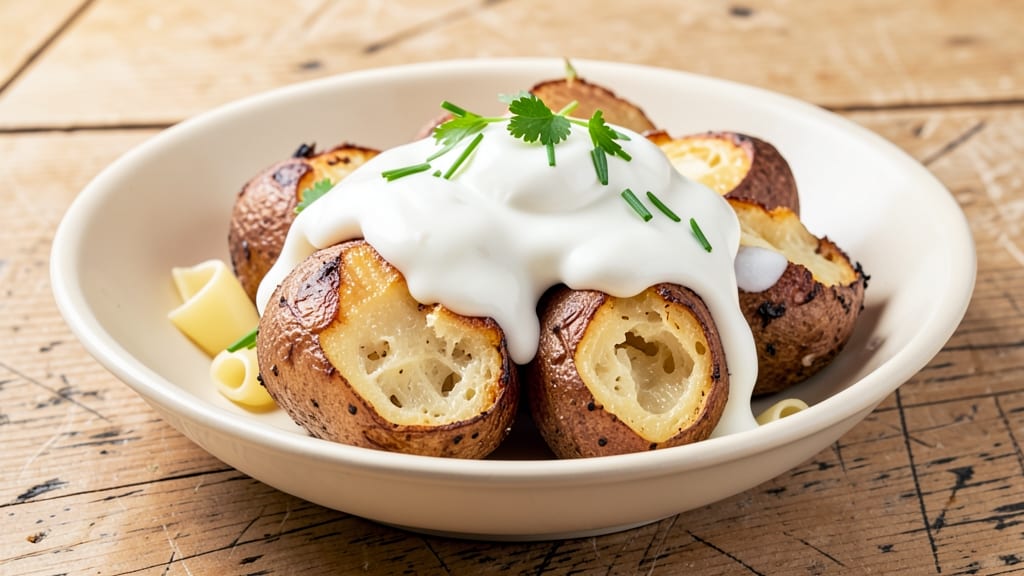
This baked potato dressing recipe transforms humble spuds into a creamy, crispy masterpiece that elevates any holiday table. The secret lies in roasting potatoes until caramelized, then blending them into a velvety base with sharp cheddar, tangy sour cream, and aromatic herbs.
What starts as a simple side becomes the star—thanks to a golden lattice crust that adds irresistible texture.
The magic happens in the layers: tender roasted potatoes form the foundation, while melted cheese and creamy dairy create a rich, spreadable consistency. A crispy lattice topping, achieved through careful baking, adds that satisfying crunch that keeps everyone reaching for seconds.
This isn’t just dressing—it’s a showstopper that pairs perfectly with roasted meats or stands alone as a hearty side.
What makes this recipe truly special is its versatility. Use it as a creamy dip for fresh vegetables, a crispy topping for baked potatoes, or even a filling for stuffed peppers. The balance of textures—soft, creamy filling with crispy edges—creates a sensory experience that’s impossible to resist.
Ready in under an hour, it’s the kind of dish that transforms ordinary gatherings into memorable feasts.
For those who love customization, swap in smoked gouda for extra depth or add a dash of hot sauce for a kick. The possibilities are endless, but the foundation remains foolproof—creamy where it counts, crispy where it matters, and always delicious. Let’s get started on creating this crowd-pleasing classic.
Ingredients for baked potato dressing
Caramelized potatoes meet sharp cheddar and creamy dairy for a dressing that balances crispy lattice with velvety swirls.
| Ingredient | Amount | Notes |
|---|---|---|
| Russet Potatoes 🥔 | 4 large | Roasted until caramelized |
| Sharp White Cheddar Cheese 🧀 | 2 cups | Shredded, block preferred |
| Sour Cream 🥛 | 1 cup | Full-fat for creaminess |
| Heavy Whipping Cream 🥛 | ½ cup | Cold for best texture |
| Fresh Chives 🌿 | ¼ cup | Finely chopped, mild flavor |
| Fresh Parsley 🌿 | ¼ cup | Finely chopped, vibrant color |
| All-Purpose Flour 🌾 | ½ cup | For lattice topping |
| Unsalted Butter 🧈 | ½ cup | Melted, for lattice |
| Diamond Crystal Kosher Salt 🧂 | 1 tsp | Adjust to taste |
| Black Pepper 🌶️ | ½ tsp | Freshly ground |
The potatoes are the foundation—Russet delivers the perfect caramelized sweetness when roasted until tender. Whole Foods or Trader Joe's carry the best organic varieties with thick skins for ideal texture. For the cheese, sharp white cheddar from a block (not pre-shredded) melts smoothly and delivers that signature tang. The sour cream and heavy cream should be full-fat for maximum creaminess—Trader Joe's organic brands work perfectly. Fresh herbs are non-negotiable here; Whole Foods bulk sections offer the brightest parsley and chives, but grocery store options work if used immediately.
No sharp cheddar? Smoked gouda adds depth, while Pepper Jack brings subtle heat. Substitute Greek yogurt for sour cream (use half the amount) if you prefer tangier flavor. The lattice topping requires precise measurements—Diamond Crystal kosher salt is essential (Morton has extra sodium). For extra crispiness, brush the lattice with melted butter before baking. The herbs can be swapped for green onions or dill if preferred, though the classic chive-parsley combo remains ideal for that fresh, bright finish.
Prep the potatoes ahead—they keep 3 days in the fridge before blending. The finished dressing reheats beautifully; simply cover and warm in a 350°F oven for 15-20 minutes. For the lattice topping, make it fresh—it loses crispiness when reheated. Store leftovers in an airtight container for up to 5 days, though the texture softens over time. Freezing isn't recommended due to the dairy, but the filling alone can be frozen for 3 months before adding the lattice.
Why You'll Love This Recipe
- One-Pan Magic: I swear by this—just toss peeled potatoes, cheese, and creams on a sheet pan, bake, then fluff with chives. No chopping, no fuss, no extra bowls.
- Creamy-Cheesy Bliss: That sharp white cheddar melts into a golden, stretchy blanket while the sour cream keeps it luscious. The chives add a bright finish that makes it taste like a hug.
- Holiday Table Star: It’s my secret weapon for Thanksgiving or Christmas—elegant enough for guests but simple enough I won’t stress. Serve warm or cold; it’s equally good.
- Budget-Friendly Feast: Russets and cheddar stretch far, and leftovers reheat beautifully. Honestly, I’ve fed a crowd for under $10 with this—no one ever guesses how cheap it is.
Step-by-step instructions for baked potato dressing
Transform simple ingredients into a showstopping side with perfect texture contrast.
Roast the Potatoes Until Caramelized
Preheat your oven to 400°F and line a baking sheet with parchment paper. Scrub the 4 large Russet Potatoes clean and pierce each with a fork in several places. This prevents them from exploding during roasting. Place them directly on the baking sheet and roast for 45-50 minutes, turning halfway through, until they're tender when pierced with a knife and the skin is deeply caramelized.
Here's the thing—don't skip the turning. The potatoes will brown unevenly if left untouched, and you want that perfect golden crust all around. When they're done, let them cool slightly before handling. The residual heat will make them easier to work with when you're ready to mash them.
Create the Creamy Cheese Base
While the potatoes are roasting, shred the 2 cups Sharp White Cheddar Cheese using a box grater. I like to use a block of cheese rather than pre-shredded because it melts more smoothly. In a large mixing bowl, combine the shredded cheese with the 1 cup Sour Cream, 0.5 cup Heavy Whipping Cream, 1 tsp Diamond Crystal Kosher Salt, and 0.5 tsp Black Pepper. Mix gently with a wooden spoon until just combined—you want to maintain some texture, not a smooth paste.
This is where the magic happens. The cold cream and sour cream will create a rich, velvety texture that contrasts beautifully with the crispy lattice. If your cheese is very cold, let it sit at room temperature for 10 minutes before mixing—this ensures it melts evenly into the cream base. The mixture should look like a thick, lumpy batter with visible cheese shreds.
Prepare the Potato Lattice Topping
Once the potatoes are cool enough to handle, peel off the skins and mash them in the mixing bowl with the cheese mixture. Use a potato masher or fork to create a slightly lumpy texture—this helps create pockets for the cream to swirl through. Fold in the 0.25 cup Fresh Chives and 0.25 cup Fresh Parsley, reserving a small amount for garnish.
In a separate bowl, mix the 0.5 cup All-Purpose Flour with 0.5 cup Unsalted Butter that has been melted and cooled slightly. Use your fingers to work the butter into the flour until you have a crumbly, dough-like consistency. This will form the crispy lattice topping that contrasts with the creamy filling.
Assemble and Bake the Dressing
Transfer the potato-cheese mixture to a greased 8x8-inch baking dish. Spread it evenly into the dish, leaving about ½-inch of space at the top for the lattice. Here's where it gets fun—use two forks to create a lattice pattern with the flour-butter mixture. Start by making vertical cuts about 1-inch apart, then make horizontal cuts, lifting and twisting the strips to create the classic lattice design.
Bake at 375°F for 25-30 minutes until the lattice is golden brown and crispy, and the edges of the dressing are bubbling. The center should still be slightly soft—this ensures it's creamy when served. If the top browns too quickly, tent it loosely with aluminum foil for the last 10 minutes of baking.
Rest and Serve with Perfect Texture
Remove the dressing from the oven and let it rest for 10 minutes before serving. This resting period allows the juices to redistribute, ensuring each bite delivers that perfect balance of crispy lattice and creamy potato-cheese filling. The contrast in textures is what makes this dressing truly special—crunchy top, creamy center, and tender potatoes throughout.
Garnish with the reserved fresh herbs and serve immediately while still warm. The lattice will be at its crispest right out of the oven, and the cheese mixture will be at its most luxurious. This is the moment that matters: where all the elements come together for that first perfect bite.
Pro Tips For Making Baked Potato Dressing
- PRECOOK POTATOES FIRST: I learned this the hard way—peeling and shredding raw Russets is a mess. Parboil them whole for 10 minutes first, then drain and cool before shredding. The texture stays creamy, not gummy, and you won’t end up with potato pulp stuck everywhere.
- GRATE CHEESE COLD: Sharp white cheddar melts differently when cold. Use a microplane or box grater on frozen cheese—it shreds finer and melts smoother. Skip the pre-shredded bag stuff; it’s coated with anti-caking agents that make the dressing greasy.
- SALT THE POTATOES: Yes, even in dressing. Add 1 teaspoon of salt to the boiling water for the potatoes—it seasons them before they’re shredded. The flavor carries through the whole dish, not just the final mix.
- MIX IN CHIVES LAST: Fresh chives burn easily and turn bitter in heat. Fold them in right before serving—just a quick stir to distribute. If you add them earlier, they’ll wilt into mush, and you’ll lose that bright, fresh finish.
Common mistakes when making this dish
Overcooking Potatoes
One of the biggest mistakes is roasting the potatoes too long, which turns them mushy instead of caramelized. Aim for 45-50 minutes at 400°F—they should yield slightly to a fork but still hold their shape.
I’ve ruined this step by leaving them in too long, resulting in a watery dressing. Always check at 45 minutes and adjust based on your oven’s hot spots. 🥔
Skipping the Lattice Rest
Rushing to serve the dressing immediately after baking can lead to a soggy lattice. The 10-minute rest is crucial—it lets the creamy filling set while keeping the lattice crisp.
I once served it straight from the oven, and the top turned mushy within minutes. Patience here makes all the difference for that perfect crunch.
Using Pre-Shredded Cheese
Pre-shredded cheese contains anti-caking agents that prevent smooth melting, leading to a grainy texture in your dressing. Always shred your own sharp white cheddar using a box grater.
I’ve learned this the hard way—once, I used pre-shredded, and the result was a disappointing, clumpy mess. Block cheese is worth the extra effort. 🧀
Incorrect Lattice Technique
The lattice needs precise cuts—too wide, and it won’t crisp properly; too narrow, and it’ll burn before the filling sets. Use two forks to make vertical cuts 1-inch apart, then horizontal cuts, twisting the strips gently.
I’ve seen lattices collapse or turn rubbery when cuts were uneven. Practice makes perfect, but starting with straight lines helps.
Overmixing the Filling
Overworking the potato-cheese mixture can turn it gummy. Mix just until combined—lumps are fine! The texture should be thick but still hold pockets for the cream. I’ve accidentally turned this into a smooth paste, which lacks the desirable creaminess. A wooden spoon is your friend here—gentle folds are key. 🥛
Ignoring the Butter Temperature
Using butter that’s too hot when making the lattice can melt the flour, creating a sticky mess instead of a crisp topping. Let melted butter cool slightly before mixing with flour.
I’ve had the butter turn the lattice into a sad, greasy puddle. Room temperature butter works best—just warm it enough to soften, not liquefy. 🧈
Nutrition facts
Frequently asked questions
Can I make this dressing ahead of time?
Yes! The filling can be prepared up to 3 days in advance and stored in an airtight container in the fridge. For the lattice topping, make it fresh before baking—it loses crispiness when reheated. When ready to serve, assemble and bake as directed, then warm through in a 350°F oven for 15-20 minutes to restore creaminess. The texture will be slightly softer, but still delicious.
What if I don't have sharp cheddar?
No problem! Substitute with smoked gouda for extra depth or Pepper Jack for a subtle kick. Greek yogurt can replace sour cream (use half the amount) if you prefer a tangier flavor. Just avoid pre-shredded cheese—it contains anti-caking agents that create a grainy texture. Block cheese always melts more smoothly.
How can I make this dressing dairy-free?
Swap the cheese for 2 cups shredded vegan cheddar (like Daiya or Violife) and replace sour cream with 1 cup full-fat coconut yogurt. Use ½ cup coconut cream instead of heavy cream. The texture will be slightly lighter, but still creamy. For the lattice, use ½ cup all-purpose flour + ½ cup vegan butter or olive oil for binding. The result won't be as crispy, but it's a great alternative!
Can I use sweet potatoes instead of Russets?
Sweet potatoes will work, but the flavor and texture will differ. They're naturally sweeter and more moist, which can make the dressing taste less savory. If you try it, reduce the roasting time to 35-40 minutes at 400°F and add ½ teaspoon cinnamon to complement their natural sweetness. The lattice will still crisp up nicely, but the filling will have a distinct autumnal flavor.
Why did my lattice turn out soggy?
Soggy lattice usually happens from one of three issues: serving too soon (always rest for 10 minutes), overmixing the filling (keep it slightly lumpy), or using butter that was too hot when making the lattice. Let melted butter cool slightly before mixing with flour—it should be soft but not liquid. If it happens, try baking at a slightly lower temperature (350°F) next time to prevent over-browning.