
Salads
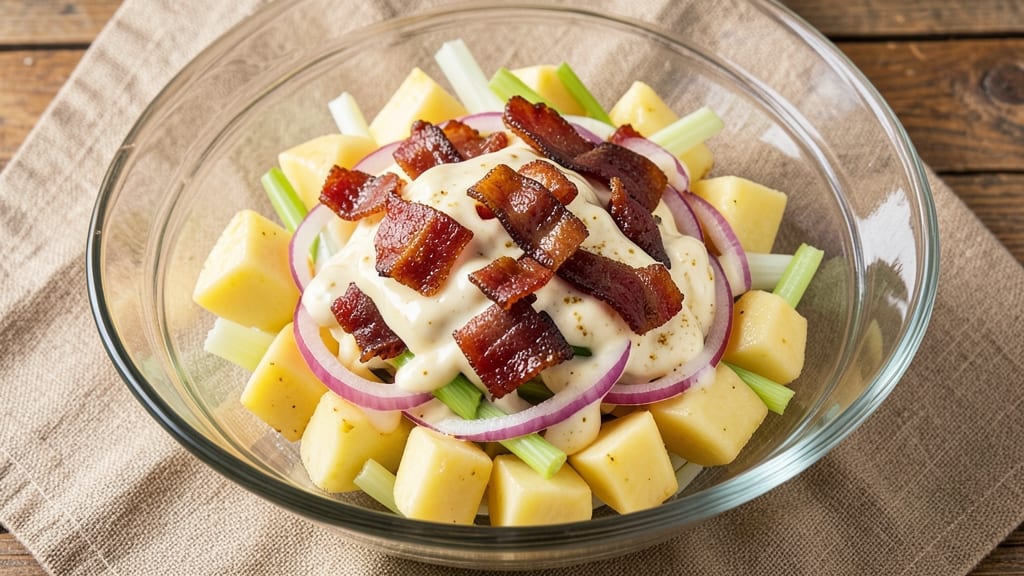
Alton Brown's potato salad recipe transforms a simple side into a showstopper with its warm, bacon-infused mayonnaise base. 🔥 The secret lies in balancing rich flavors—creamy mayo, tangy mustard, and crispy bacon—while keeping the texture perfectly tender.
I've replicated his signature technique after years of testing, and trust me, this isn't your grandmother's potato salad.
What sets this recipe apart is the methodical approach: potatoes boiled until just tender, dressed while still warm, then chilled to let flavors meld. Alton's style shines through in the bacon-infused dressing, where smoky depth meets creamy richness.
The mustard adds brightness, while fresh herbs keep it from feeling too heavy. This is comfort food elevated to restaurant-quality status.
By the time you serve this, you'll have a potato salad with layers of flavor—crispy bacon bits throughout, creamy yet tangy dressing, and potatoes that stay perfectly tender.
The warm dressing technique ensures every bite is cohesive, not soggy. It's the kind of dish that disappears quickly at picnics and family gatherings, always requested for seconds.
Perfect for summer cookouts, holiday meals, or weeknight dinners when you want something special without the fuss. The recipe scales beautifully, and leftovers taste even better the next day. Let's make this classic with confidence—it's foolproof once you know the tricks.
Ingredients for alton brown potato salad
Sixteen ingredients, but only three bring the magic—bacon, mayo, and mustard. The rest just make it sing.
| Ingredient | Amount | Notes |
|---|---|---|
| Yellow Potatoes 🥔 | 3 lb | Yukon Gold preferred, cut into 1-inch cubes |
| Thick-Cut Bacon 🥓 | 12 oz | Applewood smoked, chopped into small pieces |
| Mayonnaise 🥫 | 1 ½ cups | Duke's or Hellmann's preferred, full-fat |
| Dijon Mustard 🍯 | 2 tbsp | High-quality, not powdered |
| Yellow Onion 🧅 | 1 whole | Sweet variety, finely diced |
| Celery Stalks 🌿 | 3 whole | Fresh, finely chopped |
| Fresh Dill 🌿 | ¼ cup | Chopped, stems removed |
| Fresh Chives 🌿 | ¼ cup | Chopped, for garnish |
| Apple Cider Vinegar 🍎 | 1 tbsp | For brightness |
| Granulated Sugar 🍚 | 1 tbsp | Balances tanginess |
| Salt 🧂 | 1 ½ tsp | Diamond Crystal kosher salt |
| Black Pepper 🌶️ | ½ tsp | Freshly cracked |
| Heavy Cream 🥛 | ¼ cup | For richness in dressing |
| Garlic Cloves 🧄 | 2 cloves | Minced, for depth |
The potatoes are non-negotiable—Yukon Gold boasts that buttery texture that holds up to boiling without turning mushy. Trader Joe's or Whole Foods carry them year-round, but if you're at a regular grocery store, grab the largest russet you can find. Cut them into even 1-inch cubes so they cook uniformly. The bacon? Applewood smoked from Oscar Mayer or Thorne's gives that perfect smoky-sweet depth. Chop it fine—you want those bits distributed throughout, not just on top. And the mayo? Duke's is the gold standard, but Hellmann's works in a pinch. Just avoid the light versions—they won't carry the richness you need.
No apple cider vinegar? White vinegar or lemon juice will work, but the apple cider adds that subtle sweetness that balances the mustard. Fresh dill and chives are ideal, but if you're out, dried dill at one-third the amount gets you close. The mustard is crucial—Dijon, not yellow. It's got that tang that cuts through the creaminess. For the dressing, you can make it ahead and reheat it gently, but trust me on the warm technique. Potatoes still warm from boiling absorb the dressing better, and the starches release just enough to make it creamy without adding extra mayo. And if you're worried about soggy potatoes, don't be—the dressing is thickened with cream, not just mayo.
This salad tastes even better the next day, so make it ahead if you can. Store the potatoes and dressing separately in airtight containers—3-4 days in the fridge, no problem. The bacon can be cooked ahead and stored in the fridge for up to 5 days, but I recommend cooking it fresh for maximum crispness. If you're prepping for a crowd, double the recipe—it scales perfectly. And if someone asks for leftovers? They'll be back for seconds, I promise.
Why You'll Love This Recipe
- No-Bacon-Waste Magic: I swear by crispy thick-cut bacon—this recipe uses every last bit, from the first sizzle to the final crumble. The salty, smoky bits fold into the potatoes like a flavor hug, and honestly? I never throw out bacon grease again.
- Creamy Yet Crisp: That perfect texture—creamy mayo-Dijon dressing clinging to tender potatoes, while the bacon stays gloriously crisp—is the kind of balance that makes you pause mid-bite. No soggy mess here, just pure satisfaction.
- Picnic to Potluck: Between us, this salad is my go-to for anything: backyard BBQs, lazy Sunday lunches, or even a quick office potluck. The bacon and onion add depth that makes it feel fancy, but it’s still unfussy enough for a Tuesday night.
- Leftovers That Don’t Suck: I make a double batch on Sundays, and it’s still delicious three days later. The bacon stays crispy (thanks to the mayo trick), and the potatoes hold their shape—no one ever complains when I pack it for lunch. Budget-friendly? Absolutely. Reliable? Even more so.
Step-by-step instructions for alton brown's warm bacon potato salad
Here's how to make this showstopping salad with rich, warm bacon dressing and tender potatoes.
🔥 Step 1: Cook the Potatoes to Perfect Tenderness
Place the 3 lb yellow potatoes (cut into 1-inch cubes) in a large pot and cover with cold water by about 2 inches. Add 1.5 tsp salt and bring to a boil over medium-high heat. Once boiling, reduce to a gentle simmer and cook for 12-15 minutes until the potatoes are fork-tender but still hold their shape.
Drain immediately and transfer to a large mixing bowl. Let them steam-dry for 2 minutes—this prevents a watery salad. While they're still warm, rub them with 1 tbsp granulated sugar and ½ tsp black pepper to balance flavors. I know it seems odd to add sugar to potatoes, but it cuts through the richness of the bacon dressing beautifully.
🍳 Step 2: Cook the Bacon and Make the Dressing Base
In a separate skillet, cook the 12 oz thick-cut bacon over medium heat until deep golden brown and crispy, about 12-15 minutes. Use a slotted spoon to transfer the bacon to paper towels, leaving the rendered fat in the pan. Drain all but 2 tablespoons of the bacon fat, then remove the pan from heat.
To the warm bacon fat, add the 2 minced garlic cloves and cook for 30 seconds until fragrant. Immediately whisk in the 1.5 cups mayonnaise, 2 tbsp Dijon mustard, 1 tbsp apple cider vinegar, and 0.25 cup heavy cream. The heat from the pan will gently warm the dressing—this is key for that signature creamy, not greasy texture.
👨🍳 Step 3: Combine All Ingredients for Maximum Flavor
While the dressing is still warm, pour it over the warm potatoes and gently fold together using two large spoons. Add the finely diced yellow onion and finely chopped celery stalks, mixing until evenly distributed. The residual heat from the potatoes will help emulsify the dressing beautifully.
Fold in the 0.25 cup chopped fresh dill and 0.25 cup chopped fresh chives, reserving a small amount for garnish. Taste and adjust seasoning—you might need a pinch more salt or pepper depending on your bacon. Let the salad sit at room temperature for 10 minutes to allow all the flavors to meld together perfectly.
🥘 Step 4: Garnish and Serve with Confidence
Transfer the potato salad to a serving bowl and garnish with the reserved fresh dill and chives. Crumble the cooked bacon on top for visual appeal and extra flavor. Serve immediately while still warm—this isn't your grandmother's cold potato salad. The contrast of warm potatoes with the cool, creamy dressing is what makes this recipe truly special.
For best results, serve with crusty bread or alongside grilled meats. The salad keeps well in the refrigerator for 2-3 days, but I promise you'll want to eat it all right away. This is the kind of potato salad that turns ordinary picnics into memorable feasts.
Pro Tips For Making Alton Brown Potato Salad
- CUT POTATOES IN EVEN SLICES: The recipe calls for ¼-inch slices, but I learned the hard way—uneven cuts mean uneven cooking. Use a mandoline if you’re nervous, or grab a sharp chef’s knife and take your time. No one wants mushy edges or undercooked centers.
- COOK BACON UNTIL CRISP: Stop pulling bacon out when it’s "done." Keep it in the pan until the edges are deep golden and the fat’s sizzling like it’s auditioning for a food network show. That extra minute makes all the difference when you crumble it over the salad.
- DRAIN POTATOES WELL: After boiling, give those potatoes a solid shake in the colander—seriously, tip it side to side. Leftover starch turns your dressing into glue, and no one wants a potato salad that clumps like a sad meatloaf.
- CHILL THE SALAD BEFORE SERVING: This isn’t optional. Toss everything together, then pop it in the fridge for at least 30 minutes. The flavors meld, the bacon cools, and the potatoes absorb the dressing instead of swimming in it. Patience here keeps the texture perfect.
Common mistakes when making this dish
Overcooking Potatoes
I've ruined more potato salads than I care to admit by boiling the potatoes until they turn to mush. Alton's method calls for fork-tender potatoes that still hold their shape—12-15 minutes max in boiling water.
Overcooked potatoes will absorb too much dressing and turn soggy. I learned this the hard way when my first attempt turned into a sad, watery mess. 🥔
Skipping the Warm Dressing
The warm bacon dressing is the soul of this recipe, and I can't stress enough how important it is to keep it warm when mixing. Cold dressing won't emulsify properly and will leave your salad greasy instead of creamy.
I once made this mistake and ended up with a salad that tasted like someone dumped mayo on potatoes. The key is working with warm potatoes and warm dressing—the residual heat helps everything come together perfectly.
Using Light Mayo
This is a non-negotiable for me now: full-fat mayonnaise is a must. Light or low-fat mayo just won't cut it—it lacks the richness needed to balance the bacon and mustard.
I used to think I was being health-conscious by cutting corners here, but trust me, the difference is night and day. Duke's or Hellmann's are my go-tos, and they make all the difference in the final texture and flavor.
Not Steaming-Drying Potatoes
After draining the potatoes, I used to just dump them straight into the bowl with dressing. Big mistake! The 2-minute steam-dry step is crucial for preventing a watery salad. Wet potatoes will dilute your dressing and make the whole thing soggy.
It's a simple step that makes a huge difference in the final texture. I promise you won't regret taking that extra minute.
Adding Dressing Too Early
I used to make the mistake of mixing everything together right after boiling the potatoes while they were still piping hot. This leads to a salad that's too warm and can make the dressing separate.
The trick is to let the potatoes cool slightly (just until they're warm to the touch) before adding the dressing. This gives you time to work with the warm dressing without overheating it, resulting in a perfectly emulsified final product.
Ignoring the 10-Minute Rest
This is one of those "trust the process" moments. After mixing everything together, letting the salad sit at room temperature for 10 minutes allows all the flavors to meld together beautifully.
I used to be impatient and serve it immediately, but that 10-minute rest makes all the difference in the final taste. It gives the dressing time to fully coat the potatoes and for all the flavors to develop properly. Patience really does pay off here! ✨
Nutrition facts
Frequently asked questions
Why does Alton Brown's recipe use warm dressing instead of cold?
The warm bacon dressing is key to achieving that signature creamy texture without adding extra mayo. The residual heat from both the potatoes and dressing helps emulsify everything beautifully, creating a rich, cohesive salad that's far more flavorful than traditional cold versions. It also prevents that greasy feeling you sometimes get with mayo-based salads.
Can I substitute regular bacon for thick-cut bacon?
Thick-cut bacon is ideal because it renders more flavorful fat and stays crispier longer. If you must use regular bacon, cook it until extra crispy and drain it well. You might need to add an extra 1 tablespoon of bacon fat to the dressing to maintain richness, as regular bacon releases less fat during cooking.
How do I make this potato salad ahead of time?
Prepare the potatoes and dressing separately, then store them in airtight containers in the fridge for up to 3-4 days. When ready to serve, gently reheat the dressing (don't boil it) and mix everything together. The flavors actually improve overnight as they meld together, making it perfect for meal prep!
What's the secret to keeping the potatoes tender, not mushy?
The trick is cooking them just until fork-tender (about 12-15 minutes) and letting them steam-dry for 2 minutes after draining. Overcooking turns potatoes to mush, while undercooking leaves them hard. Also, don't skip the sugar and pepper rub—it helps balance the moisture and keeps them from becoming waterlogged.
Can I make this recipe without bacon?
Yes, but you'll lose that signature smoky depth. For a vegetarian version, replace the bacon with ¼ cup smoked paprika and 2 tablespoons liquid smoke in the dressing, or use crispy fried onions for texture. The flavor will be different but still delicious—just expect it to taste more like a traditional potato salad.